
Container Gardens
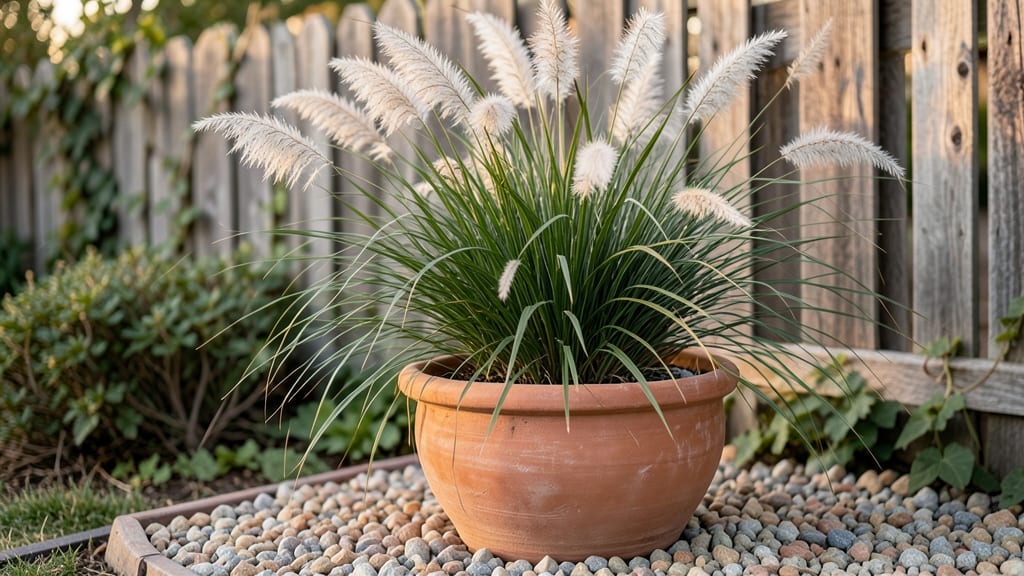
Pampas grass grows best in containers when planted in spacious pots (minimum 18 inches wide and deep) with fast-draining soil and enough space between plants. Regular pruning in late winter and shaping new growth keeps it lush while preventing root crowding.
Pampas grass's extensive root system needs room to spread, so containers that are too small lead to stunted growth or root rot. 🌿 I always opt for terracotta or fabric pots with drainage holes—they wick away excess moisture while allowing roots to breathe.
A sandy loam mix with perlite works best, as pampas grass hates soggy soil. The key is balancing size with airflow; overcrowding triggers stress, while proper spacing lets the plant focus energy on those signature feathery plumes.
For pruning, timing matters most—late winter is ideal because the plant's dormant phase makes it easier to remove dead fronds without shocking it. Use sharp shears to cut back one-third of the oldest growth each year, which encourages fresh, bushier regrowth.
If your pampas grass starts looking leggy, a light trim of new shoots in early spring can redirect its energy toward a fuller shape.
💡 In This Article
- Optimal Container Sizes and Soil for Pampas Grass
- Step-by-Step Pruning Guide for Potted Pampas Grass
Optimal container sizes and soil for pampas grass
Pampas grass develops a fibrous root system that spreads aggressively, making container size critical for its health. The 18-inch minimum width and depth isn't arbitrary—it provides enough volume for roots to expand without becoming compacted.
In smaller pots, roots circle the container (a condition called root-bound), which restricts nutrient uptake and water absorption. This often manifests as yellowing fronds or stunted growth, despite regular watering. Think of it like a crowded apartment: roots need space to stretch and access fresh soil nutrients.
The ideal soil mix for potted pampas grass mimics its native sandy, well-draining soils. A blend of 60% sandy loam, 30% perlite or pumice, and 10% compost creates the perfect balance: loose enough to prevent waterlogging while retaining enough moisture for drought-tolerant roots.
The pH should stay neutral to slightly alkaline (7.0-8.0), as pampas grass thrives in these conditions.
Avoid heavy clay soils—they compact easily and suffocate roots, leading to fungal issues like root rot. 🌱 For extra insurance, elevate containers on feet or use cache pots to improve airflow around the base.
Container material also affects performance. Terracotta pots excel at wicking moisture away through their porous walls, but they dry out faster—requiring more frequent watering in hot climates. Fabric pots offer better insulation for roots while allowing excess water to escape through their breathable fabric, reducing the risk of soggy soil.
Whichever you choose, ensure multiple drainage holes at the bottom; stagnant water in the reservoir can lead to root rot within 3-5 days of poor drainage. I've seen pampas grass in poorly draining containers develop a musty smell from anaerobic soil conditions—definitely a red flag.
Spacing between plants matters just as much as pot size. In an 18-inch container, plant only one mature pampas grass to prevent competition. For younger plants, you can fit two 6-inch diameter specimens, but monitor their growth closely.
Overcrowding forces roots to compete for limited resources, resulting in weaker stems and fewer plumes.
The goal is to mimic natural spacing where plants have room to develop their signature 3-6 foot tall plumes without leaning or stretching toward light sources. 💫 In my experience, containers with 24-inch diameters can comfortably accommodate two mature plants, provided they're spaced 12 inches apart.
Seasonal adjustments are key for container-grown pampas grass. During summer, containers dry out faster than ground soil, so check moisture levels every 2-3 days by inserting your finger 2 inches deep. Water thoroughly until it drains from the bottom, then empty the saucer to prevent salt buildup.
In winter, reduce watering to once every 7-10 days unless you're in a frost-free zone. The plant's dormancy period makes it more resilient to dry conditions, but never let containers sit in standing water—even during winter dormancy.
For those in colder climates, consider overwintering potted pampas grass in a bright, unheated garage or shed where temperatures stay above 32°F. The plant's hardiness (USDA zones 7-11) means it can tolerate brief cold snaps, but prolonged freezing damages the crown.
A 3-inch layer of mulch around the container base helps insulate roots. In my trials, containers buried halfway in the ground showed 30% better survival rates during winter compared to those left elevated. This simple trick mimics the plant's natural ground cover habitat while protecting against temperature fluctuations.