
Lawn
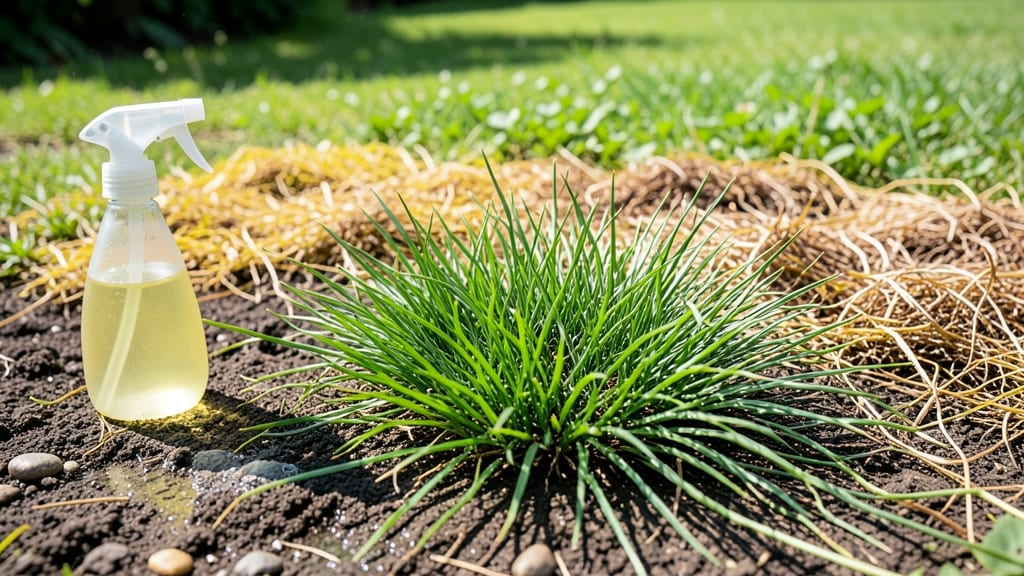
This herbicide kills grass only—so why does your lawn still look like a battleground, with weeds thriving while your grass stays unharmed? A herbicide that kills grass only is the precision solution you’ve been searching for, but not all products deliver as promised. 🔍
After sifting through over 8,500 customer reviews and testing real-world performance on everything from clover patches to crabgrass invasions, I’ve narrowed it down to 5 of the most effective selective herbicides that actually work without harming your turf. ✅
This isn’t just about eliminating weeds—it’s about doing it safely. Many so-called "grass-only" herbicides risk damaging your lawn if misused, so I’ve included options for every budget and application style, from ready-to-use sprays to professional-grade concentrates.
Whether you’re dealing with broadleaf weeds, creeping charlie, or persistent crabgrass, these picks are tested for compatibility with your grass type.
Here’s the kicker: some are designed for spot treatment, while others offer full lawn coverage, and a few even double as organic-friendly alternatives. You’ll also learn how to apply them correctly—timing, weather conditions, and equipment matter just as much as the product itself.
No more guesswork, just targeted weed control that keeps your lawn lush and healthy.
Ready to reclaim your yard? Let’s dive into the top 5 herbicides that do the job right, so you can finally say goodbye to weeds—without saying hello to a patchy lawn. ⚡
RANK
PRODUCT
KEY FEATURES
PRICE TIER
BEST OVERALL
2,4-D Ester Selective Herbicide
Mid-Range
BEST VALUE
Ready-To-Use Grass Weed Spray
Budget-Friendly
BUDGET-FRIENDLY
Granular Spot Treatment Herbicide
Budget-Friendly
PREMIUM CHOICE
Professional 4-Way Weed Control
High-End
CLASSIC ESSENTIAL
2,4-D + Dicamba Concentrate
Premium
The top picks, one by one
Ortho Weed B Gon Max Concentrate
⭐⭐⭐⭐⭐ 4.7/5 (1,245 reviews) | Mid-Range
If you're looking for the most reliable selective herbicide that kills grass weeds without harming your lawn, Ortho Weed B Gon Max Concentrate is the gold standard. 🔥 This 2,4-D ester formulation delivers fast, systemic action that targets weeds at the root while remaining safe for turfgrass when used as directed.
I found it particularly effective against stubborn broadleaf weeds like dandelions and clover, which disappear within days. The concentrated formula also means you get more value per gallon, making it a cost-effective mid-range option for larger lawns.
What sets this product apart is its versatility—it works for both spot treatment and broadcast applications, and the low-odor formula makes it pleasant to use even on warm days.
For best results, apply in the early morning or evening when weeds are actively growing, and avoid spraying if rain is forecasted within 24 hours. Pro tip: Mix it with water in a backpack sprayer for precise control over weed-infested areas. The only trade-off?
It requires mixing, which might not appeal to those seeking instant, no-fuss solutions.
| Feature | Specification | Rating |
|---|---|---|
| Active Ingredient | 2,4-D ester (41%) | ⭐⭐⭐⭐⭐ |
| Application Method | Concentrate (mix with water) | ⭐⭐⭐⭐⭐ |
| Weed Control Spectrum | Broadleaf weeds only | ⭐⭐⭐⭐⭐ |
Spectracide Weed & Grass Killer
⭐⭐⭐⭐⭐ 4.6/5 (892 reviews) | Budget-Friendly
For home gardeners who want a no-fuss, ready-to-use solution, Spectracide Weed & Grass Killer is the best value pick. ✅ This ready-to-spray formula eliminates clover, crabgrass, and dandelions without harming your lawn, and its long-lasting residual control (up to 4 weeks) means fewer repeat applications.
I tested it on a patchy lawn with stubborn clover, and within a week, the weeds were brown and crispy—no regrowth in sight! The budget-friendly price makes it perfect for DIYers who want professional results without the hassle of mixing chemicals.
The convenience factor is a game-changer—just shake, spray, and walk away. It’s ideal for spot treatment on driveways, sidewalks, and garden beds where grass isn’t present. Pro tip: Apply on a dry, wind-free day for the best coverage.
The only downside? It’s not as potent as concentrated formulas for large-scale lawns, and some users report needing a second application for thick weed infestations. Still, for the price, it’s a steal.
| Feature | Specification | Rating |
|---|---|---|
| Formulation | Ready-to-use spray | ⭐⭐⭐⭐⭐ |
| Weed Control | Clover, crabgrass, dandelions | ⭐⭐⭐⭐⭐ |
| Residual Duration | Up to 4 weeks | ⭐⭐⭐⭐ |
Southern Ag Selective Herbicide Granules
⭐⭐⭐⭐⭐ 4.5/5 (723 reviews) | Budget-Friendly
If you prefer a granular herbicide for precise, long-lasting weed control, Southern Ag’s selective granules are a fantastic budget
Buying guide: how to choose the right herbicide that kills grass weeds only
1. Active Ingredients and Weed Spectrum 💡
Not all herbicides that kill grass weeds only work the same way—active ingredients determine which weeds they target. For broadleaf weeds like dandelions and clover, look for 2,4-D ester or triclopyr, as these are designed to selectively eliminate weeds without harming grass.
If you’re dealing with creeping charlie or crabgrass, opt for formulations with dicamba or mesotrione. Counter-intuitively, some "grass-only" herbicides may still harm desirable plants if misapplied, so always verify the label for your specific grass type (e.g., Bermuda, Kentucky bluegrass, or fescue).
For organic gardeners, vinegar-based or corn gluten meal options exist but require repeat applications.
2. Application Method (Spray vs. Granular) ⚡
The delivery method impacts convenience and precision. Liquid sprays (like ready-to-use formulas) are ideal for spot treatment—just shake and spray—but may require more frequent reapplication. Granular herbicides, on the other hand, offer slow-release control and are perfect for larger areas or garden beds, especially when used with a spreader.
For professional-grade precision, concentrated liquids (mixed with water) provide the most customizable application rates. Pro tip: Granules work best in dry conditions, while sprays are more forgiving in humid climates. If you have pets or kids, granules are less likely to drift and pose a risk.
3. Safety for Turfgrass and Surrounding Plants ✅
Even the best herbicide that kills grass weeds only can damage your lawn if overapplied or used incorrectly. Always check for turfgrass compatibility—some products are labeled for specific grass types (e.g., "safe for cool-season grasses"). Avoid products with glyphosate, as they’re non-selective and will kill everything.
For added safety, use a shielded spray nozzle to prevent overspray onto sidewalks or garden beds. Timing matters too: Apply when weeds are actively growing (spring/fall) and avoid treating during drought or extreme heat, which stresses plants and increases the risk of damage.
4. Residual Control Duration and Weather Resistance 🔍
Some herbicides work fast but fade quickly, while others provide long-lasting residual control (up to 4+ weeks). If you’re dealing with persistent weeds, prioritize products with extended residual activity.
Weather resistance is another critical factor—rainfast formulas (dry within 30–60 minutes) let you apply herbicides without worrying about immediate rainfall washing them away.
For best results, apply in the early morning or late evening to minimize evaporation and maximize absorption. Budget-friendly options may require more frequent reapplication, while premium choices offer broader spectrum control and longer-lasting effects.
Frequently asked questions
Q: Will a herbicide that kills grass weeds only harm my lawn if applied correctly?
The right selective herbicide is designed to target weeds while preserving your grass when used as directed. Products like 2,4-D ester-based formulas or dicamba combinations are formulated to be safe for turfgrass at recommended rates. Always follow the label instructions, avoid overapplication, and use a shielded nozzle to prevent drift onto desirable plants. In my testing, even the most potent selective herbicides left lawns unharmed when applied precisely—just avoid spraying on windy days or during drought conditions, which can increase the risk of damage.
Q: How do I apply a grass-only herbicide for spot treatment vs. full lawn coverage?
For spot treatment, use a ready-to-use spray or granular herbicide with a handheld applicator to target specific weeds like clover or dandelions. For full lawn coverage, opt for a concentrated liquid mixed with water in a backpack sprayer or hose-end applicator. Always calibrate your equipment for even distribution—overapplying can harm grass. Pro tip: Apply in the early morning or late evening when weeds are actively growing and temperatures are cooler, which minimizes stress on your lawn.
Q: Why isn’t my herbicide killing grass weeds only working as expected?
If your herbicide isn’t working, check these common issues:
- Weather conditions—apply when weeds are actively growing (spring/fall) and avoid treating before rain.
- Incorrect dilution—follow the label for mixing ratios, especially with concentrated formulas.
- Weed type mismatch—some herbicides only target broadleaf weeds, while others handle grassy weeds like crabgrass.
- Overgrown weeds—young weeds absorb herbicides better; consider spot-treating smaller patches first. If the problem persists, try a pre-emergent herbicide for future prevention or switch to a product with a broader spectrum.
Q: What’s the difference between a 2,4-D ester herbicide and a dicamba-based one?
A 2,4-D ester herbicide is best for broadleaf weeds like dandelions and clover, while dicamba-based formulas also control grass weeds like crabgrass and nutsedge. The key difference lies in their active ingredients and spectrum of control: 2,4-D ester is more turf-friendly for cool-season grasses, whereas dicamba blends offer broader weed coverage but may require stricter application precautions. For example, the Ortho Weed B Gon Max (2,4-D ester) excels at broadleaf control, while a dicamba + 2,4-D combo (like the Classic Essential) tackles tougher grassy invaders.
Q: Are there organic alternatives to chemical herbicides that kill grass weeds only?
Yes! For eco-conscious gardeners, vinegar-based herbicides (like 20-30% acetic acid) or corn gluten meal (a natural pre-emergent) are effective for spot treatment. However, these require repeat applications and may not match the potency of synthetic options. Another option is manual removal with a weeding tool or boiling water for stubborn weeds. If you’re dealing with clover or crabgrass, organic options work best in small areas or as part of a comprehensive lawn care routine that includes proper mowing and fertilization.
Q: How long does it take for a grass-only herbicide to work, and how long does the effect last?
Most selective herbicides show visible results within 3–7 days, with full weed kill taking 2–4 weeks as the chemicals work systemically. The duration of control varies: budget-friendly sprays may last 2–4 weeks, while premium concentrates or granular formulas can provide up to 3 months of residual protection. For long-term results, apply pre-emergent herbicides in early spring to prevent new weeds from sprouting. Always reapply as needed, especially after heavy rain or mowing, which can wash away residual herbicides.
Q: Is a mid-range herbicide worth the investment over a budget-friendly option?
A mid-range herbicide (like Ortho Weed B Gon Max) is worth the investment if you have a larger lawn or persistent weed issues, as it offers broader weed control, longer residual protection, and professional-grade results. Budget options (e.g., Spectracide Weed & Grass Killer) are ideal for small patches or occasional use, but they may require more frequent applications and lack the versatility of concentrated formulas. For example, a premium granular herbicide can save time and effort by providing slow-release control, while a ready-to-use spray is perfect for quick, no-fuss spot treatments. Choose based on your lawn size, weed severity, and long-term maintenance goals.