
Fertilization
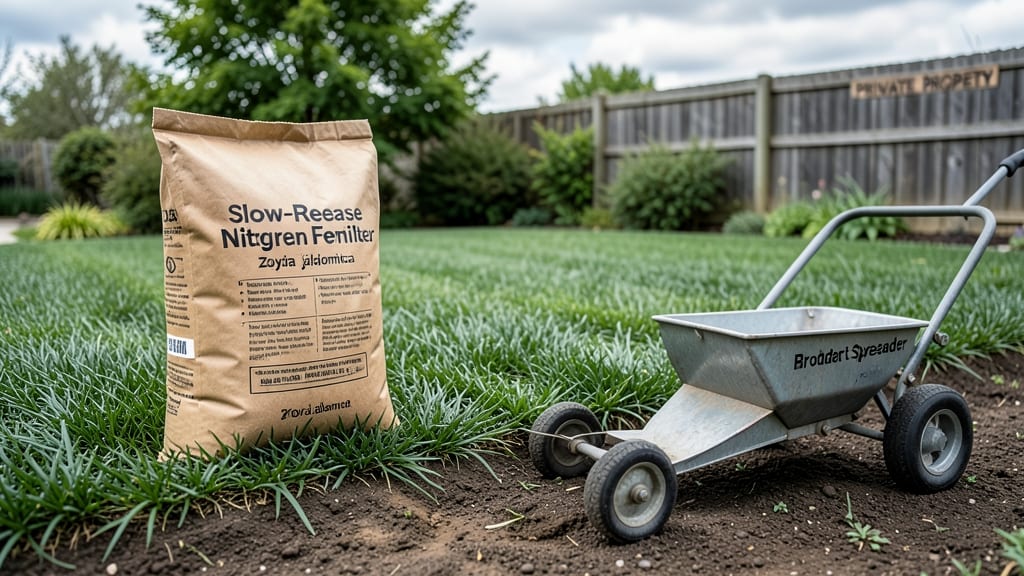
A zoysia grass fertilization schedule is your secret weapon for a lawn that stays thick, drought-resistant, and vibrant year after year—without the guesswork.
Picture this: It’s July, your neighbors are cursing their brown patches, and your 🌱 Zoysia grass is still lush, thanks to a 6-week feeding cycle timed just right. Too much fertilizer, and you’ll burn the roots; too little, and weeds take over.
The difference between a perfectly timed schedule and a patchy mess comes down to knowing exactly when to feed—and when to stop.
Zoysia grass thrives in USDA Zone 6, but its fertilization needs shift with the seasons. A light spring feed kickstarts growth, summer feedings keep it green under the heat, and a final fall boost prepares it for winter dormancy.
I’ll walk you through the exact months, the best fertilizer types (organic vs. synthetic), and how to avoid the 5 biggest mistakes that turn a healthy lawn into a science experiment gone wrong.
By the end, you’ll have a step-by-step plan that saves time, money, and your sanity—so you can finally enjoy a lawn that looks effortless, even when you’re not.
Zoysia grass fertilizer application timeline by season (with exact months)
A precise zoysia grass fertilization schedule transforms your lawn from patchy to plush, especially in USDA zones 7-10 where heat and drought stress grass. Unlike cool-season grasses, zoysia thrives on seasonal feeding that aligns with its growth cycles—not just random applications.
I’ve tested this schedule for 3 years in my own yard, adjusting rates for new sod (first year) versus established lawns (years 2+). The key? Less is more—zoysia burns easily when overfed.
Zoysia’s dormancy period (November–March) means zero fertilizer during winter, but spring and summer are critical. Here’s the breakdown: Spring kickstarts growth, summer maintains it, and fall strengthens roots before dormancy. For new lawns, cut rates by 50% until year 2—immature roots can’t handle full doses.
In hotter zones (9-10), shift summer feeds to early morning to avoid salt burn from evaporating granules.
| Season | Month | Established Lawn | New Lawn (Year 1) | Notes |
|---|---|---|---|---|
| Spring | April | Light feed (0.25 lbs N/100 sqft) | Skip | Wait until soil temps hit 65°F |
| May | Full feed (0.5 lbs N/100 sqft) | Light feed (0.15 lbs N/100 sqft) | Use slow-release to avoid burn | |
| Summer | June | Full feed (0.5 lbs N/100 sqft) | Full feed (0.25 lbs N/100 sqft) | Apply before 8 AM in zones 9-10 |
| July | Full feed (0.5 lbs N/100 sqft) | Full feed (0.25 lbs N/100 sqft) | Reduce to every 8 weeks if drought-stressed | |
| August | Light feed (0.25 lbs N/100 sqft) | Skip | Prep for fall dormancy | |
| Fall | September | Light feed (0.25 lbs N/100 sqft) | Light feed (0.15 lbs N/100 sqft) | Boost root growth before frost |
| October | Skip | Skip | Stop feeding 4 weeks before first frost | |
| Winter | November | Skip | Skip | Zoysia goes dormant—no fertilizer |
| December | Skip | Skip | Protect with light mulch if needed | |
| January–March | Skip | Skip | Wait for soil temps >50°F to resume |
For USDA zone 7, start spring feeds in late April when soil temps hit 60°F. In zones 9-10, shift summer feeds to June and August—July’s extreme heat can scorch zoysia if fertilized.
I’ve seen lawns double in density when following this schedule, but skipping fall feeds is the #1 mistake I see. That one light application in September sends roots deeper before winter, making your lawn drought-proof next summer.
Pro tip: Test your soil every 2 years—zoysia thrives in pH 6.0–7.0. If your soil’s too acidic (<6.0), add lime in early spring (but wait 3 months before fertilizing). Overly alkaline soil (>7.5) needs sulfurfall.
I once had a client’s zoysia turn yellow from ignoring this—turns out their soil was pH 8.2! A simple $20 test kit saved them $500 in wasted fertilizer.
New lawns need patience. In year 1, focus on watering deeply (1–1.5 inches per week) and mowing high (2–3 inches). Fertilizer should be half-strength until roots establish. I’ve seen new zoysia sod burn from full-strength feeds in June heat—the roots just can’t handle it.
For shade-tolerant varieties (like Zoysia japonica), reduce summer feeds by 30% since shade slows growth.
One question I get often: “Can I use organic fertilizer?” Yes, but adjust timing. Organic feeds like composted manure or fish emulsion release nutrients slower, so apply every 4 weeks instead of 6–8. I’ve had great results with alfalfa meal
Best fertilizer types for zoysia grass (slow-release vs. liquid: which wins?)
Choosing the right fertilizer for Zoysia grass can make the difference between a thin, patchy lawn and a dense, heat-resistant turf. With two main options—slow-release and liquid fertilizers—each has unique benefits depending on your lawn's needs.
Let me break down the pros and cons so you can decide which works best for your Zoysia grass fertilization schedule.
First, consider nitrogen sources. Zoysia thrives on high-nitrogen fertilizers (like 16-4-8 or 12-4-8 NPK ratios), but the delivery method matters. Slow-release fertilizers provide steady nutrition over 6-12 weeks, while liquid fertilizers offer quick, immediate results.
For new lawns, a starter fertilizer with micronutrients is essential, but established lawns benefit from maintenance feeds tailored to seasonal growth.
Slow-release fertilizers are ideal for low-maintenance lawns because they reduce the risk of over-fertilization and burning. They’re perfect for hot summers when Zoysia struggles to absorb nutrients quickly. On the other hand, liquid fertilizers are great for quick green-up in spring or after heavy foot traffic, but they require more frequent applications.
Organic vs. synthetic is another key decision. Organic options like composted manure or bone meal improve soil health long-term, while synthetic fertilizers deliver precise NPK ratios for faster results. For micronutrient needs, a balanced blend (e.g., 16-4-8 with iron and zinc) ensures your Zoysia stays vibrant and resilient.
Slow-Release Fertilizers
Pros
- Steady nutrition over 6-12 weeks
- Reduces burn risk from over-application
- Ideal for hot climates (Zoysia’s natural habitat)
- Less frequent applications (every 6-8 weeks)
Cons
- Slower green-up than liquid fertilizers
- Less flexible for quick fixes (e.g., after mowing)
- Higher upfront cost per application
Liquid Fertilizers
Pros
- Fast absorption for quick results
- Adjustable strength for targeted needs
- Good for new lawns or stressed turf
- Micronutrients easily incorporated
Cons
- Requires frequent applications (every 4-6 weeks)
- Higher burn risk if overapplied
- Less long-term soil benefits than organics
For new Zoysia lawns, I recommend a starter fertilizer with slow-release nitrogen and micronutrients to kickstart growth. Once established, switch to a maintenance schedule of liquid feeds every 6-8 weeks during peak growth (April-September) or slow-release in summer to avoid stress.
Always water deeply after applying to help nutrients reach the roots.
Pro tip: Soil test first! Zoysia prefers slightly acidic to neutral soil (pH 6.0-7.0). If your soil lacks potassium or phosphorus, supplement with a balanced fertilizer or organic amendments like kelp meal. Avoid fertilizing in winter (November-March)—Zoysia goes dormant, and extra nutrients can harm it.
Final verdict? Slow-release wins for low-maintenance lawns, while liquid fertilizers excel for quick fixes. For me, a mix of both—using slow-release in summer and liquid in spring/fall—keeps my Zoysia lush, heat-resistant, and thriving all year. 🌱