
Lawn
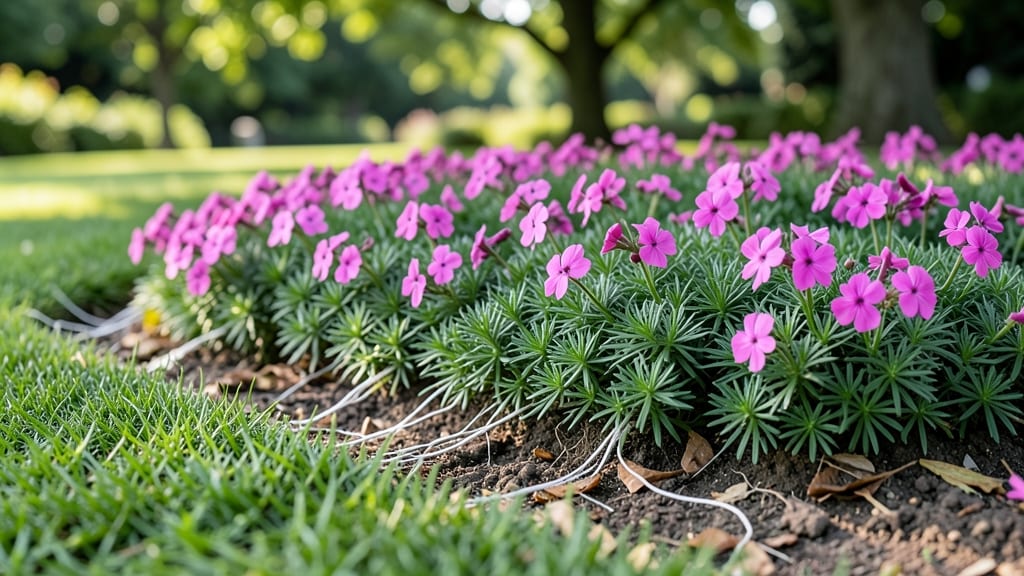
Will creeping phlox take over grass? No—it won’t invade lawns but thrives aggressively in garden beds, creating dense mats that can crowd out smaller plants. Strategic spacing and regular pruning keep its growth in check while protecting your grass.
Creeping phlox spreads through underground runners, but its growth habit differs from invasive grasses like Bermuda. 🌱 In lawns, its shallow roots struggle to penetrate dense turf, while in garden beds, it can form thick ground cover that may overshadow delicate perennials.
The key is planting it in designated areas with 12-18 inches of spacing—this prevents unwanted spread while letting it thrive where you want it.
For existing plantings, I recommend cutting back foliage by one-third in early spring and again after blooming to redirect energy into controlled growth. Mulching with 2-3 inches of organic material suppresses runners while improving soil health—just avoid piling mulch directly against stems.
This approach keeps creeping phlox manageable without harming nearby grass.
💡 In This Article
- How Creeping Phlox Spreads and Its Impact on Landscapes
- Controlling Creeping Phlox Growth Without Harming Grass
How creeping phlox spreads and its impact on landscapes
Creeping phlox spreads primarily through rhizomes—horizontal underground stems that produce new shoots at nodes. Unlike aggressive grasses that spread via stolons or dense root systems, phlox rhizomes grow 3-6 inches per year, creating a dense mat over time.
This slow but steady expansion explains why it thrives in garden beds but rarely invades lawns, where competition from grass roots limits its spread. 🌱
The plant’s shallow root system (typically 6-12 inches deep) means it struggles to penetrate compacted or heavily trafficked lawns. Instead, it flourishes in well-draining, slightly acidic soil (pH 6.0-7.0) with partial shade to full sun.
In ideal conditions, a single plant can expand 12-18 inches in diameter annually, forming thick carpets that block sunlight from weaker ground covers like ajuga or lamium.
Creeping phlox’s competitive advantage lies in its early spring growth—it sends up foliage before many perennials, capturing sunlight and nutrients. This timing, combined with its succulent stems (which store water), allows it to outcompete slower-growing plants.
In contrast, grass roots, which extend 4-6 inches deep, create a physical barrier that phlox rhizomes rarely breach.
Visual cues like purple-tinged stems and dense foliage signal aggressive spread. If left unchecked in garden beds, phlox can double its coverage in 3-5 years, smothering annuals or bulbs.
However, its non-invasive nature in lawns stems from the lack of rhizome penetration—grass’s dense root network simply doesn’t provide the space phlox needs to establish.
Soil moisture also plays a role: phlox prefers consistently moist but not soggy conditions. In dry climates, its spread slows dramatically, while in humid regions, it can expand up to 24 inches per year if unmanaged.
This variability explains why some gardeners see rapid growth while others report minimal spread—local climate and soil conditions are critical factors.
For example, in Zone 5 gardens, phlox may spread 10-12 inches annually, while in Zone 7, it can reach 18-24 inches under ideal moisture.
This regional difference highlights why spacing and pruning are essential for control—a 12-inch planting gap in Zone 5 might become 6 inches in Zone 7 after 2 years.
Understanding these mechanics helps gardeners strategically place phlox—near patios or walkways where its spread is less noticeable, or in contained beds with edging barriers to prevent rhizome migration. The key takeaway? Phlox won’t "take over" grass, but its targeted aggressiveness in garden beds demands proactive management. ✨