
Lawn
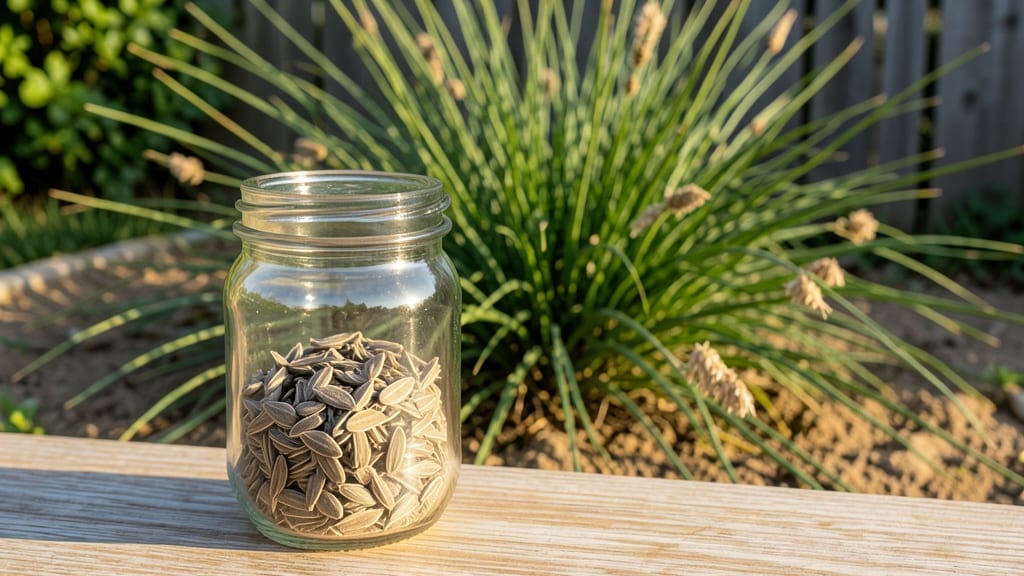
Bermuda grass seed looks like tiny, light brown to tan grains about the size of a pinhead, with a hard shell and three faint ridges when examined closely. These seeds often stick together in small clusters after being harvested.
Bermuda grass seeds are so small they can easily be mistaken for dust or specks of dirt, but their distinct ridges and slightly rough texture set them apart from other grass seeds. 🌱 The color varies from pale tan to golden brown depending on sunlight exposure, and they feel surprisingly heavy for their size when held in your hand.
Unlike many grass seeds that spread out evenly, Bermuda seeds tend to form tight clusters—this clumping behavior helps identify them when mixed with other seed types.
What makes these seeds particularly interesting is how their appearance changes with moisture. When dry, they look almost papery, but once dampened, they become slightly more pliable and darker in hue.
This trait is useful for gardeners who need to distinguish them from similar warm-season grasses like zoysia or bahia, which typically have smoother surfaces and different color tones.
💡 In This Article
- Identifying Bermuda Grass Seed: Key Visual and Textural Traits
- How to Tell Bermuda Grass Seed Apart From Other Warm-Season Grasses
Identifying Bermuda grass seed: key visual and textural traits
Bermuda grass seeds measure between 0.08 to 0.12 inches in length—about the diameter of a standard sewing pin. Under magnification, you'll notice their most distinctive feature: three faint longitudinal ridges running parallel along each seed's length.
These ridges create a subtle "grooved" appearance that sets them apart from smoother grass seeds like fescue or ryegrass. The ridges aren't just decorative; they help the seed absorb moisture more efficiently during germination, which explains why Bermuda grass establishes so aggressively in warm climates.
The color spectrum ranges from pale tan to golden brown, but seeds exposed to direct sunlight develop a deeper amber hue due to increased melanin production—a natural protective mechanism against UV damage.
When held between your fingers, Bermuda seeds feel surprisingly dense for their size, with a slightly gritty texture that's more pronounced than the silky smoothness of centipede grass seeds.
This density comes from their hard outer seed coat, which protects the embryo during dormancy and requires scarification or stratification to break before germination can occur.
Moisture dramatically alters their appearance: dry seeds look almost papery and brittle, while damp seeds soften slightly and darken to a chocolate-brown color.
This color shift happens because water activates enzymes that break down pigments in the seed coat. 🌱 What's fascinating is how these seeds clump together—unlike many grass seeds that disperse evenly, Bermuda seeds form tight clusters due to electrostatic forces between their ridged surfaces.
This clumping behavior is your first visual clue when distinguishing them from other warm-season grasses.
Here's what to look for under a magnifying glass or microscope:
- Seed shape: Oval with slightly tapered ends, never perfectly round
- Surface texture: Rough with visible micro-ridges (feels like fine sandpaper)
- Color variation: Pale tan when shaded, golden amber when sun-exposed
- Clumping pattern: Forms irregular clusters with visible seed-to-seed contact points
The ridges aren't uniform—they often appear more pronounced at the seed's midpoint and fade toward the tapered ends. This irregularity helps distinguish Bermuda seeds from bahia grass seeds, which have more uniform, less pronounced ridges. The seed's hardness also serves a functional purpose: it prevents premature germination during dry periods, ensuring the seed remains viable until conditions are optimal for sprouting.
When comparing Bermuda seeds to other warm-season grasses, pay attention to these key differences:
- Size comparison: Bermuda seeds are 20-30% smaller than zoysia seeds
- Texture contrast: Zoysia seeds feel smoother, while Bermuda has that gritty ridge texture
- Clumping behavior: Centipede seeds rarely clump, preferring even distribution
Pro tip: If you're working with fresh seed samples, try the "water float test"—Bermuda seeds will sink immediately due to their density, while many weed seeds or lighter grass seeds will float. This simple test can quickly separate Bermuda from contaminants in your seed mix. 💫