
Lawn
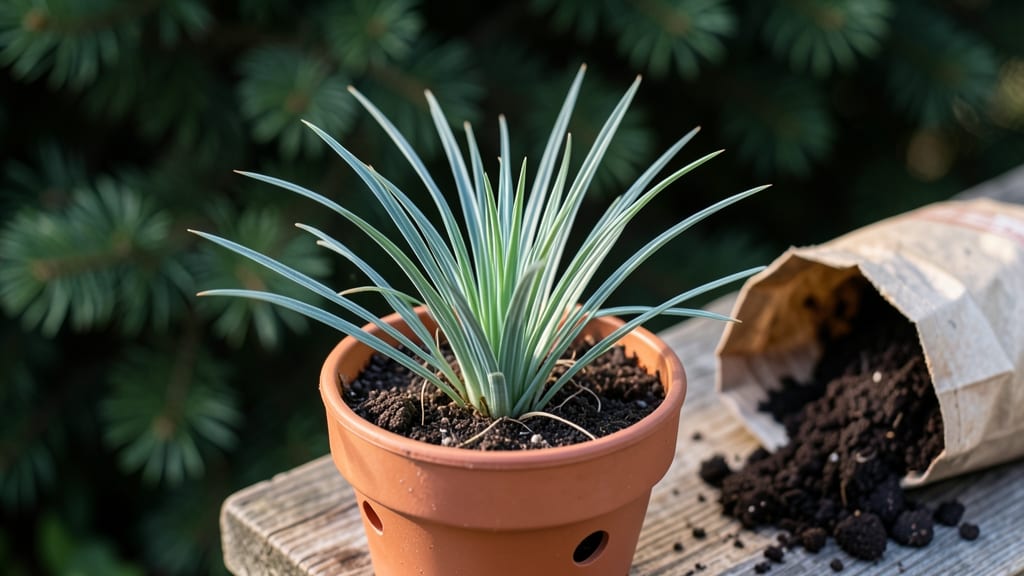
Pampas grass seedlings look like delicate, bright green shoots about 1-3 inches tall with thin, grass-like blades that grow in tight clusters from the soil. These early sprouts appear wispy and fine before developing into broader foliage.
When you spot these seedlings, you'll notice their blades are much narrower than mature pampas grass, resembling fine, thread-like strands. 🌱 Unlike other ornamental grasses that spread wider immediately, pampas seedlings stay compact in their early stages, making them easier to distinguish from weeds or other grass types.
The bright green color helps them stand out against darker soil, especially when they emerge in groups.
What's interesting is how their growth pattern changes as they mature. Initially, they look almost like miniature versions of their adult form, but with a more delicate structure. This early growth phase is crucial for identifying them correctly before they develop their signature fluffy plumes.
Proper care during this stage—like keeping the soil moist but not soggy—helps them transition smoothly into their iconic appearance.
💡 In This Article
- Identifying Pampas Grass Seedlings vs Other Grass Types
- Caring for Young Pampas Grass: Early Growth Tips
Identifying pampas grass seedlings vs other grass types
Pampas grass seedlings have a distinct early-stage appearance that sets them apart from other ornamental grasses. Their blades are typically 0.1-0.2 inches wide and grow in tight, vertical clusters rather than spreading outward like many ornamental grasses.
This compact growth pattern helps differentiate them from species like fountain grass, which often displays a more fanned-out habit from the beginning. 🌱 The seedlings' bright green color also helps them stand out against darker soil or mulch, making them easier to spot during their first few weeks.
One key visual clue is the seedlings' parallel venation, where the thin, grass-like blades show faint lines running lengthwise. This feature resembles bamboo shoots but lacks the segmented, jointed appearance of true bamboo.
Another distinguishing trait is how the seedlings emerge—often in groups of 3-5 sprouts from a single seed pod, creating a dense tuft. Unlike many weeds or wild grasses that grow singly, this clustered emergence is a hallmark of young pampas grass. 💚
The texture of pampas grass seedlings is another important identifier. Their blades feel smooth yet slightly leathery to the touch, with a subtle waxy coating that helps conserve moisture. This contrasts with softer, more delicate grasses like maiden grass, whose seedlings have a finer, almost silky texture.
The seedlings' growth rate is also slower initially, with blades extending only about 0.5-1 inch per week under ideal conditions, which helps distinguish them from fast-spreading grasses that might appear more aggressive.
Color variation can also aid identification. While most pampas grass seedlings are bright green, some varieties may show slight purplish or bluish tinges in cooler temperatures. This subtle color shift is more pronounced in seedlings than in mature plants.
When comparing to other grasses, note that pampas seedlings lack the hair-like extensions found on some ornamental grasses or the serrated edges common in wild grasses like foxtail. These differences become more apparent when examining the seedlings under natural light.
For gardeners, understanding these visual distinctions is crucial because misidentifying pampas grass seedlings could lead to improper care. For example, treating them like aggressive weeds by pulling them too early might damage the delicate root systems.
The seedlings' compact growth also makes them less likely to be confused with spreading grasses like Bermuda grass, which develops a dense, low-growing mat from the start. 🌿
Consider these key visual traits when identifying pampas grass seedlings:
- Blade width: 0.1-0.2 inches (narrower than most ornamental grasses)
- Growth pattern: Tight vertical clusters (not fanned out)
- Venation: Parallel lines (no segmented joints)
- Emergence: Often in groups of 3-5 sprouts
- Texture: Smooth with subtle waxy coating