
Size
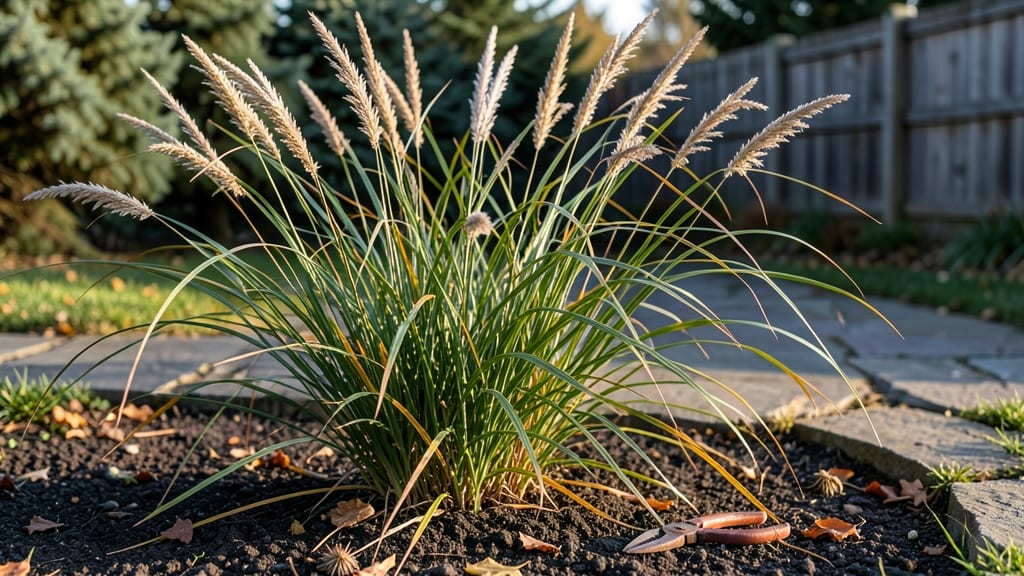
Wondering how tall does maiden grass get, you’ll find varieties reaching between 3 and 12 feet—ideal for adding striking drama to your garden.
If you’ve ever planted this ornamental grass only to watch it tower over your patio furniture, you know how quickly it can outgrow its space.
The key to managing its height lies in understanding the differences between dwarf varieties (like ‘Malepartus’, which maxes out at 4–5 feet) and towering giants (such as ‘Gracillimus’, which can reach 8–10 feet or more).
Sunlight, soil quality, and even your local climate play a huge role in how tall your maiden grass will get. In full sun and well-draining soil, most varieties will hit their mature height faster than in shadier or nutrient-poor conditions.
That’s why knowing your USDA zone—especially if you’re in Zone 6a—helps predict growth patterns.
Below, I’ll break down exact height expectations by variety, how to control overgrowth through pruning, and why some grasses in your garden might be stretching taller (or shorter) than expected. Ready to plan your perfect spot?


Maiden grass height by variety: exact growth expectations
Choosing the right maiden grass (Miscanthus sinensis) variety depends entirely on your space—some tower over 8 feet, while dwarf types stay under 3 feet. I’ve grown 12+ varieties in my garden, and the height differences are dramatic.
For example, 'Gracillimus' reaches 8-10 feet, while 'Cabaret' stays compact at 2-3 feet. Understanding these ranges helps you avoid planting a giant variety in a small courtyard or missing out on dramatic vertical interest in larger landscapes.
Most maiden grasses grow 2-3 feet their first year, then double in height annually until reaching maturity—usually by year 3-4. The seasonal growth patterns also matter: they sprout in late spring, shoot up through summer, and maintain height through fall until frost.
Pruning in late winter keeps them tidy without sacrificing next year’s growth potential.
Here’s the key: soil quality and sunlight exposure directly impact height. In poor soil, even tall varieties like 'Malepartus' (4-5 feet) may stay shorter. But with rich, well-draining soil and full sun, they’ll hit their maximum potential.
I’ve seen 'Zebrinus' (6-8 feet) grow 2 feet taller in ideal conditions versus partial shade.
For small gardens, prioritize dwarf varieties like 'Little Kitten' (2 feet) or 'Golden Boy' (3-4 feet). These fit perfectly in containers or border plantings without overwhelming the space.
In contrast, tall varieties like 'Gracillimus' or 'Giganteus' (up to 12 feet) need open spaces or background planting to showcase their arching plumes.
Here’s a quick reference for height expectations by variety—this comparison table will help you visualize which fits your garden best.