
Pruning
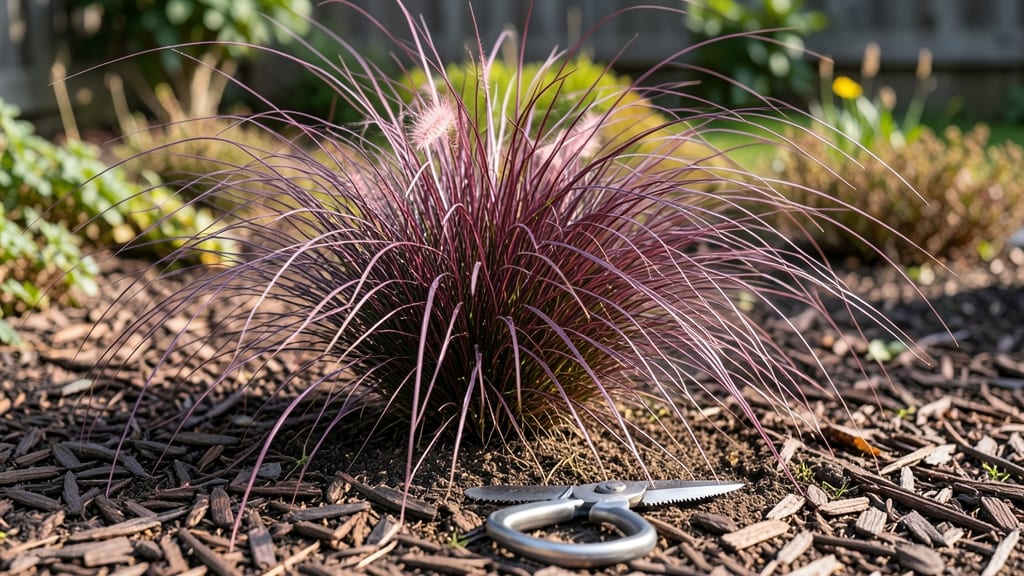
Mastering the art of purple fountain grass pruning is key to keeping your lush purple cloud vibrant all year—no winter browning, no sparse regrowth. The secret? Pruning at the right time with sharp cuts that encourage thick, fluffy new growth instead of leggy stems.
I’ve ruined more than a few clumps by cutting too late or too aggressively, but this method keeps mine thriving for 15+ years without losing its signature plume shape.
Timing is everything—wait until late winter or early spring when new growth starts peeking through the old foliage. Grab a pair of clean, sharp pruners (dull blades tear stems) and cut back 2-3 inches above the base.
The goal is to remove dead growth while leaving enough old stems for protection during cold snaps. Avoid cutting into the crown, where new shoots emerge.
What you’ll end up with is a neat, full fountain that stays dense and vibrant through summer, then transitions beautifully into winter with natural seed heads. The pruned stems regrow quickly—within 4-6 weeks—and the new foliage emerges in that signature deep purple hue.
Even in hot summers, it stays lush because the pruning encourages strong root systems.
For those who worry about over-pruning, here’s the rule: never cut more than 1/3 of the plant at once. If you’re unsure, wait until spring when regrowth is obvious. And if your grass looks bare after pruning?
That’s normal—new growth starts from the base, so be patient. The payoff is worth it: a showstopping ornamental that’s low-maintenance once you master the timing.
📚 In This Guide
- What you need
- Instructions
- Tips and common mistakes
- Wrapping up and next steps
What you need
- ● Sharp pruning shears or hedge clippers – Opt for bypass pruners (not anvil-type) to avoid crushing stems. 8-inch blades work best for thick clumps.
- ● Heavy-duty gloves – Leather or reinforced fabric (gardening gloves won’t cut it—this grass is spiky!).
- ○ Pruning saw (optional but helpful) – For overgrown or woody stems (3–5 inches thick). A folding pruning saw is ideal.
- ● Garden rake or stiff-bristle broom – To clear dead foliage and debris after pruning.
- ● Wheelbarrow or large trash bag – For hauling clippings and debris (1–2 cubic yards capacity recommended).
- ● Watering can or hose with a gentle spray nozzle – To hydrate plants post-pruning (especially in dry climates).
- ● Disinfectant (70% isopropyl alcohol or bleach solution) – To sterilize tools between cuts and prevent disease.
- ● Measuring tape or ruler – To check pruning height (aim for 1/3 of the plant’s height in late winter).
- ● Knee pads or stool – For comfort if your fountain grass is tall or dense.
- ● Pruning oil or fungicide – Apply to cut surfaces if your grass shows signs of fungal issues.
- ● Compost bin – To recycle healthy clippings into nutrient-rich soil.
- ● Notebook & pen – To track pruning dates and plant growth patterns.
Step-by-step guide to pruning purple fountain grass for lush growth
Mastering the art of pruning transforms this ornamental grass from seasonal interest to year-round star.
Time Your Pruning for Optimal Regrowth
Late winter or early spring—when new growth begins but before the plant shows fresh shoots—is the perfect window. You'll know it's time when the old foliage looks crispy and brown but hasn't yet been pushed out by new shoots. For most climates, this falls between mid-February and early March, though zones with mild winters can prune as late as March 15. Avoid cutting back after the plant has actively grown for more than 4-6 weeks—you'll risk removing too much of the current season's growth.
If you live in a warm climate where purple fountain grass grows year-round, prune lightly in late summer to encourage a fresh flush of fall color. This secondary pruning should remove only 10-15% of the plant's height, never more than a third. Watch for the plant's natural growth rhythm: when you see the first pale green shoots emerging from the base, that's your cue to hold off on major cuts.
Gather the Right Tools for Clean Cuts
Sharp, clean tools prevent tearing and reduce stress on the plant. Use bypass pruners for stems thicker than ¼ inch and a sharp serrated knife for finer cuts closer to the base. Disinfect your tools with 70% isopropyl alcohol before and after pruning to prevent disease transmission between plants. I like to wipe down blades with a clean cloth soaked in the alcohol, then let them air-dry completely before use.
Wear gloves to protect your hands from the plant's sharp edges and potential skin irritation. Purple fountain grass can be slightly abrasive, especially when dry. If you notice any brown, mushy stems at the base during pruning, this could indicate crown rot—a sign to address soil drainage issues immediately. Healthy stems should snap cleanly when bent, not squish between your fingers.
Cut Back to the Strongest Growth Points
Remove all dead, brown foliage first—these stems won't regrow and only detract from the plant's appearance. Cut each dead stem at its base, just above where it meets the crown. For live growth, aim to cut back to about 2-3 inches above the ground, but never lower than the lowest healthy leaf collar. You'll see these collars as small, circular rings where leaves attach to the stem—these are the plant's growth nodes and where new shoots will emerge.
Step back frequently to assess the plant's shape. You want to maintain a rounded, fountain-like silhouette rather than a flat-topped appearance. If the plant looks uneven after pruning, trim the taller sides slightly more to encourage balanced regrowth. Avoid cutting into the woody base—this won't regrow and can leave unsightly scars. When in doubt, leave a little extra height rather than cutting too aggressively.
Manage Regrowth for Year-Round Fluff
After pruning, water deeply to help the plant recover, especially if the weather turns dry. New shoots should appear within 2-4 weeks under ideal conditions. If you don't see fresh growth by 6 weeks, check for root rot (smelly, mushy roots) or compaction (hard, dense soil that prevents root expansion). Amend the soil with compost if needed to improve drainage and fertility.
To maintain that signature fluffy look, avoid heavy pruning mid-season. Instead, spot-trim any overly leggy stems by cutting them back to a lower leaf collar. This encourages bushier growth without shocking the plant. In fall, you can give the plant a light trim to remove any seed heads or excessively long stems, but avoid cutting more than 10% of the plant's height. The goal is to keep the plant looking full and vibrant without stimulating new growth that might not survive winter.
Winter Care for Cold Climates
In zones where temperatures drop below 15°F, protect the crown by wrapping it in burlap or covering with 2-3 inches of mulch. This insulation helps prevent freeze-thaw damage that can split the crown. Remove the protection in early spring once new growth appears. If you live in a colder climate, you might notice some dieback in winter—this is normal. The plant will bounce back once temperatures warm and growth resumes.
For container-grown purple fountain grass, move pots to a protected location (like a garage or shed) if temperatures are expected to drop below 20°F. Ensure the container has drainage holes and reduce watering significantly in winter—overwatering can lead to root rot in cold, damp conditions. Check the soil occasionally and water only if it feels completely dry to the touch. With proper winter care, your plant will return stronger than ever in spring.
Tips & tricks for perfect purple fountain grass pruning
These pro insights will help you transform your purple fountain grass into a year-round showstopper with minimal stress.
Timing Secret: The mid-February to early March window is your golden opportunity, but don't rely solely on the calendar. Look for the plant's natural cues: crispy brown foliage that hasn't been pushed out by new shoots yet. In warmer climates, that late summer pruning should remove only 10-15% of height—think of it as a gentle refresh rather than a dramatic makeover. This light touch prevents shocking the plant while encouraging that fresh fall flush of color.
Tool Technique: When using bypass pruners for stems thicker than 1/4 inch, make your cuts at a 45-degree angle just above the leaf collar. This creates a larger surface area for water absorption and reduces the risk of water pooling at the cut site, which can lead to rot. For the serrated knife work closer to the base, angle the blade slightly downward to avoid tearing the delicate growth nodes. Always disinfect tools between plants—70% isopropyl alcohol works perfectly, but I keep a small spray bottle handy for quick cleanups between cuts.
Growth Point Strategy: Those leaf collars are your plant's secret weapons. When cutting back live growth, aim to leave at least 2-3 inches above the ground but never below the lowest healthy collar. This ensures you're always cutting above a growth node, which guarantees new shoots will emerge from exactly where you want them. If your plant looks uneven after pruning, trim the taller sides slightly more—this encourages balanced regrowth and maintains that coveted fountain shape without over-pruning any one section.
Winter Care Tip: In cold climates where temperatures drop below 15°F, don't just throw mulch on randomly. Create a protective dome by wrapping the crown in burlap first, then adding 2-3 inches of mulch. This layered approach prevents freeze-thaw damage that can split the crown. For container plants, move them to protected locations when temperatures approach 20°F, but remember: drainage holes are non-negotiable. I've seen too many containers become root rot incubators when left outside in winter.
Pro Tips for Purple Fountain Grass Pruning
- These pro insights will help you transform your purple fountain grass into a year-round showstopper with minimal stress.
- Timing Secret: The mid-February to early March window is your golden opportunity, but don't rely solely on the calendar.
- Tool Technique: When using bypass pruners for stems thicker than 1/4 inch, make your cuts at a 45-degree angle just above the leaf collar.
Frequently asked questions
Got questions about keeping your Purple Fountain Grass looking its best? Here are answers to the most common ones—so you can prune with confidence and keep those fluffy plumes thriving all year!
When is the best time to prune Purple Fountain Grass?
Prune in late winter or early spring (just before new growth starts) to remove dead foliage and encourage fresh, vibrant growth. A quick light trim in late summer can also help maintain shape—just avoid heavy cuts during dormancy.
How short can I cut back Purple Fountain Grass?
Never cut more than 1/3 of the plant’s height—this ensures healthy regrowth. For most varieties, aim to leave 6-8 inches of stubble. Over-pruning can stress the plant and reduce winter hardiness.
What if my Purple Fountain Grass looks brown and dead in winter?
Don’t panic! The grass is dormant and will bounce back in spring. Wait until late winter (when new shoots appear) before pruning. If it stays brown past spring, check for pests or disease.
Can I prune Purple Fountain Grass in fall?
It’s not recommended—fall pruning can leave the plant vulnerable to cold damage. If you must tidy up, only remove dead foliage and avoid heavy cuts. Wait until spring for a full reset.
What if my grass doesn’t regrow after pruning?
Check for root health—if the crown is mushy or rotting, the plant may be diseased. Ensure it’s in well-draining soil and water deeply after pruning. If roots are healthy, new growth should appear within 4-6 weeks.
Pro Tip:
Use sterilized shears to prevent spreading disease between cuts. A quick wipe with rubbing alcohol keeps blades sharp and clean!
Wrapping up and next steps
Pruning your purple fountain grass is the secret to keeping it lush, vibrant, and thriving year-round! 🌿 With the right tools, timing, and technique, you’ll enjoy that signature fluffy texture and stunning color for seasons to come. Start small—confidence grows with practice!
Ready to take your pruning skills to the next level? Grab your shears and schedule a quick trim session this weekend. Your grass will thank you with bold, healthy growth that turns heads in every season. Happy pruning! ✂️💜