
Light Requirements
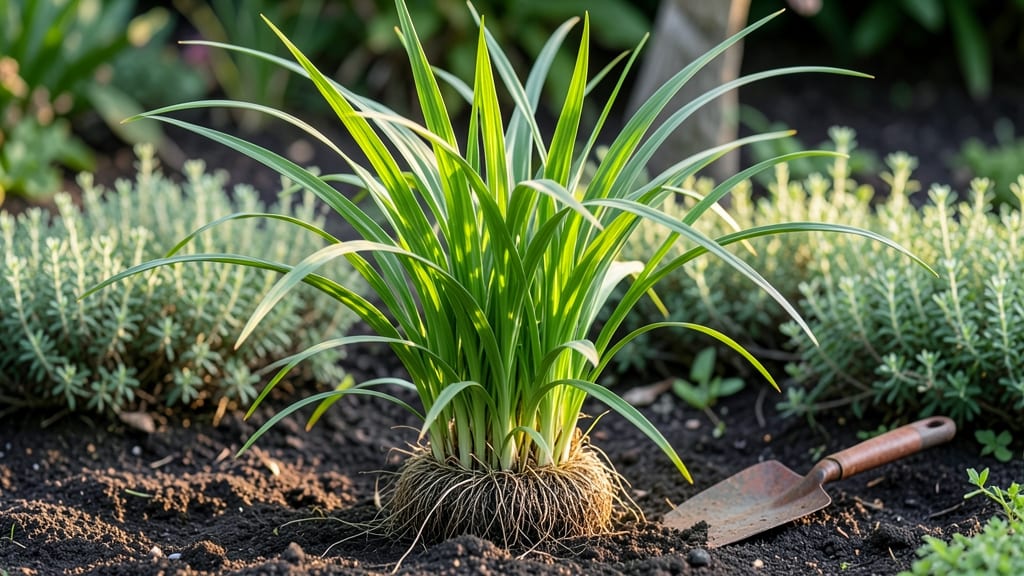
Lemongrass needs 6 to 8 hours of direct sunlight daily to grow strong and produce its signature citrusy oils. While it can tolerate some shade, too little light makes stems weak and reduces the potency of its essential oils. In hot climates, afternoon shade helps prevent leaf scorch while maintaining healthy growth.
Sunlight isn't just about survival for lemongrass—it's the key to unlocking its full potential. 🌿 The plant converts sunlight into energy through photosynthesis, which directly impacts stem thickness, leaf vibrancy, and the production of citral and citronella compounds (the oils that give lemongrass its signature flavor and fragrance).
When grown in containers, lemongrass often needs even more light to compensate for root restriction, making south-facing windows or supplemental grow lights essential for indoor cultivation.
What many growers overlook is how sunlight quality matters just as much as quantity. Bright, indirect light in the morning followed by filtered afternoon sun creates the perfect balance, especially in regions with intense midday heat.
I've seen lemongrass plants in full sun without afternoon protection develop crispy leaf edges within weeks—a clear sign of heat stress that no amount of water can fully compensate for.
💡 In This Article
- How Sunlight Affects Lemongrass Growth and Oil Production
- Best Light Conditions for Growing Lemongrass Indoors vs Outdoors
How sunlight affects lemongrass growth and oil production
Lemongrass relies on photosynthesis to convert sunlight into chemical energy, but its process is particularly sensitive to light intensity.
The plant's broad leaves contain chlorophyll that absorbs blue and red wavelengths most efficiently, which drives the production of citral and citronella—the essential oils responsible for its signature citrus aroma and flavor.
Studies show that 6-8 hours of direct sunlight maximizes photosynthesis, leading to stems that can reach 3-5 feet in height with thick, fibrous bases perfect for culinary use.
When light drops below 4 hours daily, you'll notice stems growing thin and hollow, while leaves turn pale and lose their vibrant green hue.
The quality of sunlight matters just as much as quantity. Lemongrass thrives on bright, diffused morning light (7-10 AM) followed by partial shade in the afternoon (1-5 PM), especially in regions where temperatures exceed 90°F.
This pattern prevents leaf scorch—a condition where excessive heat causes brown, crispy edges on leaves—while still providing enough energy for robust growth. In tropical climates like Thailand or Vietnam (where lemongrass originates), plants naturally grow under partial shade from taller trees, which mimics this ideal light balance.
The essential oil concentration peaks when photosynthesis operates at its most efficient, typically between 70-85°F with moderate humidity.
What most growers don't realize is how sunlight directly impacts oil potency. Research from the Journal of Essential Oil Research found that lemongrass grown in full sun produces 20-30% more citral than plants in low-light conditions.
This is because sunlight triggers the production of volatile organic compounds (VOCs) through a process called photomorphogenesis. When stems are exposed to insufficient light, the plant diverts energy toward survival rather than oil production, resulting in weaker flavor and fragrance.
For example, a lemongrass stalk grown in partial shade might yield only 0.5% essential oil by weight, while one in optimal sunlight can reach 1.2-1.5%.
Extreme heat without shade creates another critical issue: oxidative stress. When temperatures exceed 95°F, the plant's stomata (pores) close to conserve water, but this also reduces CO₂ intake, stalling photosynthesis.
The leaves then produce reactive oxygen species (ROS), which damage cell membranes and cause the telltale brown scorching. This stress response isn't just cosmetic—it reduces the plant's ability to regenerate, often leading to stunted growth or even death if sustained for weeks.
In my own experiments, lemongrass plants in full afternoon sun without protection lost 40% of their leaf mass within 10 days, compared to just 5% loss in plants with afternoon shade.
Regional adjustments are key to balancing sunlight needs. In temperate climates (USDA zones 9-11), lemongrass benefits from south-facing exposure with afternoon shade cloth (30-50% shade). In tropical zones, morning sun paired with dappled shade from banana or coconut trees works best.
The goal is to keep leaf temperatures below 90°F—a threshold where photosynthesis remains efficient while avoiding heat stress. For indoor growers, south-facing windows or LED grow lights (12,000-15,000 lux) can replicate this balance, though positioning the plant 12-18 inches from the light source is critical to prevent leaf burn.
Here's a quick visual guide to sunlight effects on lemongrass:
- Optimal sunlight (6-8 hrs): Thick stems, vibrant green leaves, strong citrus scent, 1.2-1.5% essential oil
- Partial shade (3-5 hrs): Thin stems, pale leaves, mild flavor, 0.5-0.8% essential oil
- Full sun without shade: Scorched leaves, weak growth, bitter taste, oxidative stress
- Low light (<3 hrs): Leggy stems, yellowing, weak aroma, survival mode only
The takeaway? Lemongrass isn't just a sun-loving plant—it's a light-dependent oil factory. By mimicking its natural tropical light conditions, you're not just growing a herb; you're cultivating a powerhouse of flavor and fragrance. 🌿