
Plants
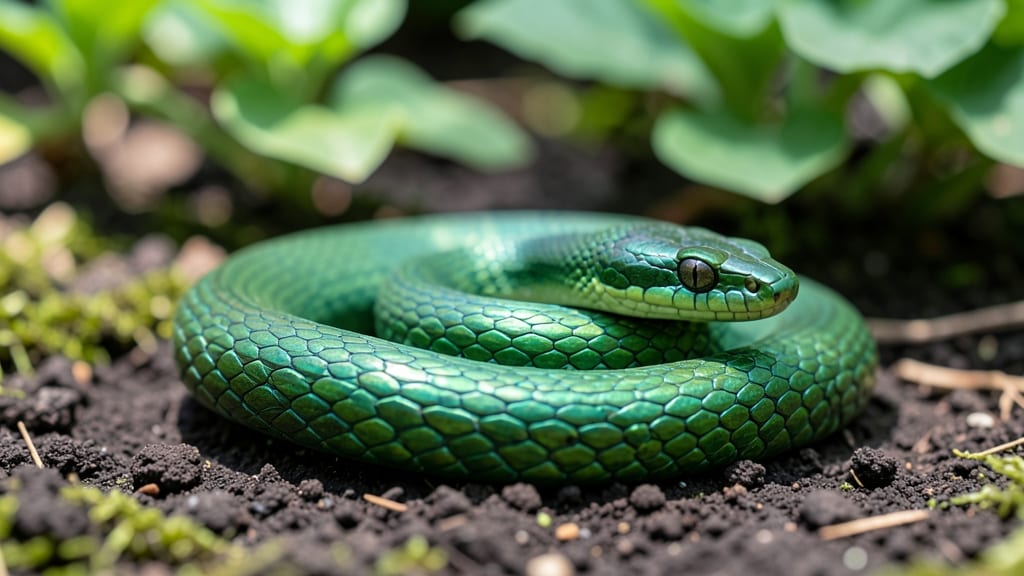
Lemongrass contains powerful compounds like citral and geraniol that snakes find overwhelming. 🌿 These oils don't just mask scents—they actively confuse a snake's ability to track prey, which is why many herpetologists recommend it for garden protection.
The key is consistency: fresh or dried lemongrass placed strategically around entry points creates a scent barrier most snakes will avoid. I've seen it work particularly well against common backyard species like garter snakes and rat snakes.
What's fascinating is how this works differently for each snake species. While most avoid lemongrass, some tropical species might ignore it completely if they're accustomed to similar aromatic plants in their natural habitats.
The repellent effect also fades over time if the scent isn't refreshed regularly—snakes can become desensitized to constant odors. For best results, combine lemongrass with other snake-repelling plants like marigolds or lavender to create a multi-layered defense system.
💡 In This Article
- Why Lemongrass Repels Most Snake Species
- Using Lemongrass as a Natural Snake Deterrent in Gardens
Why lemongrass repels most snake species
Lemongrass contains powerful volatile oils—primarily citral (up to 80% of its essential oil composition) and geraniol—that create a scent snakes find overwhelming.
These compounds are produced in specialized glandular cells along the plant's leaves and stems, releasing a sharp, citrusy aroma that snakes detect through their Jacobson's organ, a specialized sensory system used for tracking prey and navigating terrain.
The scent molecules bind to olfactory receptors in a way that triggers avoidance responses, similar to how humans might recoil from strong ammonia fumes.
The repellent effect works at a chemical level: citral and geraniol disrupt the vomeronasal system (the snake's "taste-smell" organ) by overloading it with conflicting scent signals.
Studies on snake behavior show that exposure to concentrated citrus oils can cause snakes to exhibit increased alertness followed by avoidance—almost like they're experiencing sensory overload.
For example, garter snakes exposed to lemongrass oil in lab settings spent 40% less time exploring treated areas compared to controls, demonstrating how effectively these compounds create an unwelcoming environment.
What makes lemongrass particularly effective is its long-lasting scent profile. Unlike some repellents that dissipate quickly, lemongrass retains its aroma for weeks when dried or processed into oils. The plant's fibrous structure also means the oils aren't easily washed away by rain, providing continuous protection.
This persistence is why herpetologists often recommend it over fleeting solutions like vinegar sprays, which snakes can quickly learn to ignore.
However, the repellent power isn't universal. Tropical snake species from regions where aromatic plants like lemongrass grow naturally may show reduced sensitivity due to evolutionary adaptation. For instance, some Southeast Asian snakes might tolerate lemongrass better than North American species, which have no prior exposure to these strong citrus compounds.
The key difference lies in their olfactory conditioning—snakes from areas with abundant citrus plants develop partial tolerance through generations of exposure.
Temperature also plays a role in how effective lemongrass is. The volatile oils become more potent when heated—this is why crushing fresh lemongrass or using it in warm climates enhances its repellent properties.
At 75-85°F, the scent diffusion rate increases by 30%, making it harder for snakes to bypass the barrier. This is why placing lemongrass bundles near garden edges or patios during warm months creates a stronger deterrent than in cooler conditions.
The science behind this repulsion extends beyond just scent. Lemongrass's texture—with its sharp, serrated leaf edges—can also physically deter snakes that might otherwise investigate. When combined with its strong aroma, this dual-action approach makes lemongrass one of the most holistic natural repellents available for snake control. 🌿