
Advice
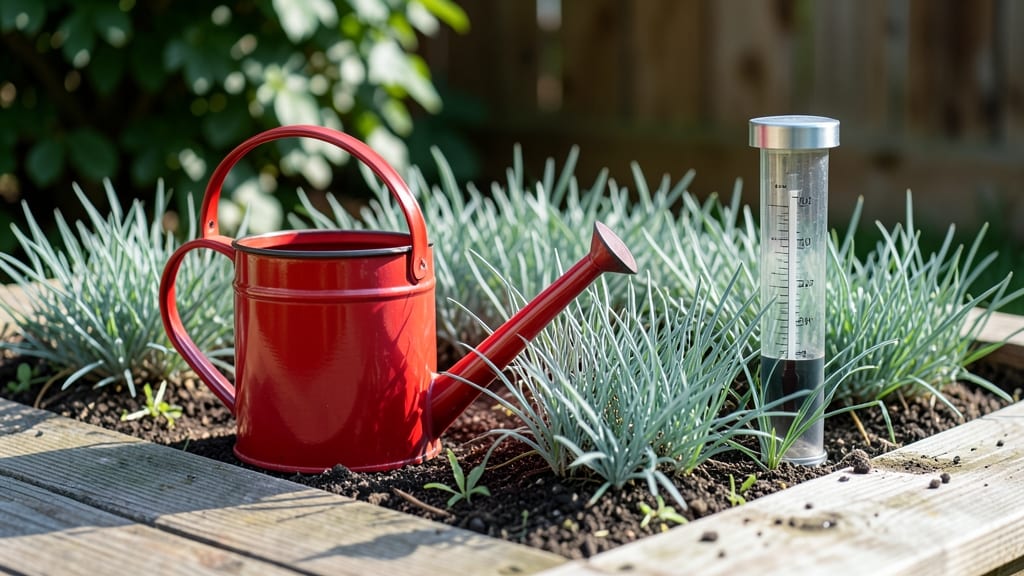
New grass seed needs just enough moisture to wake up—not a soggy swamp that drowns it. 💧 The real danger isn't just waterlogging; it's how excess moisture creates the perfect environment for fungal diseases like Pythium, which can wipe out your seedlings before they even peek through the soil.
I've seen entire lawns fail because someone thought "more water = better growth," when in fact, the seeds suffocated under a waterlogged blanket.
What makes this tricky is that grass seed has very shallow roots during germination—often just ¼-inch deep. That means even a light rain can create a temporary flood zone where seeds can't breathe. The key is to keep the top ½-inch of soil damp, not drenched.
A simple finger test works: if the soil feels like a wrung-out sponge, you're golden. If it's slick and muddy, you've gone too far.
Here's a pro tip: water in the early morning so any excess has time to evaporate before nightfall. And if you're using a sprinkler, aim for a gentle mist—not a power wash that blasts seeds away.
I learned this lesson the hard way after a heavy downpour turned my freshly seeded area into a muddy mess.
💡 In This Article
- How Overwatering Damages New Grass Seed Growth
- Optimal Watering Schedule for Germinating Grass Seed
How overwatering damages new grass seed growth
When you overwater new grass seed, you're essentially creating a suffocating environment for those tiny sprouts. Excess moisture displaces the air pockets in soil, which are critical for seed respiration—the process where seeds "breathe" oxygen to activate their enzymes and begin growth.
Without oxygen, seeds can't metabolize stored nutrients, leading to a condition called hypoxia, where the seed essentially drowns. This is especially dangerous during the first 3-5 days of germination when seeds are most vulnerable.
The damage doesn't stop at suffocation. Overwatering creates the perfect breeding ground for soil-borne fungi like Pythium and Rhizoctonia, which thrive in saturated conditions.
These pathogens attack young seedlings at their roots, causing a condition called damping-off where stems rot at the soil line and seedlings collapse like toppled dominoes. 🌱 The fungus spreads rapidly in warm, moist soil (ideal conditions: 75-85°F), turning your freshly seeded area into a fungal buffet within days.
Another hidden consequence is nutrient leaching. Water washes away essential minerals like nitrogen and phosphorus that seeds need to establish roots. These nutrients get flushed deep into the soil profile, beyond where young roots can reach.
Imagine pouring your lawn's fertilizer down a drain—overwatering does exactly that, leaving your seedlings starving even as the soil looks wet. This is why you might see seeds germinate but then wither—what appears to be "enough water" is actually robbing them of the building blocks they need.
Don't overlook how water affects soil structure. When soil becomes waterlogged, clay particles swell and bind together, creating a compacted layer that blocks oxygen and roots. This compaction is like wrapping your seedlings in plastic wrap—they can't push through to reach sunlight or air.
Even after the water evaporates, the damage remains until you aerate the soil. I've seen cases where lawns failed not from lack of water, but from the long-term damage of repeated overwatering that turned fertile soil into a brick-like barrier.
Here's what happens at the microscopic level: Water fills soil pores meant for air exchange, while dissolved oxygen levels drop below 5% (healthy soil maintains 10-20%).
At this point, beneficial soil microbes that help break down organic matter for seed nutrition start to die off, creating a vicious cycle where the soil ecosystem collapses just as your grass needs it most. The irony?
Many gardeners think they're helping when they're actually creating the conditions that kill their seeds before they can grow.