
Watering
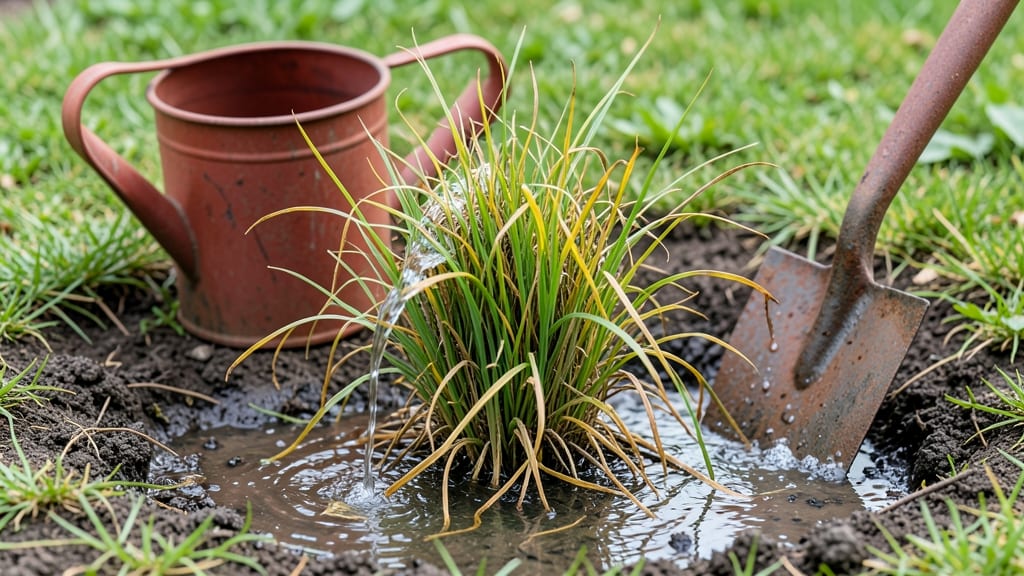
That swampy look in your fescue overwatered grass isn’t just unsightly—it’s suffocating your lawn from the roots up. 💧 The good news? It’s fixable, and you don’t need a degree in horticulture to turn things around.
Overwatering creates the perfect storm: suffocated roots, fungal growth, and that telltale yellowing you’re seeing. The soil stays soggy for days, cutting off oxygen, and your fescue grass can’t breathe.
But here’s the thing—once you adjust your watering, improve drainage, and give the roots a chance to recover, you’ll see new green growth within 2-3 weeks.
Start by cutting back on watering—deep, infrequent soaks work better than daily sprinkles. Test your soil’s moisture by sticking your finger in 2 inches deep; if it’s damp, wait. Aerate compacted areas to help water drain, and consider top-dressing with compost to restore balance. Your lawn will thank you.
For stubborn cases, don’t hesitate to call in a pro—sometimes the damage runs deeper than DIY fixes. But in most cases, these steps will have your fescue bouncing back to that lush, deep green you love. Trust the process, and your grass will too.
Understanding The Root Causes
Overwatering fescue grass isn’t just about pouring too much water—it’s a mix of environmental factors, human habits, and even the grass’s own biology. Let’s break down the key reasons why your lush lawn might be drowning in excess moisture, turning vibrant green into sad, yellow patches.
🌧️ Clay Soil Struggles – Fescue thrives in well-draining soil, but clay-heavy grounds act like a sponge, absorbing water but refusing to release it. When rain or overwatering occurs, the excess moisture lingers in the root zone, suffocating roots and cutting off oxygen.
Without proper aeration, fungal diseases like Rhizoctonia or Pythium move in, turning grass yellow and mushy.
🔧 Compacted Soil Blocks Pathways – Heavy foot traffic, machinery, or even natural settling can compress the soil, creating a dense barrier that water can’t penetrate. This forces water to pool on the surface instead of seeping down, leaving roots waterlogged and starved for air.
Actionable Fix: Test your soil’s drainage by digging a 12-inch hole, filling it with water, and timing how long it takes to drain. If it’s slower than 6 hours, your lawn needs aeration (core or spike) or gypsum amendments to break up compaction.
💦 Daily Light Watering Traps Moisture – Fescue needs 1–1.5 inches of water per week, but frequent shallow watering (like daily sprinklers) keeps the top layer soggy while the deeper roots dry out. This creates a shallow root system that’s prone to stress and disease.
⏰ Ignoring Weather Conditions – Watering on a strict schedule, regardless of rain or humidity, leads to overwatering. A sudden downpour followed by automatic sprinklers can drown roots faster than they can recover.
Actionable Fix: Switch to deep, infrequent watering—soak the soil 6–8 inches deep 2–3 times per week (early morning, 4–8 AM). Use a rain gauge or smart sprinkler controller to adjust based on real-time weather data.
🌱 Newly Sodded Fescue Needs Patience – Freshly laid fescue sod has delicate roots that can’t handle heavy watering. Overwatering at this stage washes away soil nutrients and encourages rot before roots establish (typically after 2–3 weeks).
🍃 Thatch Buildup Acts As A Moisture Trap – Thatch (that layer of dead grass between soil and green blades) is normal, but if it’s over ½ inch thick, it blocks water from evaporating and air from reaching roots. This creates a perfect storm for fungal growth.
Actionable Fix: For new sod, water lightly 2x/day for the first week, then taper to deep watering. For thick thatch, dethatch in early fall or use a sharp mower blade to reduce buildup.
🚨 Sprinkler Heads Spraying Improperly – Misaligned or broken sprinkler heads can create hot spots where water pools instead of spreading evenly. This leads to some areas drowning while others dry out.
💡 Automatic Timers Set Too Long – Many homeowners leave sprinklers on the same setting year-round, leading to chronic overwatering in cooler months when evaporation slows.
Actionable Fix: Audit your sprinklers—walk the lawn with a tuna can to measure water output. Adjust heads to spray uniformly and set timers based on seasonal needs (reduce in fall/winter).
🍄 Fescue-Friendly Fungi Thrive – Overwatered grass creates the perfect environment for dollar spot, brown patch, or snow mold (common in northern climates). These fungi feed on waterlogged grass, turning blades yellow and slimy.
🔬 Symptoms to Watch For:
- Yellow rings or irregular patches
- Mushy, foul-smelling grass when pulled
- White or pink fungal threads on blades
Actionable Fix: If fungi are suspected, reduce watering immediately and apply a fungicide (like propiconazole or myclobutanil) in the evening for best absorption.
🌪️ Low-Lying Areas Collect Water – Sloped lawns or depressions naturally pool water, making those spots prone to overwatering. Without intervention, roots in these zones suffocate from prolonged saturation.
🌡️ Humid Climates Slow Drying – In areas with high humidity, water evaporates slower, meaning your lawn stays damp longer. This extends the window for overwatering damage.
Actionable Fix: For low spots, grade the lawn to improve drainage or install French drains. In humid climates, water in the early morning to allow foliage to dry before evening moisture sets in.
Pro Tip: 💡 The "Squeeze Test" – Walk your lawn after watering. If soil squeezes out water when pressed, you’re overdoing it. Healthy soil should feel moist but not soggy—like a wrung-out sponge.
Fixing overwatered fescue grass
If your fescue lawn has turned into a soggy, yellow mess from too much water, don’t panic—it’s often reversible with the right steps. The key is to correct the watering habits, improve drainage, and give your grass the space to breathe.
Below, we’ll break down the fixes based on the most common causes of overwatering, along with easy prevention tips to keep your lawn lush and healthy.
When fescue grass gets drenched in one go, the roots suffocate, leading to yellow patches and fungal growth. The fix? Water deeply but infrequently.
How to Fix It:- 🔥 Check soil moisture before watering—stick your finger 2-3 inches into the soil. If it’s damp, wait. If it’s bone-dry, water.
- 🍳 Water in cycles: Apply ½ inch of water at a time, then let the soil absorb it for 30 minutes before adding more. Repeat until the top 6 inches of soil are moist.
- 👨🍳 Water early in the morning (between 4–8 AM) to reduce evaporation and fungal risks.
- ⏰ Space out waterings: Aim for 1–1.5 inches of water per week (including rain), split into 2–3 sessions.
- 💡 Invest in a rain gauge or a simple tipping bucket to track rainfall and adjust watering accordingly.
- 🌡️ Use a smart sprinkler controller to automate watering based on weather forecasts.
- ✨ Avoid weekend watering—humidity and cooler temps at night can promote disease.
If water pools on your lawn or drains slowly, the roots can’t get oxygen, leading to yellowing and thinning grass. The solution? Break up compacted soil and boost airflow.
How to Fix It:- 🔥 Core aerate your lawn in early fall or spring. Rent a core aerator or hire a pro to pull small plugs of soil, creating channels for water and air.
- 🍳 Add organic matter: Spread ¼ inch of compost or peat moss over the lawn, then lightly rake it in. This improves soil structure.
- 👨🍳 Level low spots where water pools. Use a shovel to redistribute soil or create gentle slopes for drainage.
- 🔪 Install French drains in severely waterlogged areas—dig a trench, add gravel, and place a perforated pipe to redirect excess water.
- 💡 Test your soil every 2–3 years to check drainage and pH. Adjust with gypsum (for clay soil) or sand (for sandy soil).
- 🎯 Avoid heavy foot traffic on wet grass, which compacts soil further.
- ✨ Plant deep-rooted ground covers like clover in high-traffic areas to reduce soil compaction.
Overwatering creates the perfect breeding ground for fungi like brown patch or dollar spot, which turn grass yellow and slimy. The fix? Reduce moisture, improve airflow, and apply targeted treatments.
How to Fix It:- 🔥 Stop watering immediately if you see fungal symptoms (yellow rings, slimy patches, or mushrooms). Let the soil dry out completely.
- 🍳 Apply a fungicide labeled for lawn fungi (e.g., propiconazole or chlorothalonil). Follow the instructions carefully.
- 👨🍳 Mow higher (3–4 inches) to shade the soil and reduce fungal spores.
- 🔪 Rake out dead grass and dispose of it in a sealed bag to prevent spreading spores.
- 💡 Water in the morning so grass has time to dry before evening humidity sets in.
- 🌡️ Space out waterings to avoid keeping the lawn soggy for days.
- ✨ Improve air circulation by trimming overgrown shrubs or trees near the lawn.
With these fixes, your fescue grass should bounce back in 2–4 weeks. The key is consistency—adjust your watering habits, improve drainage, and stay vigilant against fungal threats. Soon, you’ll have a resilient lawn that’s the envy of the neighborhood! 🌱💚
Frequently asked questions
How can I tell if my fescue grass is overwatered instead of just thirsty?
Check for yellow patches that stay damp for days, mushy grass when pulled, or white/pink fungal threads on blades. Overwatered soil feels soggy 2+ inches down, while thirsty soil is dry at the surface. Also look for thinning or fool-smelling areas.
Is it better to water fescue grass daily or less often?
Deep, infrequent watering (2–3 times/week) is best—1–1.5 inches total per week. Daily light watering keeps roots shallow and encourages fungal growth. Water early morning (4–8 AM) to reduce evaporation and disease risk.
What should I do if my fescue lawn has fungal growth from overwatering?
Stop watering immediately and let the soil dry completely. Apply a fungicide (like propiconazole) in the evening, then aerate the lawn to improve airflow. Raise mower height to 3–4 inches to shade soil and reduce spores.
How long does it take for overwatered fescue to recover?
With proper care, you’ll see improvement in 2–4 weeks. Adjust watering immediately, improve drainage, and avoid foot traffic on wet grass. For severe cases, recovery may take 6–8 weeks—patience is key!
Can I use a sprinkler timer to prevent overwatering?
Yes, but smart timers are better—they adjust for rain/wind. Set cycles to 30 minutes with breaks between, and water early morning. Test with a tuna can to measure output. Avoid weekend watering to reduce fungal risks.