
Lawn
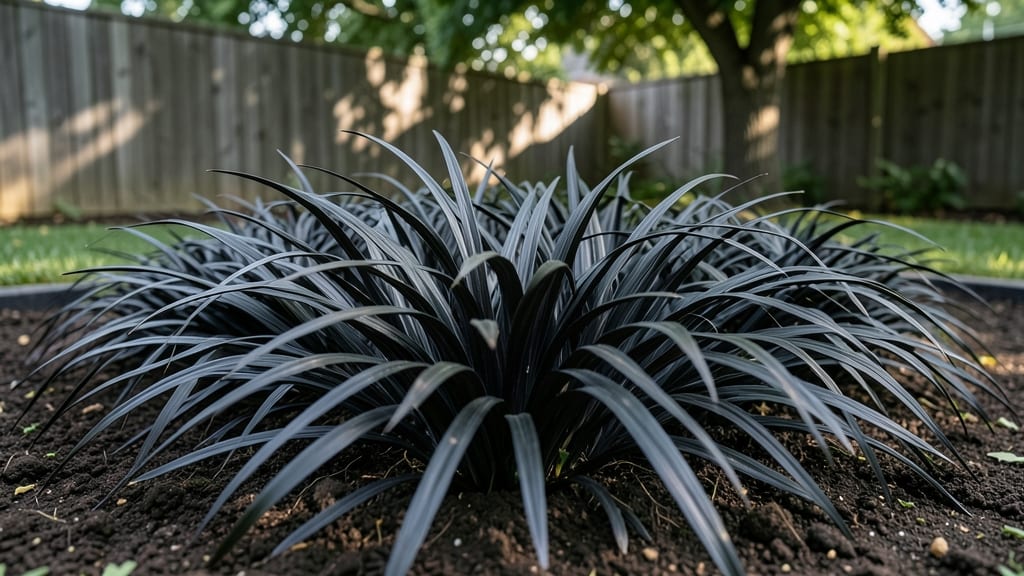
Black mondo grass isn’t about flowers—it’s about that stunning, velvety black foliage that transforms shady spots into dramatic focal points. 🌿 I’ve used it to edge walkways and fill under trees where nothing else thrives, and the deep purple-black leaves stay vibrant all year.
The tiny white flowers it might produce in late summer are barely noticeable, but the foliage? That’s the star. The secret to keeping it looking its best is partial shade and consistent moisture—dry spells or too much sun will fade that rich color.
It spreads slowly but steadily, so once established, it’s low-maintenance and drought-tolerant. That’s why I’ve never replaced a patch once it’s taken hold. You’ll end up with a lush, nearly weed-proof ground cover that stays green (or black) even in winter.
It’s perfect for borders, slopes, or anywhere you want bold texture without the fuss of flowers. Just avoid heavy foot traffic—it’s delicate underfoot. If you do want flowers, consider alternatives like creeping phlox or ajuga, which deliver both color and blooms. But for pure drama, black mondo grass is unmatched.
Let’s get yours thriving!
📚 In This Guide
- What you need
- Instructions
- Tips and common mistakes
- Wrapping up and next steps
What you need
- ● Black mondo grass plants (Ophiopogon planiscapus 'Nigrescens') – 3–5 mature plants per square foot for dense coverage (or seeds if starting from scratch).
- ● Well-draining potting mix or garden soil – Amend with compost (20–30% by volume) for nutrient-rich growth.
- ○ Mulch (optional but recommended) – Pine straw or cypress mulch (2–3 inches) to retain moisture and suppress weeds.
- ● Garden trowel or transplant spade – For digging holes (6–8 inches deep).
- ● Pruners or sharp scissors – For trimming dead foliage or dividing clumps.
- ● Garden gloves – To protect your hands from soil and sharp edges.
- ● Watering can or hose with a gentle spray nozzle – Mondo grass prefers consistent moisture but hates soggy roots.
- ○ Soaker hose (optional) – For efficient, deep watering in established beds.
- ● Sunlight – Partial to full shade (2–6 hours of direct sun daily). Avoid harsh afternoon sun in hot climates.
- ● Soil pH – Slightly acidic to neutral (6.0–7.0). Test soil with a pH kit if unsure.
- ● Climate – Thrives in USDA Zones 6–10. Use a frost cloth in colder zones for winter protection.
- ● Spacing – Plant 12–18 inches apart for a lush, uninterrupted look.
How to grow and maintain black mondo grass for stunning year-round color
This striking ground cover thrives with minimal fuss—just a few key steps to keep it lush and vibrant.
🌱 Step 1: Choose the Perfect Planting Location
Black mondo grass (Ophiopogon planiscapus 'Nigrescens') loves shade but handles partial sun too. I always plant mine in partial to full shade—think dappled sunlight under trees or on north-facing walls. The deeper the shade, the richer the dark foliage stays year-round.
Test your spot by observing how much light it gets daily. If leaves appear pale or bleached, it's getting too much sun. Amend heavy clay soil with 2-3 inches of compost to improve drainage—this grass hates soggy roots. Work the compost into the top 6 inches of soil before planting.
🪴 Step 2: Plant at the Right Spacing and Depth
For 4 plants, space them 12-18 inches apart in rows 18 inches apart if using as a ground cover. Dig holes just slightly larger than the root ball—about 1 inch deeper and wider than the container. Gently remove the plant from its pot and place it in the hole, ensuring the crown sits just below soil level. Firm the soil around the roots to eliminate air pockets.
Water deeply right after planting to settle the soil. You'll see the first signs of establishment when new growth emerges within 2-3 weeks. If your soil stays dry for more than 3-4 days, the plants will wilt—this grass prefers consistently moist (but not soggy) conditions.
☀️ Step 3: Provide Consistent Moisture and Light
Water 1-2 times per week during the first growing season, keeping the soil evenly moist but never waterlogged. Once established, black mondo grass becomes drought-tolerant, but the foliage stays deepest and darkest with regular moisture. You'll notice the leaves turn slightly lighter if the soil dries out completely for 5+ days.
Fertilize lightly in early spring with a balanced 10-10-10 fertilizer—just ½ teaspoon per plant. Too much nitrogen makes the grass grow leggy and loses its deep black hue. Mulch with 1-2 inches of shredded bark to retain moisture and suppress weeds. Replenish mulch annually in early spring.
✂️ Step 4: Prune and Maintain for Year-Round Beauty
Black mondo grass rarely needs pruning, but you can trim back any leggy growth in late winter before new shoots emerge. Use clean, sharp pruners to cut back 1-2 inches above the soil line. This encourages denser, bushier growth. Watch for yellowing leaves—this usually means too much sun or poor drainage.
Divide clumps every 3-4 years in early spring if the center looks bare. Dig up the plant, separate the rhizomes, and replant the healthiest sections. You'll see new growth fill in within 4-6 weeks. This grass spreads slowly, so it won’t overtake your garden—just keep an eye on the edges and trim as needed.
🌿 Step 5: Protect and Enjoy Year-Round Color
In USDA Zones 6-10, black mondo grass stays evergreen, but in colder zones, it may turn brown in winter. Don’t worry—it regrows in spring. If you notice white powdery spots (powdery mildew), improve air circulation by thinning nearby plants and avoid overhead watering.
This grass thrives in containers too—just use a 10-inch pot for one plant and ensure it has drainage holes. Group 3-4 plants in a large container for a bold, low-maintenance statement. With proper care, your black mondo grass will deliver deep, velvety color for decades with almost no effort.
Tips & tricks for perfect black mondo grass flowers
Confession: I nearly killed my first batch of black mondo grass by overwatering—don't make my mistake!
Light Matters: In Step 1, when choosing your planting location, remember that black mondo grass thrives in partial to full shade. If you notice the leaves turning pale or bleached, that's your sign to move it to a shadier spot. The deeper the shade, the richer and darker the foliage will stay year-round. Think of it as creating your own little shade garden under trees or on north-facing walls.
Planting Depth: When planting in Step 2, ensuring the crown sits just below soil level is crucial. I learned this the hard way when I buried mine too deep—it led to rot. The crown should be covered by just a thin layer of soil, about 1/4 inch deep. This allows the plant to establish strong roots without suffocating.
Watering Wisdom: The instructions mention watering 1-2 times per week during the first growing season, but here's what nobody tells you—black mondo grass prefers consistently moist soil, not soggy. I use my finger to check moisture levels about 1 inch below the soil surface. If it feels dry, it's time to water. Overwatering is the #1 reason this grass fails, so let the top inch dry out between waterings once established.
Fertilizer Tip: In Step 3, when fertilizing in early spring, less is more. That ½ teaspoon of 10-10-10 fertilizer per plant is all you need. Too much nitrogen will make your grass grow leggy and lose that stunning deep black color. Think of it as a whisper of nutrients rather than a shout—this plant is delicate in its needs.
Pro Tips for Black Mondo Grass Flowers
- Confession: I nearly killed my first batch of black mondo grass by overwatering—don't make my mistake!
- Light Matters: In Step 1, when choosing your planting location, remember that black mondo grass thrives in partial to full shade.
- Planting Depth: When planting in Step 2, ensuring the crown sits just below soil level is crucial.
Frequently asked questions
Got questions about growing and caring for black mondo grass flowers? You’re not alone!
Here are some of the most common queries—plus quick, practical answers to keep your bold, dark foliage thriving year-round.
Do black mondo grass flowers actually bloom?
Not in the traditional sense! While Ophiopogon planiscapus 'Nigrescens' (black mondo grass) is often called a "flowering" plant, it primarily grows for its striking dark purple-black foliage. Tiny, insignificant white or greenish flowers may appear in summer, but they’re rarely showy. Focus on its lush, evergreen ground cover instead—it’s the star!
How long does it take for black mondo grass to establish?
Patience pays off! Expect 6–12 months for black mondo grass to fill in a bare spot. It spreads slowly via underground runners, so dividing clumps every 2–3 years helps accelerate coverage. For faster results, plant 3–4 inches apart and keep soil consistently moist during the first year.
Why is my black mondo grass turning brown or crispy?
Brown edges or wilting usually signal drought stress, overwatering, or sunburn. This shade-loving plant thrives in partial to full shade—if exposed to harsh afternoon sun, it may scorch. Water deeply but infrequently (about 1 inch per week) and mulch to retain moisture. Avoid soggy soil, which can cause root rot.
What’s a good alternative if black mondo grass is too high-maintenance?
If you want low-maintenance, dark foliage, try these black mondo grass lookalikes:
- Creeping Jenny (Lysimachia nummularia 'Aurea'): Golden edges, spreads fast, tolerates wet soil.
- Heuchera ('Palace Purple'): Vibrant purple leaves, drought-tolerant, great for borders.
- World’s End Mondo (Ophiopogon japonicus 'World’s End'): Darker than black mondo, handles more sun.
- Sweet Woodruff (Galium odoratum): Fragrant, shade-loving, but less dense.
Does black mondo grass survive winter?
This hardy perennial (zones 5–9) stays evergreen in mild climates and may turn slightly purple in cold snaps but rebounds in spring. In zone 5 or colder, mulch heavily (2–3 inches) to protect roots. Avoid heavy foot traffic in winter—fragile leaves can break under snow or ice.
How do I propagate black mondo grass?
Easy! Division is the simplest method:
- Dig up a mature clump in spring or fall.
- Gently separate roots into 2–3 inch sections, ensuring each has shoots.
- Replant divisions 1–2 inches deep, water well, and mulch.
For seeds (rarely used), collect seed pods in summer and sow in moist, shaded soil—germination is slow and unpredictable.
Wrapping up and next steps
Black Mondo Grass isn’t just a plant—it’s a dramatic, low-maintenance statement for your garden! With its deep purple-black foliage and striking year-round presence, it effortlessly elevates any space while demanding minimal care.
Whether you’re a seasoned gardener or just starting, this bold beauty proves that stunning results don’t require complicated steps.
Ready to transform your outdoor space? Start small—try a single pot or a small border, then expand as you fall in love with its resilience and charm. Your garden’s next masterpiece could be just a few seeds away! 🌱✨