
Lawn
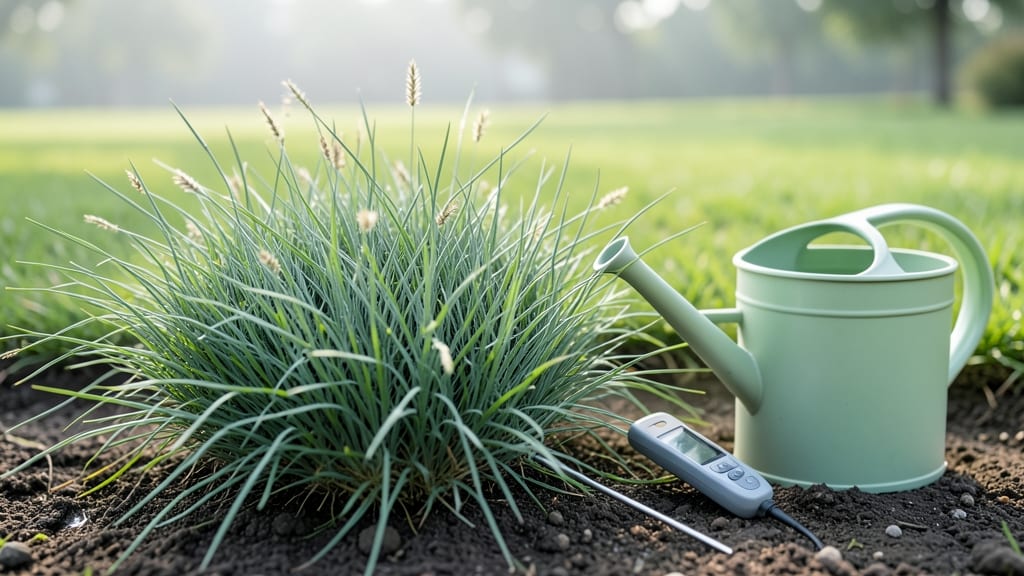
Why does your grass have dark green patches?
They’re not just a color problem—they’re a silent signal your lawn is either thriving too hard or fighting an unseen battle. 🌱 I’ve seen this happen after a heavy fertilizer session or when fungal spores get the perfect conditions to party in your yard. The good news?
You can usually diagnose and fix it before it spreads. First, check the texture: if the patches feel spongy when you walk on them, that’s often a fungus like dollar spot or brown patch.
But if the grass feels stiff and grows like a weed, you might be overdoing nitrogen—especially if you applied fertilizer recently. Both issues need different fixes, so let’s figure out which one you’re dealing with.
You’ll likely see results within 7-14 days if you address the root cause: adjusting watering, aerating compacted soil, or applying the right fungicide. The key is acting fast—before the patches turn yellow or brown, which means the damage is permanent.
This works for cool-season grasses (like Kentucky bluegrass) and warm-season grasses (like Bermuda), though solutions vary slightly by type. Let’s get your lawn back to that even, vibrant green it deserves.
What Triggers Dark Green Spots
Dark green patches in your lawn aren’t just an eyesore—they’re a signal your grass is either thriving too well or struggling under unseen stress. Below, we break down the real culprits behind those vibrant (or suspicious) splotches, backed by science and actionable insights.
🌱 Why it happens: When you apply too much nitrogen (the primary nutrient in fertilizers), your grass goes into overdrive, producing excess chlorophyll—the pigment responsible for that deep green color. While it might look lush, this rapid growth weakens roots, making grass more vulnerable to pests, drought, and disease.
Over time, these patches can develop into thin, spongy, or even dead areas if the soil becomes toxic from excess salts or ammonia buildup.
💡 Pro Tip:
- Test your soil (DIY kits or lab tests) to determine if nitrogen levels are already high.
- Split applications: Use half the recommended dose every 4–6 weeks instead of one heavy dose.
- Water deeply after fertilizing to help nutrients soak into the soil evenly (avoid runoff).
🍄 Why it happens: Dark green patches can also signal fungal activity, like dollar spot, brown patch, or Pythium blight. Fungi thrive in cool, wet conditions and feed on grass, causing thick, velvety patches that may later turn brown or die.
Some fungi (like Fusarium) produce toxic byproducts that stress grass, leading to uneven coloration.
🔍 How to spot fungal clues:
- Morning dew on patches that dry by afternoon.
- Thin, water-soaked spots that spread quickly.
- Grass blades with dark, web-like growth (a classic sign of dollar spot).
💡 Pro Tip:
- Improve drainage—fungi love soggy soil. Aerate compacted areas and consider a sand topdressing.
- Avoid overhead watering (use drip irrigation or early-morning watering to let grass dry faster).
- Apply fungicides (like propiconazole or chlorothalonil) if patches persist, especially in humid climates.
🌳 Why it happens: Grass under partial shade (like near trees or fences) often grows darker and slower because it stretches toward light, increasing chlorophyll production.
Meanwhile, excess moisture (from poor drainage or overwatering) creates anaerobic conditions, where grass roots suffocate. This leads to dark, spongy patches that may smell musty.
📊 Key signs:
- Patches near tree roots, gutters, or low spots.
- Grass that feels squishy when walked on (a red flag for poor drainage).
- Weeds like creeping Charlie thriving in the same areas (they love damp shade).
💡 Pro Tip:
- Choose shade-tolerant grass (like fine fescue or zoysia) if your lawn has permanent shade.
- Rake leaves and debris away from the base of trees to prevent thatch buildup.
- Install French drains or sand trenches in soggy areas to redirect water.
🐜 Why it happens: Insects like grubs, chinch bugs, or sod webworms feed on grass roots, causing irregular darkening as the grass struggles to photosynthesize. Their damage weakens the lawn, making it prone to fungal infections or nutrient leaching, which further darkens affected areas.
🔥 Pest patrol checklist:
- Look for: Wilting grass that recovers after watering, tunnels in the soil, or birds pecking at your lawn (a grub buffet!).
- Common culprits:
- Grubs (C-shaped larvae under turf).
- Chinch bugs (tiny black bugs that cause dry, brown patches with dark edges).
💡 Pro Tip:
- Hand-pull sod in suspect areas—if grubs are present, you’ll see them wriggling.
- Apply beneficial nematodes (microscopic predators that target grubs).
- Use insecticidal soap for chinch bugs (spot-treat in early evening).
🏗️ Why it happens: Heavy foot traffic, pets, or clay-heavy soil compresses the root zone, restricting oxygen, water, and nutrient flow. Compacted soil forces grass to grow upward (not downward), creating dense, dark green clumps while roots starve. Over time, this leads to thin, patchy lawns.
🌡️ Test for compaction:
- Stick a screwdriver into the soil—if it won’t go past 2 inches, your lawn is compacted.
- Step on the grass—if it springs back slowly, roots are struggling.
💡 Pro Tip:
- Aerate in fall or spring (use a core aerator to pull out soil plugs).
- Top-dress with compost to improve soil structure.
- Reduce traffic on wet lawns (wait until soil is dry to mow or walk on it).
💦 Why it happens: If your patches feel slippery, slimy, or grow even after mowing, you might have algae or moss—not grass at all. These thrive in shady, wet, or acidic conditions, outcompeting grass for space.
While algae (like blue-green slime) is more common in hot, humid climates, moss takes over in cool, damp areas.
🎯 How to tell them apart:
| Sign | Algae | Moss |
|---|---|---|
| Texture | Slimy, jelly-like | Soft, spongy, carpet-like |
| Color | Bright green, sometimes blue-green | Dark green to brown |
| Season | Peaks in summer | Thrives in fall/winter |
💡 Pro Tip:
- For algae: Reduce watering, improve drainage, and apply iron sulfate (a natural algaecide).
- For moss: Spread lime (to raise pH) and overseed with grass in spring.
How to Fix It Naturally
Dark green patches in your lawn might seem like a victory at first glance—lush and vibrant, right? But when they’re caused by nutrient overload, fungal infections, or other issues, they can actually signal deeper problems.
The good news? Most of these issues are fixable with the right approach. Below, we’ll break down targeted solutions for each likely cause, along with prevention tips to keep your lawn healthy long-term.
If your grass is turning dark green due to excess nitrogen or fertilizer, the fix is simpler than you might think: balance and moderation.
🔥 Adjust Your Fertilizer Routine
- Stop applying fertilizer immediately if you’ve recently overdone it. Let the soil recover for 4–6 weeks before testing again.
- Switch to a slow-release or organic fertilizer (like compost or alfalfa meal) to avoid sudden nutrient spikes.
These release nutrients gradually, preventing burns and dark patches. - Water deeply and frequently (1–1.5 inches per week) to help flush out excess salts and nutrients from the soil.
💡 Pro Tip: Soil Testing Saves the Day
Before reapplying fertilizer, conduct a soil test (available through local agricultural extensions or home test kits). This tells you exactly what nutrients your lawn needs—and what it’s drowning in.
✨ Prevention for Next Time
- Follow label instructions—more isn’t better when it comes to fertilizer.
- Split applications into smaller doses (e.g., every 6–8 weeks instead of one big dose).
- Consider a soil amendment like gypsum if your soil is compacted, as this improves nutrient absorption.
If dark green patches are accompanied by mushrooms, slime, or thinning grass, a fungal infection like Rhizoctonia or Dollar Spot is likely the culprit. Here’s how to tackle it:
👨🍳 Apply the Right Fungicide
- Spot-treat with a fungicide containing propiconazole, azoxystrobin, or myclobutanil. Follow the product’s instructions carefully—overuse can harm beneficial microbes.
- For severe cases, consider a systemic fungicide (absorbed by the grass roots) for long-term control.
🌡️ Improve Airflow & Drainage
Fungi thrive in wet, shaded, or compacted conditions.
Break the cycle with these steps: - Aerate your lawn in early fall or spring to reduce soil compaction and improve water drainage. - Thin out dense trees or shrubs to increase sunlight exposure (aim for 6+ hours of direct sun per day). - Water in the morning (never at night) to allow grass blades to dry quickly, discouraging fungal spores.
🎯 Prevention: Break the Fungal Cycle
- Mow high (3–4 inches) to strengthen grass blades and reduce stress.
- Rake up thatch (the layer of dead grass between soil and blades) if it’s thicker than ½ inch—it traps moisture and fungi.
- Avoid walking on wet grass to prevent spreading spores.
If your lawn has soggy, dark patches (especially after rain), waterlogging or poor drainage could be the issue.
🔪 Improve Drainage Fast - Core aerate to create channels for water to escape.
Rent a core aerator or hire a lawn service if needed. - Add organic matter like compost or peat moss to sandy soils to help retain moisture without suffocating roots. - Grade your yard if water pools in low spots—redirecting water flow can prevent future issues.
⏰ Optimize Your Watering Schedule
- Water deeply but infrequently—aim for 1–1.5 inches per week, including rainfall.
Use a rain gauge or tuna can to measure. - Water early in the day (before 10 AM) to reduce evaporation and fungal growth. - Check for sprinkler issues—misaligned heads can create uneven watering patterns.
💡 Pro Tip: The "Screwdriver Test"
Stick a screwdriver into the soil after watering. If it goes in easily up to 4–6 inches, your lawn is getting enough water. If it’s dry at that depth, you need to adjust your watering.
Sometimes, dark patches aren’t about nutrients or fungi—they’re about hidden invaders.
🍳 Identify & Treat Weeds or Thatch
- For broadleaf weeds (like clover or dandelions), use a selective herbicide (safe for grass).
- For thick thatch, dethatch in early fall or spring using a rake or machine.
- For grubs or insects, apply a grub control product (like imidacloprid) in early summer before they hatch.
🔥 Prevention: Strengthen Your Grass
- Overseed bare spots with the same grass type to crowd out weeds.
- Mow regularly (never remove more than ⅓ of the blade at once).
- Apply a pre-emergent herbicide in early spring to prevent weed seeds from germinating.
Final Thought: Dark green patches don’t have to be a mystery—most fixes are simple, cost-effective, and preventable with the right care. Start with soil testing, adjust your watering, and treat the root cause (literally!).
Your lawn will thank you with a uniform, vibrant green that’s the envy of the neighborhood. 🌿✨
Frequently asked questions
Are dark green patches always a sign of over-fertilizing?
Not necessarily! While excess nitrogen can cause dark green patches, they could also indicate fungal infections, shade stress, or even algae/moss. Check for other clues: spongy texture suggests fungus, while slimy patches point to algae. Always start with a soil test to rule out nutrient issues.
How can I tell if my dark patches are from fungus or just thick grass?
Fungal patches often feel spongy when walked on and may have web-like growth or morning dew that disappears by afternoon. Healthy thick grass feels firm and grows uniformly. If you see mushrooms or thinning areas within the dark patches, fungus is likely the culprit.
Will stopping fertilizer immediately fix the problem?
Not always—if the patches are from fungus or pests, you’ll need targeted solutions. For fertilizer burn, stop applying immediately and water deeply (1–1.5 inches per week) to flush out excess nutrients. Test your soil in 4–6 weeks before reapplying fertilizer to avoid repeating the issue.
Can I use household items to treat fungal dark patches?
Yes! Mix 1 part baking soda with 1 part water and spray on patches (reapply every 3–4 days). For a natural fungicide, try a 1:10 vinegar-to-water solution (test on a small area first). However, severe fungal issues may require store-bought fungicides like chlorothalonil for full control.
Why do my dark patches only appear in certain spots?
Uneven patches usually mean localized issues like poor drainage (low spots), shade from trees/fences, or compaction from foot traffic. Check for differences in soil texture, sunlight exposure, or water pooling. Addressing these specific conditions will help restore uniformity to your lawn.