
Lawn
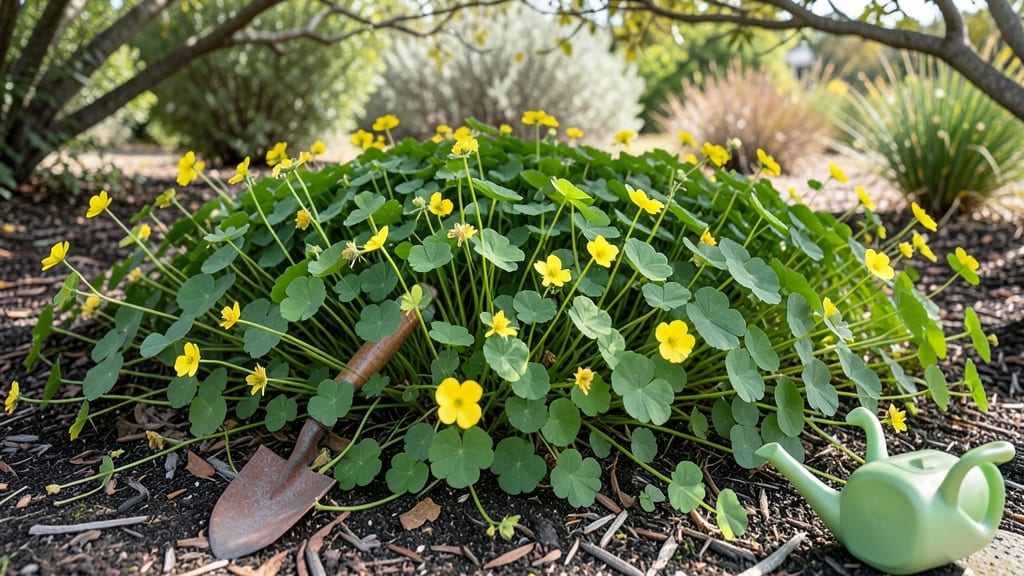
Sour grass is a weedy plant (Oxalis spp.) that emits a vinegar-like odor when crushed, thriving in lawns due to its shade tolerance and aggressive root system. Its clover-like leaves and yellow flowers make it a persistent nuisance in gardens and turf.
This pesky weed gets its name from the formic acid released when leaves are damaged, creating that unmistakable vinegar smell. 🌱 Unlike most lawn weeds, sour grass spreads through both seeds and underground tubers, making it nearly impossible to eliminate with a single treatment.
Its ability to thrive in shaded areas and compacted soil explains why it pops up even in well-maintained lawns.
What makes sour grass particularly frustrating is its rapid growth cycle—it can regenerate from tiny root fragments left behind after pulling. Many homeowners mistake it for clover due to its similar leaf shape, but the vinegar scent gives it away instantly.
If you're dealing with an infestation, timing matters most: tackle it in early spring before the tubers become dormant again.
💡 In This Article
- Why Sour Grass Smells Like Vinegar and Spreads So Fast
- Effective Removal Methods for Sour Grass in Lawns
Why sour grass smells like vinegar and spreads so fast
The vinegar-like scent of sour grass comes from formic acid, a natural compound produced by the plant's damaged cells.
When you crush or step on its clover-like leaves, the plant releases this acid as a defense mechanism, creating that sharp, pungent aroma. 🌿 This chemical isn't just unpleasant—it's also a survival tactic, deterring herbivores and competing plants from invading its space.
The acid concentration can reach up to 0.5% in fresh leaves, which is why the smell hits so strongly when the plant is disturbed.
Sour grass spreads aggressively through two key methods: underground tubers and airborne seeds. Each tuber can produce multiple shoots, while a single plant can release thousands of seeds that stay viable in the soil for years.
The tubers, which can grow up to 6 inches deep, make manual removal especially challenging—even small fragments left behind can regenerate into new plants. This dual reproduction strategy explains why sour grass often returns after seemingly successful eradication attempts.
The plant's rapid spread is also fueled by its adaptability to various conditions. Sour grass thrives in shaded areas, compacted soil, and even poor-quality turf where other plants struggle. It prefers moisture-rich environments, which is why it often appears after rain or in lawns with inconsistent watering.
Disturbances like foot traffic, mowing, or soil tilling trigger its growth, as the plant senses these as opportunities to expand its territory.
What most people don't realize is that sour grass has a dormancy period—it goes underground in hot, dry conditions but can resurface within days of rain. This explains why some homeowners see it disappear in summer only to reappear in spring.
The plant's ability to photosynthesize efficiently in low light also gives it an edge over grass, which requires more sunlight to thrive.
For those dealing with an infestation, understanding these growth patterns is crucial. The tubers' depth means you'll need tools like a weeding fork or dandelion digger to extract them completely. Surface-level pulling often leaves fragments behind, leading to regrowth.
Additionally, sour grass spreads faster in cool seasons (spring and fall), so targeting it during these periods with the right removal methods can significantly reduce its presence.
Interestingly, sour grass isn't just a lawn pest—it's also used in some cultures as a culinary herb (like wood sorrel) due to its tangy flavor. However, the formic acid content makes it unsafe in large quantities.
This dual nature highlights how a plant's traits can be both beneficial and problematic depending on the context. 🌱