
Watering
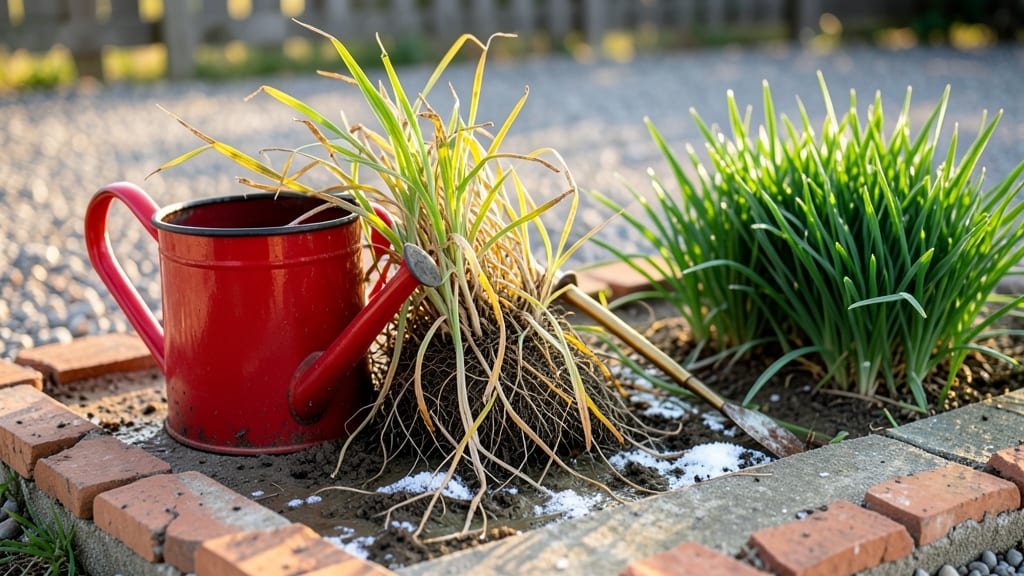
Overwatered Bermuda grass looks like a sad, soggy mess—yellow spots, mushy blades that crumple underfoot, and a musty smell that lingers after rain. 🌱 I’ve seen it too often: what should be a lush, green lawn turns into a swampy wasteland where fungus thrives and roots suffocate.
The first sign? Grass that stays damp for hours after watering, with blades that flop like overcooked noodles.
Those yellow patches aren’t just tired grass—they’re a red flag for root rot or fungal diseases like brown patch. Check the soil: if it’s compacted or stays soggy, your Bermuda’s roots can’t breathe.
Even worse, overwatering washes away nutrients, leaving your lawn weak and prone to pests. The good news? Fixing it just takes smarter watering and better drainage.
Start by cutting back on water—deep soakings twice a week (early morning) work better than daily light sprinkles. Aerate compacted soil to help roots breathe, and consider a soil test to check drainage.
Within weeks, you’ll see blades firm up, yellowing fade, and that musty smell disappear. Prevention is easy: water only when the top 2 inches of soil feel dry.
For severe cases, fungal treatments or sand top-dressing can help, but most lawns bounce back fast with adjusted care. Bermuda grass is tough—it just needs you to stop drowning it. Trust me, your lawn will thank you with vibrant green come summer.
Root Causes Of Overwatering
Overwatered Bermuda grass isn’t just a random mishap—it’s usually the result of specific mistakes in lawn care. Understanding these causes helps you fix the issue and prevent future damage. Let’s break down the science behind why your grass might be drowning in its own moisture.
Bermuda grass thrives in well-drained soil with 1 to 1.5 inches of water per week, including rainfall. But when irrigation systems (or hoses) run too long, too often, or at the wrong times, water accumulates faster than the soil can absorb it.
- Automatic sprinklers left on too long – Many systems default to 8–12 minutes per zone, but if your soil is clay-heavy or compacted, this can lead to surface runoff instead of deep absorption.
- Frequent light waterings – Short, daily sprinklings (like 5–10 minutes) encourage shallow root growth and keep the soil saturated, inviting fungal diseases like brown patch or dollar spot.
- Poor water absorption – If your lawn has thatched buildup (a dense layer of dead grass and roots), water pools on top instead of soaking in.
💡 Pro Tip: Use a rain gauge or tuna can test to measure water output—your sprinklers should deliver 0.5–1 inch per hour for Bermuda grass.
Bermuda grass hates soggy soil—its roots need oxygen to thrive. If water can’t escape, roots suffocate, leading to yellowing, wilting, or mushy blades.
- Clay soil – Clay particles pack tightly, blocking water flow.
Even after rain, clay stays waterlogged for days. - Low-lying areas – Natural slopes or depressions in your yard act as basins, trapping water. - Compacted soil – Heavy foot traffic, machinery, or poor aeration compresses soil, reducing porosity (the space for water to drain). - No slope or grading – If your lawn is flat, water has nowhere to go, leading to standing water and anaerobic (oxygen-deprived) soil.
🔧 Fix It: Test drainage with a percolation test—dig a 12-inch hole, fill it with water, and time how long it takes to drain. If it takes more than 6 hours, you’ve got poor drainage.
Thatch is a natural layer of dead grass, roots, and stems that sits between the soil and green blades. While ¼-inch of thatch is healthy, anything thicker (>½ inch) blocks water, air, and nutrients from reaching the roots.
- Lack of dethatching – Bermuda grass sheds fast, especially in warm climates.
Without regular dethatching (1–2x/year), thatch acts like a waterproof blanket. - Excessive nitrogen fertilizer – Too much quick-release N promotes top growth over root development, worsening thatch accumulation. - Infrequent mowing – Tall grass shades the soil, slowing decomposition and thickening thatch.
✂️ Solution: Use a vertical mower or dethatching rake in early spring before Bermuda grass grows aggressively.
Even the best-laid watering plan can fail if weather conditions push your lawn past its limits.
- Heavy rainfall + no dry spells – If 3+ inches of rain falls in a week, Bermuda grass can’t recover without proper drying time. - High humidity – Warm, muggy air slows evaporation, keeping soil damp longer and promoting fungal growth. - Cool-season slowdowns – In fall or spring, Bermuda grass goes dormant and needs less water.
Overwatering here leads to root rot before it can recover.
📅 Adjust for Seasons: Reduce watering by 30–50% in fall/winter unless your grass is actively growing.
Sometimes, the problem isn’t you—it’s your tools.
- Leaky or misaligned sprinkler heads – A broken nozzle or angled head can spray sidewalks or driveways instead of your lawn, wasting water and leaving dry patches.
- Incorrect sprinkler placement – Heads too close together cause overlap, soaking one spot while missing another.
- Clogged emitters (drip systems) – Mineral buildup or debris restricts flow, making water drip slowly but constantly—like a leaky faucet for your lawn.
🔍 Check Your System: Walk your yard after watering—are there dry spots or puddles? Adjust sprinkler heads to water evenly in overlapping 8–12 inch circles.
Healthy soil balances water retention and drainage. If yours is depleted or imbalanced, overwatering becomes a double whammy.
- Low organic matter – Sandy or mineral-heavy soil drains too fast, but compacted clay holds too much. Both extremes stress Bermuda grass. - pH imbalances – Bermuda prefers 6.0–7.5 pH.
If your soil is too acidic (low pH) or alkaline (high pH), roots struggle to absorb water efficiently. - Lack of aeration – Compacted soil repels water, causing it to pool on top instead of soaking in.
🌱 Boost Soil Health: Test your soil’s pH and composition, then amend with compost, gypsum (for clay), or sand (for heavy soil).
Overwatering rarely happens in isolation—it’s often a combination of poor drainage, heavy thatch, and inconsistent watering. Fix one issue (like improving drainage), but ignore thatch or sprinkler timing, and the problem persists.
The good news? Bermuda grass is resilient—once you correct the cause, it bounces back faster than you’d expect. Start with one fix (like adjusting your watering schedule), then tackle the next. Your lawn will thank you with deep green blades and strong roots in no time.
Revive Your Bermuda Grass Now
Overwatered Bermuda grass may look like a lost cause, but with the right steps, you can nurse it back to health—sometimes even faster than you think! The key is acting quickly to address the root (literally) of the problem while preventing further damage.
Below, we’ve mapped out practical fixes based on the most common causes of overwatering, along with prevention tips to keep your lawn lush and resilient.
If your Bermuda grass is sitting in soggy soil, the first priority is improving drainage to stop root suffocation.
🔥 Step 1: Stop Watering Immediately
- Turn off irrigation systems or pause automatic sprinklers for 3–5 days to let the soil dry out.
- Avoid walking on wet grass—this compacts soil further, worsening drainage.
🍳 Step 2: Aerate the Lawn
- Rent a core aerator (or hire a pro) to pull small soil plugs, creating air pockets.
- Best time: Early morning or late afternoon on a warm, dry day (so the holes don’t fill with water).
- Frequency: Once a year for most lawns; twice if your soil is clay-heavy.
👨🍳 Step 3: Amend the Soil
Mix in organic matter to improve drainage:
- Sand (for sandy soils): Spread ¼ inch of coarse sand and rake in.
- Compost (for clay soils): Top-dress with ½ inch of compost and water lightly.
- Perlite or vermiculite (quick fix): Sprinkle over the surface and work into the top inch.
⏰ Step 4: Monitor Soil Moisture
- Stick your finger 2–3 inches deep—if it’s still damp after 48 hours, you need better drainage.
- Install French drains or swales (shallow trenches) if water pools in low spots.
Once drainage is improved, focus on helping the grass bounce back without overwhelming it.
💡 Pro Tip: Mow High and Less Often
- Set your mower to 1–1.5 inches (taller blades shade soil, reducing evaporation).
- Wait until grass is dry before mowing to avoid tearing weakened blades.
🌡️ Fertilize Lightly (If Needed)
- Skip fertilizer for now—stressed grass can’t absorb nutrients well.
- Wait 2–3 weeks after aerating to apply a low-nitrogen, slow-release fertilizer (e.g., 10-10-10).
- Avoid high-nitrogen feeds (like quick-release lawn foods), which can burn already stressed grass.
🎯 Boost Microbial Activity
- Spread a thin layer of mycorrhizal fungi (available at garden centers) to help roots recover.
- Use compost tea (homemade or store-bought) to reintroduce beneficial microbes.
The best way to avoid a repeat is smart watering habits and lawn maintenance.
✨ Adjust Your Watering Schedule
- Water deeply but infrequently: Bermuda grass thrives with 1–1.5 inches per week (including rain).
- Water in the early morning (4–8 AM) to reduce evaporation and fungal risks.
- Use a rain gauge or tuna-can test to track actual watering—many sprinklers overapply!
🌧️ Upgrade Your Irrigation System
- Check sprinkler heads for misalignment (overspray on sidewalks = wasted water).
- Install a smart controller (like Rain Bird or Rachio) to adjust for weather forecasts.
- Consider drip irrigation for new Bermuda grass patches—it delivers water directly to roots.
🔥 Soil Test for pH and Nutrients
- Test your soil (DIY kits or local extension services) to rule out nutrient deficiencies (like potassium or magnesium) that mimic overwatering symptoms.
- Adjust pH if needed—Bermuda grass prefers 6.0–7.0; lime raises pH, sulfur lowers it.
- Don’t scalp the grass (cutting too short) while it’s recovering—weak roots need blade protection.
- Avoid fungicides unless you see pink patch or brown patch (overwatering can invite disease, but fix drainage first).
- Don’t compact soil with heavy foot traffic or equipment while it’s wet.
| Timeframe | What to Expect | Your Action |
|---|---|---|
| Days 1–3 | Soil may still feel damp; grass looks limp | Monitor, aerate if needed |
| Days 4–7 | Blades may yellow but stay upright | Lightly rake to improve air circulation |
| Weeks 2–3 | New growth appears; soil dries out | Resume normal mowing height |
| Weeks 4–6 | Full recovery; deeper green color | Fertilize lightly, adjust watering |
With these steps, your Bermuda grass should perk up within 2–4 weeks—and with better watering habits, you’ll avoid future soggy patches. 🌿✨ Remember: Bermuda grass is tough—it just needs a little TLC to bounce back!
Frequently asked questions
How quickly can overwatered Bermuda grass recover?
With proper care, you’ll often see improvement within 2-4 weeks. The first signs of recovery appear around 10-14 days—blades will firm up and stop flopping, though yellowing may linger until drainage improves. For severe cases with fungal issues, recovery may take 4-6 weeks of consistent drying and aeration.
What's the difference between overwatered and underwatered Bermuda grass?
Overwatered grass has mushy, limp blades that stay damp for hours, often with yellow patches and a musty smell. Underwatered grass turns blue-gray, feels crispy when walked on, and pulls up easily from the soil. The key difference: overwatered grass stays wet while underwatered grass stays dry and brittle.
Can I still mow overwatered Bermuda grass?
Only if the blades are completely dry—never mow wet grass as it tears the blades and compacts soil further. Wait until morning after rain or watering, and set your mower to 1.5 inches to protect weakened roots. Avoid bagging clippings, as they can smother the lawn when it's already stressed.
Will fungicides help overwatered Bermuda grass?
Only if you see fungal diseases like brown patch or pink patch. First fix drainage issues—fungicides mask symptoms without addressing the root cause. For prevention, water early morning and avoid nighttime watering, which creates humid conditions perfect for fungal growth. A soil test can confirm if nutrient deficiencies are worsening the problem.
How do I know if my Bermuda grass needs aeration?
Test by pushing a 6-inch screwdriver into the soil—if it goes in easily, your lawn likely needs aeration. Other signs include water pooling after rain, a spongy feel when walked on, or thatch thicker than ½ inch. Aerate in spring or fall when Bermuda grass is actively growing for best results.