
Pests and Diseases
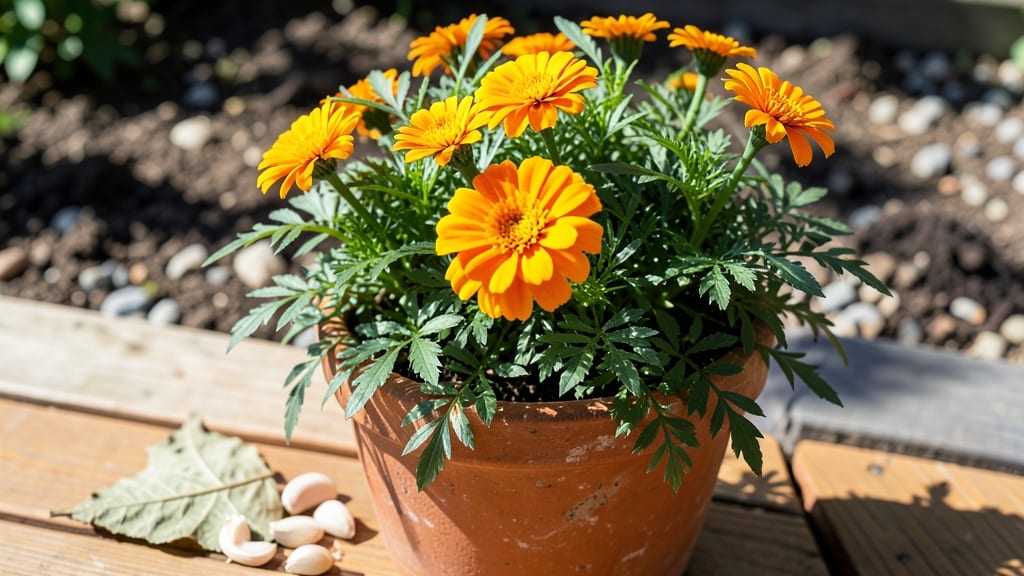
Grasshoppers hate strong scents like peppermint, citronella, and garlic, as well as physical barriers such as row covers or diatomaceous earth. These natural repellents disrupt their feeding habits and deter infestations without harsh chemicals.
Grasshoppers rely heavily on their sense of smell to locate food, so when you introduce overpowering aromas, they instinctively avoid the area. 🌿 Peppermint oil, for example, contains menthol compounds that interfere with their ability to detect plant odors, while garlic releases sulfur compounds that repel them.
Physical barriers like fine mesh netting or diatomaceous earth create an additional line of defense by preventing them from reaching plants altogether.
What makes these methods particularly effective is their dual-action approach: they don't just mask what grasshoppers want to eat—they actively create an environment that feels hostile to them. Unlike chemical pesticides, these solutions are safe for pets and beneficial insects while still providing strong protection for your garden.
💡 In This Article
- How Scent-Based Repellents Confuse Grasshoppers
- Best Natural Grasshopper Deterrents for Gardens
How scent-based repellents confuse grasshoppers
Grasshoppers possess highly sensitive olfactory receptors that detect plant volatiles—chemical signals emitted by vegetation to attract pollinators or deter herbivores. When you introduce concentrated essential oils like peppermint or citronella, their complex chemical profiles create sensory overload.
Peppermint oil, for instance, contains menthol and menthone compounds that bind to grasshopper odor receptors, effectively masking the scent of their preferred host plants (like corn or alfalfa). This disruption forces them to expend energy searching for familiar aromas, making them abandon treated areas within 24-48 hours.
The key lies in these oils' volatility—they evaporate quickly, releasing 100-300 volatile organic compounds (VOCs) per minute that overwhelm grasshopper antennae. Citronella, derived from Cymbopogon grasses, contains citronellal and geraniol, which trigger avoidance responses similar to how humans recoil from strong ammonia smells.
Even diluted at 1:100 ratio with water, these compounds create an "odor shield" that repels grasshoppers while remaining safe for plants and pollinators.
Garlic's effectiveness stems from its sulfur compounds (like allicin), which produce a pungent aroma when crushed. These molecules mimic the distress signals of damaged plants, a natural warning system grasshoppers have evolved to avoid. A 1 tablespoon per gallon garlic spray creates a 3-5 foot protective radius around treated plants.
The sulfur compounds also interfere with grasshopper pheromone communication, making it harder for them to coordinate group feeding behaviors.
Temperature plays a surprising role here—grasshoppers are most sensitive to repellent scents between 75-95°F, when their metabolic rates peak. During cooler mornings (60°F), you'll need 20-30% stronger concentrations of repellent to achieve the same effect.
This is why late afternoon applications often show better immediate results, as the heat amplifies the volatility of essential oils.
For maximum confusion, combine repellents with contrasting scent profiles. A blend of peppermint (cooling menthol) and citrus oils (warming limonene) creates an olfactory "mismatch" that disorients grasshoppers more effectively than single-scent treatments.
Think of it like wearing cologne and perfume simultaneously—the sensory conflict makes it nearly impossible to identify individual components.
What most gardeners overlook is that grasshoppers also use vibrational cues from plant surfaces. When you spray repellent solutions, the slight moisture and residue create subtle texture changes that further deter them.
This dual sensory disruption (smell + texture) is why homemade sprays often outperform commercial products that rely solely on scent.