
Fertilization
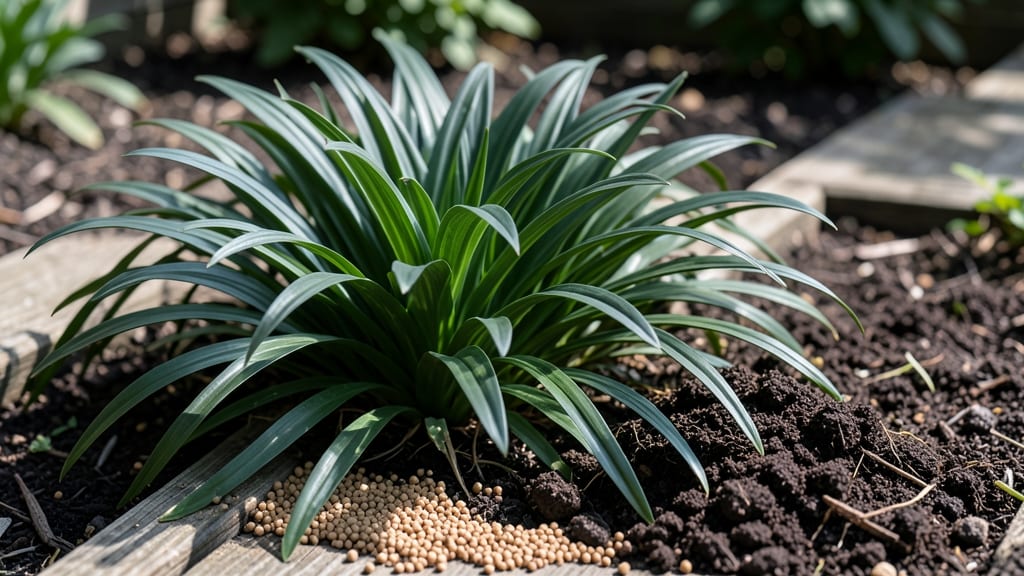
The right mondo grass fertilizer—packed with nitrogen—can transform your patchy lawn into a lush, durable carpet in weeks.
Struggling to keep your mondo grass lush and resilient? The right fertilizer can transform your lawn from patchy to picture-perfect—without the guesswork of trial and error.
Mondo grass thrives on a balanced approach, but nitrogen is the game-changer for that rich, deep green color and dense growth you’re after. Too little, and it looks lackluster; too much, and you risk burning those delicate blades.
In this guide, I’ll break down the best fertilizers, the ideal timing for application, and how to avoid common mistakes that leave your mondo grass struggling. Let’s get your lawn looking its best!
Best nitrogen-rich fertilizers for mondo grass growth & recovery
Mondo grass thrives on nitrogen-rich fertilizers that fuel its dense, vibrant foliage and resilience against foot traffic. Without proper nutrition, you’ll notice pale leaves, sparse growth, or weak recovery after mowing. The key is choosing fertilizers with the right NPK ratio—typically 10-10-10 or 16-4-8—to balance growth without overwhelming your plants with excess salts.
Nitrogen is the game-changer for mondo grass recovery, but not all nitrogen sources work the same. Slow-release options like coated urea provide steady nourishment, while quick-absorb fertilizers like ammonium sulfate deliver immediate results.
Organic choices, such as alfalfa meal or fish emulsion, improve soil health long-term, whereas synthetic fertilizers offer precise control over nutrient delivery.
Your choice impacts more than just color—it affects drought resistance and density. For example, synthetic nitrogen can boost greenness quickly but may stress plants in hot climates, while organic matter enhances moisture retention. Let’s break down the best options to keep your mondo grass thriving year-round.
⚠️ CRITICAL NOTE: Over-fertilizing can burn roots or attract pests. Always follow label instructions and test soil pH (ideal range: 6.0–7.0) before applying. Mondo grass prefers moderate nitrogen—too much leads to weak stems and disease susceptibility.
| Fertilizer Type | NPK Ratio | Release Type | Best For | Application Rate | Drought Impact |
|---|---|---|---|---|---|
| Coated Urea (Synthetic) | 46-0-0 | Slow-Release | Year-round growth | 1 lb per 100 sq ft | Moderate (improves root depth) |
| Alfalfa Meal (Organic) | 2-1-2 | Slow-Release | Soil health + color | 1 cup per 10 sq ft | High (retains moisture) |
| Ammonium Sulfate (Synthetic) | 21-0-0 | Quick-Release | Fast recovery | ½ lb per 100 sq ft | Low (risk of burn) |
| Fish Emulsion (Organic) | 5-1-1 | Moderate-Release | Foliar + root feed | 1 tbsp per gallon water | High (improves resilience) |
| Blood Meal (Organic) | 12-0-0 | Quick-Release | New growth spurts | ½ cup per 10 sq ft | Low (use sparingly) |
For quick recovery after mowing or drought, I recommend ammonium sulfate or blood meal—they deliver nitrogen fast, but use them sparingly to avoid root burn. If you’re prepping for summer, coated urea provides steady nourishment without the risk of overfeeding.
Organic options like alfalfa meal or fish emulsion are my top picks for long-term health, especially in partial shade where synthetic fertilizers can stress plants.
Pro tip: Mix organic matter (like compost) with synthetic fertilizers to buffer pH and improve moisture retention. This combo works wonders for drought-prone areas where mondo grass struggles to stay green. Always water thoroughly after applying granular fertilizers to activate nutrients and prevent salt buildup.
Watch for yellowing leaves—a classic sign of nitrogen deficiency. In this case, switch to a higher-nitrogen fertilizer (like 20-0-0) and reduce phosphorus/potassium to avoid imbalance. Over time, your mondo grass will develop a thicker canopy and darker green hue, making it nearly indestructible underfoot.
For shady lawns, organic fertilizers outperform synthetics because they improve soil structure, which is critical
When & how to apply mondo grass fertilizer for maximum results
Timing your mondo grass fertilizer applications is everything—too early or late, and you’ll waste nutrients or stress your plants.
Since mondo grass thrives in spring and summer, focus on feeding during its active growth phases (April through June, with a possible light feed in early fall). Early spring is ideal for kickstarting new growth, while late summer helps recover after heat stress.
Avoid fertilizing in winter or fall, as the plant enters dormancy and won’t use the nutrients effectively.
Choosing between granular vs. liquid fertilizers depends on your needs. Granular fertilizers (like slow-release pellets) are best for long-term feeding, while liquid fertilizers deliver quick results—perfect for correcting nutrient deficiencies fast.
For mondo grass, I recommend a balanced 10-10-10 NPK ratio to promote even growth without favoring roots or foliage over the other. Always water thoroughly after applying to activate nutrients and prevent burn.
🌱 Step-by-Step Fertilizer Application for Mondo Grass
- 1 Test soil pH first—mondo grass prefers 6.0–7.0. Use a kit to check; amend with lime (for acidic soil) or sulfur (for alkaline soil) before fertilizing.
- 2 Choose your fertilizer: For granular, use 1 tbsp per plant of 10-10-10. For liquid, mix 1 tbsp per gallon of water. Organic options like fish emulsion work too but require more frequent applications.
- 3 Apply in early morning to avoid leaf burn from heat. For granular, sprinkle evenly around the base of plants, avoiding direct contact with foliage. For liquid, water plants first, then apply fertilizer to damp soil.
- 4 Water deeply immediately after applying to activate nutrients. Aim for 1 inch of water to help fertilizer penetrate the root zone. Avoid overhead watering for 24 hours to prevent nutrient runoff.
- 5 Monitor for 2 weeks—look for darker green leaves and new growth. If you see yellowing or wilting, reduce fertilizer amounts by half and water more frequently to flush excess salts from the soil.
One of the biggest mistakes I see is over-fertilizing, which leads to leaf burn or even plant death. Mondo grass is sensitive to high salt levels, so always follow package instructions and dilute liquid fertilizers if needed.
If your soil is already rich, cut the recommended dose in half. Pro tip: Mulch after fertilizing with 2–3 inches of shredded bark to retain moisture and slow nutrient release.
For container-grown mondo grass, reduce fertilizer amounts by 30–50% since pots drain faster and roots are more confined. Use a water-soluble fertilizer every 6–8 weeks during the growing season, and always flush the soil with water after each application to prevent salt buildup.
Containers also dry out quicker, so pair fertilizing with deep watering to avoid stress.
If your mondo grass shows signs of nutrient deficiencies, act fast. Yellowing leaves often mean nitrogen deficiency—apply a quick-release nitrogen fertilizer like urea. Purple stems indicate phosphorus deficiency; use a bone meal supplement.
For potassium issues (weak stems), switch to a potassium-rich fertilizer like greensand. Always pair corrections with proper watering to help the plant recover.