
Lawn
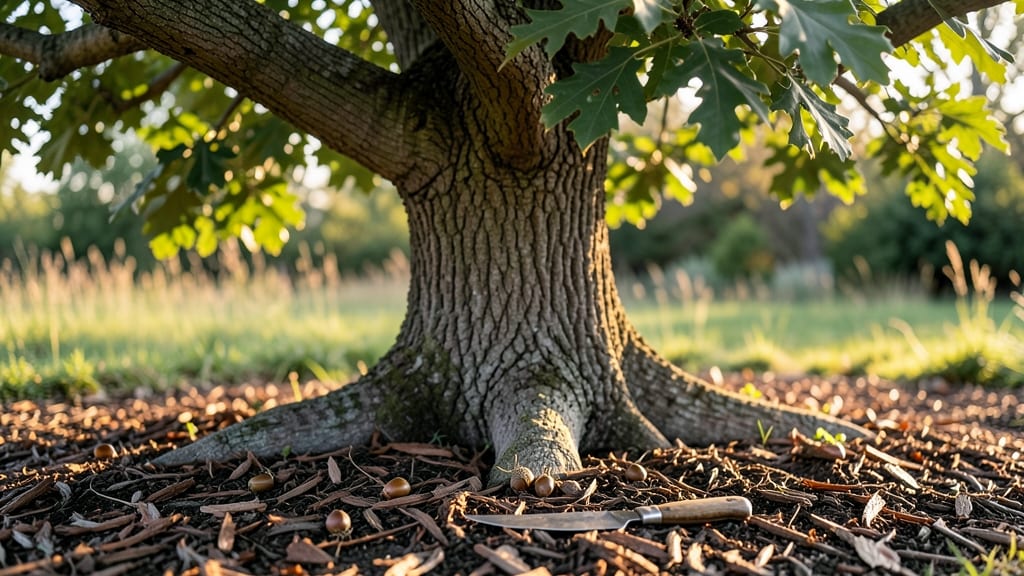
Removing grass around trees may seem helpful, but it can actually harm root systems by exposing them to heat and erosion while eliminating natural moisture competition. Instead, maintain a 3- to 6-inch mulched ring to protect roots and retain soil health.
Deciding whether to remove grass around trees comes down to root protection and soil health.
Grass acts as a natural insulator, keeping soil cooler and more stable, while its shallow roots compete with trees for water and nutrients. Over-clearing can leave roots vulnerable to drying out or damage from foot traffic, but leaving grass unchecked can lead to matting and fungal growth.
The ideal balance is a mulched buffer zone that blocks weeds while preserving moisture and temperature regulation. This approach mimics nature's design while giving trees the support they need to thrive. 🌳
For best results, use organic mulch like wood chips or bark—these break down over time, enriching the soil rather than suffocating roots. Keep mulch 2-3 inches deep and maintain a 2-inch gap between the mulch and tree trunk to prevent rot.
This method reduces maintenance while protecting your trees' long-term health.
💡 In This Article
- How Grass Removal Affects Tree Root Systems
- Best Practices for Mulching Around Trees Instead of Grass Removal
How grass removal affects tree root systems
Tree roots extend far beyond the trunk, often reaching 3-5 times the tree's height horizontally. Grass competes for water and nutrients through its shallow root network, which can stress younger trees or those in drought-prone areas.
However, removing grass entirely eliminates this natural moisture competition while exposing roots to higher soil temperatures—especially in sunny climates where surface temps can exceed 120°F during summer. This heat stress forces roots to work harder to absorb water, potentially stunting growth.
The real issue isn't just competition—it's the thermal insulation grass provides. A dense lawn acts like a blanket, keeping soil 5-10°F cooler than bare ground. Without this protection, roots near the surface dry out faster, while deeper roots struggle to compensate.
Research from the University of Georgia shows that trees with mulched bases maintain 20% more moisture retention than those with grass-free zones, even during dry spells. 🌱
Grass also plays a role in soil structure. Its fibrous roots prevent erosion while improving drainage, whereas compacted bare soil can become impermeable. When you remove grass, you risk creating a hardpan layer that blocks water and oxygen flow to roots.
This is particularly dangerous for shallow-rooted species like maples or oaks, which rely on consistent moisture near the surface.
One critical factor is the mycorrhizal relationship between trees and grass roots. These beneficial fungi help trees absorb phosphorus and other nutrients. Disturbing this ecosystem—whether through grass removal or over-mulching—disrupts this natural partnership.
The key is balance: enough grass removal to reduce competition, but not so much that you sacrifice root protection.
Consider this analogy: Grass is like a tree's natural air conditioning system. Without it, roots overheat like a car engine left running in the sun—eventually leading to failure. The solution lies in strategic removal combined with protective mulching, creating a microclimate that supports root health year-round. 🌿
For example, a 2-inch layer of wood chips under a 3-foot diameter mulch ring can reduce soil temperature fluctuations by 30% compared to bare soil. This simple adjustment mimics the natural forest floor environment where trees thrive without human intervention.