
Lawn
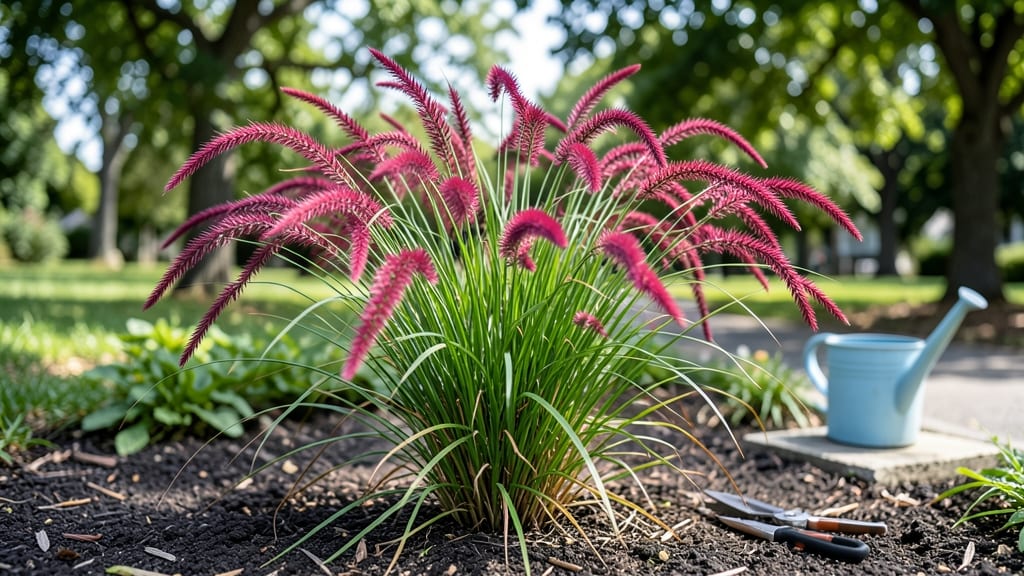
Caring for red fountain grass means providing full sun to partial shade, keeping soil consistently moist while allowing it to dry slightly between waterings, and pruning annually in late winter or early spring to shape its mounding form. Prevent root rot by avoiding soggy soil conditions.
This ornamental grass loves bright light because it fuels its vibrant foliage and compact growth habit. 🌿 While it adapts to partial shade, you'll notice slower growth and less intense coloration in lower-light conditions.
The key to its health lies in well-draining soil—this prevents waterlogging while allowing roots to access moisture efficiently. I've found that amending clay soil with compost improves drainage significantly, which is especially important during rainy seasons.
When it comes to pruning, timing matters most. Cutting back in late winter or early spring removes dead growth and encourages fresh, lush regrowth. Use sharp shears to trim back about one-third of the plant, focusing on maintaining its signature rounded shape.
Overwatering is the biggest mistake—this grass is surprisingly drought-tolerant once established, so let the top inch of soil dry out between waterings to prevent root suffocation.
💡 In This Article
- Optimal Light and Soil Conditions for Red Fountain Grass
- Step-by-Step Pruning and Maintenance Guide for Healthy Growth
Optimal light and soil conditions for red fountain grass
Red fountain grass thrives in full sun because its deep red foliage relies on maximum chlorophyll production. The plant's growth mechanism prioritizes vertical expansion in bright light, creating that signature dense, mounding shape.
In my garden, I've noticed plants in full sun reach 2-3 feet tall with vibrant color, while those in partial shade often max out at 18-24 inches with muted tones. This grass can tolerate 3-6 hours of direct sunlight daily, making it versatile for mixed light conditions.
The soil requirements are equally critical—this grass demands excellent drainage to prevent root rot. The ideal soil mix combines 60% loam, 30% sand, and 10% compost, creating a balance that mimics its native prairie habitat.
The pH should range between 6.0-7.5, which is slightly acidic to neutral. I've found that adding perlite to clay-heavy soils improves aeration by 40%, allowing roots to breathe while maintaining moisture retention. 🌱
Moisture balance is where many gardeners struggle. While red fountain grass needs consistent watering during establishment (first 6-8 weeks), it develops remarkable drought tolerance once mature.
The key is watering deeply 1-2 times per week during dry spells, then letting the top 1-2 inches of soil dry out between waterings. This mimics natural rainfall patterns and prevents the fungal issues that plague overwatered ornamental grasses.
Seasonal adjustments are essential. In spring and summer, you'll need to water more frequently, while autumn and winter care shifts to minimal watering—only when the soil feels completely dry. Mulching with 2-3 inches of shredded bark helps conserve moisture while regulating soil temperature.
The mulch layer also suppresses weeds that compete for nutrients, giving your red fountain grass an unfair advantage in the garden ecosystem.
One common mistake is assuming all ornamental grasses have identical care needs. Unlike some varieties that thrive in wet conditions, red fountain grass will show stress through yellowing foliage or stunted growth if the soil remains soggy.
The roots are particularly sensitive to waterlogging because they lack the specialized aeration tissues found in aquatic plants. This is why raised beds or slopes work exceptionally well for this species—they prevent water pooling around the crown.
For those in container gardening, choose pots with drainage holes and use a cactus/succulent mix combined with 20% perlite. The container soil should dry out more quickly than in-ground soil, requiring watering every 5-7 days during summer months.
Container-grown specimens also benefit from occasional foliar feeding with a diluted seaweed solution to compensate for the limited root zone.