
Watering
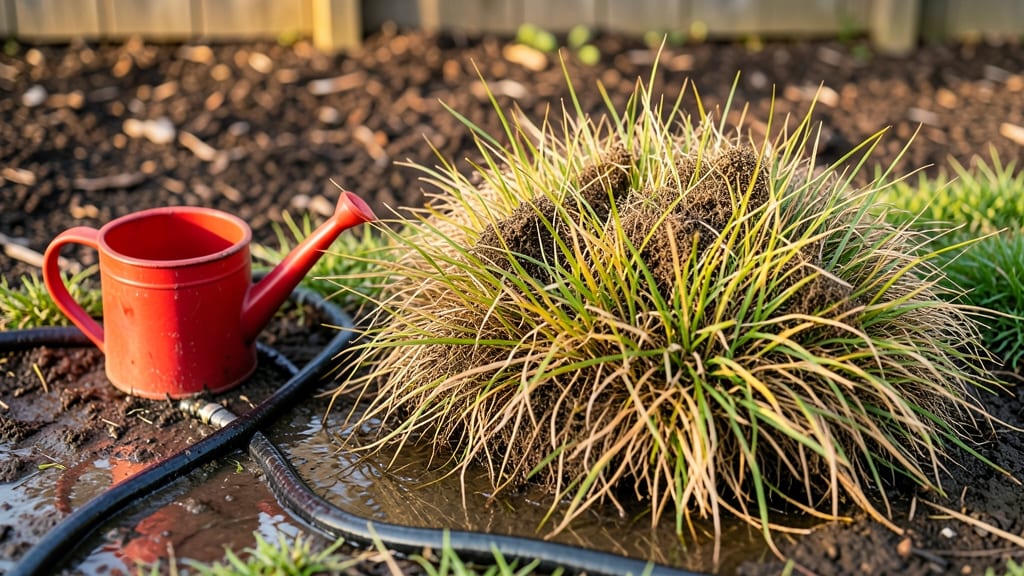
Your Bermuda grass might look lush but could be drowning in too much water. 🌱 Overwatered Bermuda grass shows up as yellowing patches, fungal growth, and a spongy feel underfoot—all signs your lawn needs better drainage and a smarter watering routine.
The problem starts with soil that can't drain fast enough, often from heavy clay or compacted layers. I've seen this turn vibrant green lawns into soggy, disease-prone messes in just a few weeks.
The fix? Test your soil's drainage and adjust your watering schedule to 1 inch per week, including rain.
With proper aeration and a slight slope in your yard, you'll see roots recover within 2-3 weeks. The grass will turn a deeper green, stay firm underfoot, and resist diseases like brown patch. Think of it as giving your lawn a breath of fresh air.
This works for any Bermuda grass variety, whether you're dealing with a small patch or your entire yard. The key is consistency—don't let the soil stay soggy, and you'll keep that resilient turf looking its best all season.
Root Causes Of Soggy Soil
Overwatering Bermuda grass isn’t just about giving it too much love—it’s often the result of misjudging soil conditions, irrigation habits, or environmental factors. Understanding why this happens helps you fix the problem at its source. Let’s break down the key culprits behind that perpetually damp lawn.
Bermuda grass thrives in well-draining soil, but if your yard has heavy clay or compacted dirt, water pools instead of percolating. Here’s why:
- Clay-heavy soil: Tiny particles pack tightly, blocking water flow. Even after rain or watering, excess moisture lingers near the surface, suffocating roots.
- Compaction: Foot traffic, machinery, or natural settling crush soil pores, reducing aeration. Without air pockets, water has nowhere to go but upward—leading to puddles and fungal risks.
- No organic matter: Sandy or depleted soils lack the humus needed to hold moisture temporarily while allowing excess to drain. Bermuda grass roots struggle to establish in these conditions.
Actionable fix: Test your soil’s drainage by digging a 12-inch hole, filling it with water, and timing how long it takes to drain. If it’s slower than 6 hours, amend with compost or sand to improve structure.
Even with good soil, inconsistent watering habits drown Bermuda grass. Common mistakes include:
- Short, frequent sessions: Light sprinkles (e.g., 5–10 minutes daily) encourage shallow root growth and evaporate quickly, forcing you to water again—trapping moisture in the top inch of soil.
- Ignoring weather: Watering on rainy days or after heavy dew doubles moisture input, overwhelming the soil’s capacity to absorb and release water.
- Wrong time of day: Early morning watering is ideal, but evening sessions leave grass damp overnight, promoting disease. Overwatering at any time without checking soil moisture leads to waste.
Actionable fix: Aim for 1–1.5 inches of water per week (including rain), delivered in deep, infrequent sessions (e.g., 20–30 minutes, 2–3x/week). Use a rain gauge or tuna can to measure accurately.
Automatic sprinklers are convenient—but they’re also prone to errors that soak your lawn unnecessarily. Watch for these red flags:
- Misaligned heads: Sprinklers angled toward sidewalks, driveways, or house foundations waste water and create uneven saturation.
- Clogged nozzles: Debris or mineral buildup reduces water pressure, causing overspray that oversaturates certain areas while leaving others dry.
- Overlapping zones: Sprinkler heads set too close together drench the same spots repeatedly, while gaps leave Bermuda grass thirsty elsewhere.
- Run-time errors: Timers stuck on "always on" or set for longer cycles than needed (e.g., 45 minutes instead of 20) flood the lawn.
Actionable fix: Audit your system monthly: check for broken seals, adjust spray patterns, and ensure heads cover only grass (not hardscapes). Consider a smart controller that adjusts based on real-time weather data.
Mother Nature plays a sneaky role in overwatering. Even with perfect human efforts, these conditions can turn your lawn into a swamp:
- Low-lying areas: Gravity pulls water toward depressions, where it pools and stagnates. Bermuda grass in these spots may appear lush but is actually drowning.
- High humidity: Air already saturated with moisture reduces evaporation, so water lingers longer in the soil. In tropical or coastal climates, this is a year-round risk.
- Heavy rainfall: Bermuda grass needs less water when it rains. Skipping irrigation after 0.5 inches of rain can prevent overwatering—but many gardeners forget to adjust.
- Shade from trees/shrubs: Roots from nearby plants compete for water, slowing drainage. Shaded Bermuda grass may also grow slower, making it seem like it needs more water.
Actionable fix: Reseed low spots with sand or install French drains to redirect water. In humid climates, water only when the top 2–3 inches of soil are dry (use a screwdriver test).
By identifying which of these factors is at play in your yard, you can target fixes that actually work—no more guesswork, just a drier, healthier lawn. 🌱
Revive Your Lawn with These Fixes
Overwatered Bermuda grass can feel like a soggy mess, but don’t panic—your lawn can bounce back with the right care. The key is identifying the root cause (literally!) and taking targeted action.
Below, we’ve mapped out practical solutions for the most common issues, from poor drainage to overzealous watering habits, plus tips to keep your turf thriving long-term.
If your lawn sits in a puddle after rain or watering, drainage is the culprit. Bermuda grass hates soggy roots, so act fast to improve soil aeration and water movement.
🌱 Step 1: Aerate Aggressively
- When: Early morning on a warm, dry day (ideal soil temp: 65–75°F).
- How: Rent a core aerator (or hire a pro) to pull 3–4" deep plugs from the lawn.
Space holes 2–3" apart. - Pro Tip: 💡 For thick thatch (¼" or more), aerate twice—once vertically, once horizontally—to break up compacted layers.
🏗️ Step 2: Amend the Soil Mix sand or compost into the aeration holes to improve drainage.
A 50/50 blend works best: - Sand: Use coarse, washed sand (like construction sand) for fast drainage. - Compost: Adds organic matter to retain some moisture while loosening clay soils. - Avoid: Pure peat moss—it can compact over time.
💧 Step 3: Test and Adjust Drainage
After aerating, water deeply and check how quickly puddles disappear:
- Good: Water drains within 6–12 hours.
- Still Slow? Add a swale (a shallow trench) around low spots to redirect water.
Bermuda grass is drought-tolerant once established—it doesn’t need daily drinks. Cut back to save your lawn (and your water bill).
👨🍳 Step 1: Water Less, But Deeper
- Frequency: 2–3 times per week (early morning, 4–6 AM).
- Depth: ½–¾" per session (use a rain gauge or tuna can to measure).
- Signs You’re Overdoing It: 🌡️ Yellowing grass, mushrooms, or a "squishy" feel underfoot.
⏰ Step 2: Upgrade Your Irrigation
- Sprinklers: Adjust heads to avoid overlap (wet spots = waste).
- Soaker Hoses: Bury them 1–2" deep for even, slow watering.
- Smart Controllers: Set timers based on weather forecasts (skip watering if rain’s coming!).
🎯 Step 3: Mow High and Let It Breathe
- Height: Keep Bermuda at 1–1.5" in summer, ½–¥" in cooler months.
- Why? Taller grass shades roots, reducing evaporation and overwatering risks.
Thatch (that spongy layer between grass and soil) can trap moisture, inviting fungus and rot. Bermuda’s thatch layer should be <½"—any thicker, and it’s a problem.
🌡️ Step 1: Dethatch in One Swipe
- When: Late spring or early fall (avoid summer heat).
- Tool: Use a vertical mower or dethatching rake (set to ¼" depth).
- Pro Tip: ✨ Rent a power dethatcher for large lawns—manually raking takes forever!
🍽️ Step 2: Feed for Breakdown
Apply a slow-release nitrogen fertilizer (like 16-4-8) to encourage microbial activity that naturally decomposes thatch.
Once your lawn is back on track, keep it resilient with these habits:
| Issue | Prevention Tip |
|---|---|
| Compacted Soil | Aerate twice a year (spring/fall) for clay soils. |
| Thatch Buildup | Overseed with perennial ryegrass in fall to thin Bermuda’s growth. |
| Overwatering | Install a rain sensor on your sprinkler system to auto-shutoff during rain. |
| Poor Drainage | Grade your yard away from the house (1" drop per 10 feet) to slope water downhill. |
If your lawn is already yellow and mushy, try this emergency fix:
- Stop watering immediately—let the soil dry out.
- Rake away dead patches to expose fresh soil.
- Reseed with Bermuda (or ryegrass for winter cover).
- Apply a fungal preventer (like BioAdvanced Fungus Control) if you spot mold.
Remember: Bermuda grass is tough—it’ll recover faster than you think if you address the root issues. Start with drainage, dial back the water, and give it time. Your lawn will be back to its lush, green self in no time! 🌱💦
Frequently asked questions
How can I tell if my Bermuda grass is truly overwatered?
Look for these key signs: yellowing patches that stay soft even when dry, a spongy feel underfoot, or mushrooms sprouting in the grass. The soil may also smell sour or have a grayish tint. Stick a screwdriver into the ground—if it slides in easily, your lawn is waterlogged.
Will stopping watering immediately fix overwatered Bermuda grass?
Yes, but it takes time. Bermuda grass is drought-tolerant once established, so let the soil dry out completely before resuming watering. Aim for 1 inch per week (including rain) in deep sessions. You should see improvement in 2-3 weeks if no other issues (like fungus) are present.
Can I still save my lawn if there's brown patch fungus from overwatering?
First, stop watering and improve airflow by mowing higher (1.5 inches). Apply a fungicide like BioAdvanced Fungus Control and aerate to help roots recover. The brown patches should fade within 3-4 weeks with consistent care.
How often should I aerate to prevent overwatering?
For clay-heavy soils, aerate twice a year (spring and fall). If your yard has compacted soil from foot traffic, do it annually. Use a core aerator to pull 3-4 inch deep plugs—this creates channels for water to drain properly and prevents thatch buildup.
What's the best way to test my soil's drainage?
Dig a 12-inch deep hole and fill it with water. If it drains in less than 6 hours, your soil drains well. If it takes longer, mix in sand or compost to improve drainage. For extreme cases, consider installing French drains in low-lying areas.