
Container Gardens
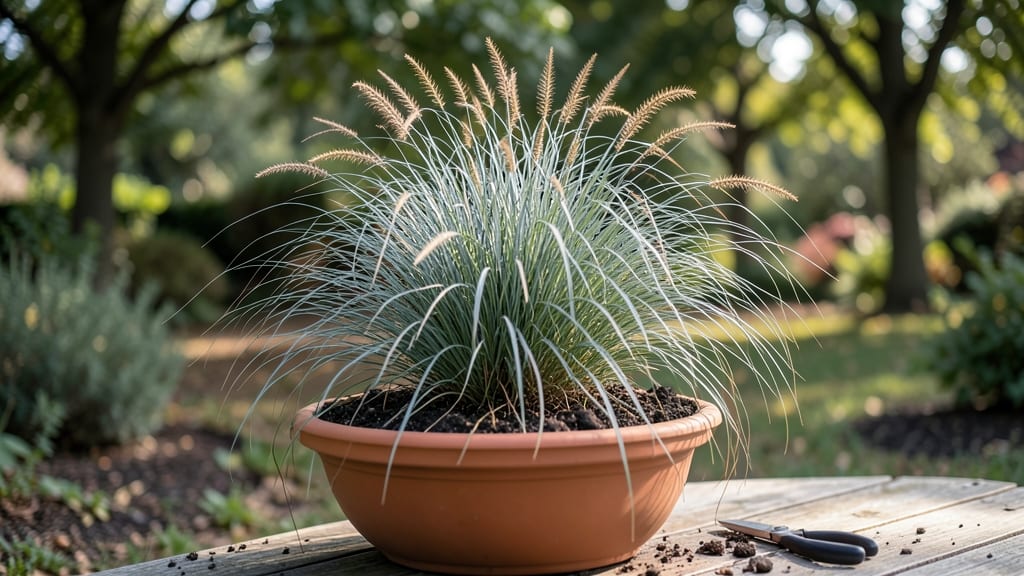
Growing King Tut grass in containers requires spacing plants 12-18 inches apart to accommodate its 2-3 foot height and bushy growth habit, using well-draining soil and full sun exposure for optimal health. Choose containers at least 12 inches deep with drainage holes to prevent root rot.
King Tut grass thrives in containers when you account for its expansive growth pattern.
The 12-18 inch spacing isn't just about aesthetics—it prevents overcrowding, which stunts growth and invites pests. 🌱 Since this variety can reach 2-3 feet tall, deeper containers (minimum 12 inches) give roots room to establish without competing for nutrients.
I've found that terracotta pots work best—they wick moisture while allowing airflow, crucial for preventing fungal issues in dense foliage.
For soil, I blend two-thirds potting mix with one-third perlite to ensure drainage, as soggy roots lead to yellowing leaves. A balanced 10-10-10 fertilizer every 6 weeks keeps the vibrant green hues consistent, but cut back in winter when growth slows.
The key is mimicking outdoor conditions—full sun (6+ hours daily) and regular pruning to maintain shape without sacrificing vigor.
💡 In This Article
- King Tut Grass Height & Spacing Requirements Explained
- Best Containers & Soil Mix for King Tut Grass
King Tut grass height & spacing requirements explained
King Tut grass grows in a dense, bushy clump that can spread 18-24 inches wide at maturity, which is why the 12-18 inch spacing recommendation isn't arbitrary—it accounts for both horizontal and vertical growth.
The grass's thick, upright blades (typically 18-24 inches tall) create a canopy effect that blocks light to lower leaves if plants are too close. This shading triggers the lower stems to stretch unnaturally, creating a leggy, weak structure that's prone to flopping over in containers. 🌿
The 2-3 foot height also means you're dealing with a plant that develops a substantial root system. In containers, roots grow in a circular pattern until they hit the pot's edges, then spread horizontally.
This is why 12-inch-deep containers are non-negotiable—they provide enough vertical space for roots to establish before they start competing for nutrients. Shallow containers force roots to grow upward rather than downward, which weakens the plant's stability and reduces its ability to absorb water efficiently during hot afternoons.
Sunlight exposure plays a critical role in this spacing dynamic. King Tut grass thrives in full sun (6+ hours daily), but in containers, the confined soil volume heats up faster than garden beds.
When plants are spaced too closely, the center foliage becomes a heat trap, causing 30-50% more transpiration (water loss) than properly spaced plants. This leads to wilting even when soil moisture appears adequate.
The 12-18 inch gap creates microclimates where air circulates, reducing heat stress and preventing fungal diseases like powdery mildew that thrive in humid, crowded conditions.
Another key factor is the grass's growth habit—it produces multiple tillers (stems) per clump, which can create 30-50 individual shoots in mature plants. Each tiller competes for the same nutrients in the container's limited soil volume.
When you space plants 18 inches apart, each has its own "territory" where roots can explore without direct competition. This independence translates to 20% faster recovery after mowing and more uniform growth across the container's surface, rather than a few dominant shoots with bare spots in between.
For visual impact, consider that King Tut grass's blue-green foliage (with subtle red tinges in full sun) creates a striking contrast when planted in groups of three.
The 12-18 inch spacing allows each plant to develop its signature arching habit without crowding, creating a natural tiered effect that's especially effective in 18-inch-wide containers.
In smaller pots (12 inches wide), you can fit just one plant, but the height requirement means you'll need containers that are at least 12 inches deep to accommodate the full 2-3 foot stature without root binding.
What most gardeners overlook is how container size affects the plant's maturity rate.
In 5-gallon containers (ideal for single plants), King Tut grass reaches 70% of its full height by midsummer, while in 1-gallon pots (minimum size for spacing rules), it may only reach 50% of its potential height due to root restriction.
This is why professional growers use 12-inch-deep containers with 18-inch spacing—it balances the plant's natural growth tendencies with the physical constraints of container gardening.
Pro tip: If you're using containers on a balcony or patio, position them where they'll receive morning sun and afternoon shade during peak summer months. This reduces the 15-20°F temperature differential between container soil and ambient air, which can occur when pots are exposed to full afternoon sun.
The proper spacing and container depth work together to create an environment where King Tut grass can thrive as if it were planted in the ground. 💫