
Lawn
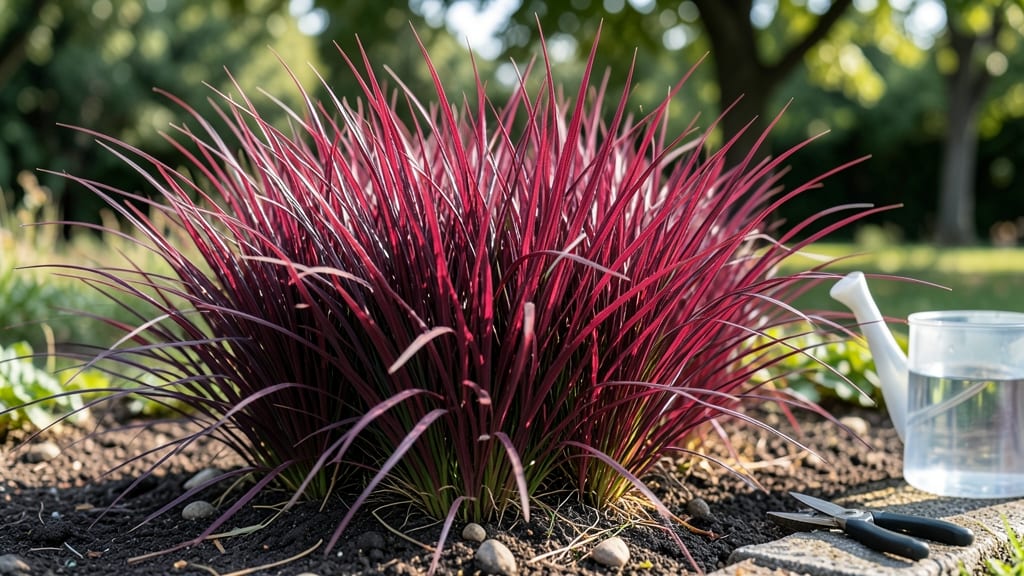
Growing Japanese Red Baron blood grass transforms your yard into a lush, burgundy carpet that thrives where Kentucky bluegrass struggles. 🌿 This cold-hardy grass isn’t just tough—it’s stunning, with deep red blades that turn golden in winter, creating year-round visual interest.
Unlike finicky turf, it handles drought, shade, and poor soil like a champ, making it the ultimate low-maintenance alternative for lawns and borders.
The secret to success starts with soil—it loves well-draining, slightly acidic conditions (pH 5.5-6.5). Amend heavy clay with compost or sand to keep roots happy, and plant in full sun to partial shade. Water deeply but infrequently after establishment; once settled, it’s drought-tolerant enough to outlast summer heat without wilting.
For best color, fertilize lightly in spring with a slow-release, iron-rich formula—avoid heavy nitrogen, which dulls those signature red hues.
By late fall, you’ll have a dense, velvety ground cover that stays vibrant even after frost. The grass spreads slowly but steadily, filling gaps naturally over time.
Unlike invasive types, Japanese Red Baron stays contained and works beautifully in mixed borders, as edging, or even as a striking alternative to mulch in garden beds. Plus, it’s deer-resistant, so you won’t lose it to hungry critters during winter.
Fair warning: those striking red blades can turn brown if stressed—usually from overwatering or too much shade. If you see crispy tips, cut back on irrigation and trim the affected areas to encourage fresh growth.
With the right care, this grass will reward you with a lawn that’s both practical and show-stopping, year after year.
📚 In This Guide
- What you need
- Instructions
- Tips and common mistakes
- Wrapping up and next steps
What you need
- ● Japanese Red Baron Blood Grass Seed – 10–20 lbs per 1,000 sq ft (coverage varies by soil prep and climate). Opt for certified organic or high-quality turf-grade seed for best results.
- ● Lawn Soil or Topsoil – 2–4 inches (screened, nutrient-rich, and well-draining). Avoid clay-heavy soil unless amended.
- ● Lawn Rake or Dethatcher – For leveling soil and removing debris before seeding.
- ● Broadcast Spreader – Ensures even seed distribution (manual or walk-behind models work best for large areas).
- ● Starter Fertilizer – High-phosphorus (P) blend (e.g., 10-20-10 ratio) to promote root growth. Apply 0.5–1 lb of P per 1,000 sq ft.
- ● Watering System – Hose with adjustable nozzle or sprinkler (light mist setting for germination). A soaker hose is ideal for deep, even watering.
- ○ Lawn Roller (Optional but Helpful) – Lightweight (100–150 lbs) to press seed into soil for better contact.
- ● Soil Test Kit – Check pH (ideal range: 6.0–7.0) and nutrient levels. Adjust with lime (if pH ) or sulfur (if pH > 7.0).
- ○ Weed Barrier Fabric (Optional) – If your soil has persistent weeds, lay down a biodegradable landscape fabric before seeding.
- ● Clear Weather Window – Plan for 5–7 consecutive dry days post-seeding to avoid mold and ensure germination.
- ● Protective Gear – Gloves, knee pads, and sunglasses for comfort during prep and planting.
- ● 🌡️ Best Planting Time: Early spring or late summer/fall (avoid extreme heat or frost).
- ● ✨ Seed Mix: For a denser lawn, mix Japanese Red Baron with 10–20% fine fescue for added cold tolerance.
- ● 🔥 Organic Boost: Add compost or worm castings to the topsoil for richer, faster growth.
Step-by-Step instructions for planting and establishing Japanese Red Baron blood grass
This cold-hardy grass thrives where Kentucky bluegrass struggles—follow these steps for a lush, low-maintenance lawn.
🌱 Step 1: Prepare the Soil for Optimal Germination
Test your soil's pH first—Japanese Red Baron prefers a range of 6.0 to 7.0. If your soil is too acidic, amend with pelletized lime (apply 2-3 pounds per 100 square feet) and work it into the top 6 inches of soil. Avoid heavy clay? Mix in 2-3 inches of compost or sand to improve drainage.
Rake the area smooth to eliminate low spots where water pools. The surface should be firm but not compacted—think of a well-tended golf green. If your soil is sandy, you'll see water bead up after watering; if it's clay, it'll absorb quickly. Aim for a balance where moisture disappears in 10-15 minutes after watering.
🌿 Step 2: Plant Seed at the Right Depth and Spacing
Spread the seed evenly using a broadcast spreader set to its lowest setting. Walk in two perpendicular directions to ensure even coverage—you should see seeds spaced about 1/4 inch apart. For a 100-square-foot area, you’ll need roughly 1-1.5 pounds of seed (check the seed bag for exact rates).
Lightly rake the seeds into the soil with a fine-tooth rake, covering them with no more than 1/8 inch of soil. Press the surface gently with a lawn roller or the back of a rake to ensure good seed-to-soil contact. This prevents seeds from washing away during your first watering.
💧 Step 3: Water Consistently for Germination and Establishment
Keep the soil evenly moist (not soggy) for the first 2-3 weeks—this is critical for germination. Water lightly 2-3 times daily (morning, afternoon, and evening) for 10-15 minutes each session. You’ll know you’re doing it right when the top 1/4 inch of soil stays damp but excess water drains away within 30 minutes.
Once seedlings reach 2 inches tall, reduce watering to 1 inch per week, including rainfall. Overwatering now causes seed rot, while underwatering leads to patchy, weak growth. Watch for dark green, grassy blades—that’s your sign the seeds are thriving. If you see yellowing, you’re either overwatering or the soil pH is off.
✂️ Step 4: Mow and Maintain for a Thick, Resilient Lawn
Wait until the grass reaches 3-4 inches tall before the first mow—this ensures deep root establishment. Set your mower blade to 3 inches and never remove more than 1/3 of the blade height in a single mowing. Japanese Red Baron stays green in temperatures down to -30°F, so you can keep mowing late into fall if needed.
Fertilize once in early spring and once in early fall with a slow-release, low-nitrogen fertilizer (look for a ratio like 16-4-8). Over-fertilizing stresses this grass, leading to brown patches. Aerate in early fall if your lawn sees heavy foot traffic—this helps roots breathe and improves water absorption.
☀️ Step 5: Adjust Care for Seasonal Challenges
In summer heat, water early in the morning to reduce evaporation and fungal risks. If your lawn turns grayish-brown in drought, it’s dormant—not dead. It revives quickly once rain returns. In winter, avoid heavy foot traffic on frozen grass—it recovers slowly from damage.
This grass outcompetes weeds naturally, but if you spot broadleaf weeds, spot-treat with a selective herbicide in early spring. Avoid pre-emergent herbicides—they can prevent seed germination for up to a year. With proper care, Japanese Red Baron stays dense, drought-tolerant, and vibrant for decades with minimal effort.
Tips & tricks for perfect Japanese Red Baron blood grass establishment
Between us, these little details make the difference between a patchy lawn and a lush, resilient carpet of grass that outlasts Kentucky bluegrass. I've seen this grass transform bare spots into vibrant turf—here's what nobody tells you.
Soil Prep Secret: When testing your soil's pH in Step 1, don't just rely on test kits—dig a small hole and examine the soil profile. Japanese Red Baron thrives in well-aerated soil, so if you see compacted layers deeper than 6 inches, consider renting a core aerator ($50 for a weekend) to break up thatpan. The goal is soil that crumbles easily when dry and holds moisture like a sponge—not concrete.
Seed Spreading Technique: In Step 2, the perpendicular pass method works wonders, but here's the pro move: after your second pass, walk diagonally through the area once more. This catches any missed spots where seeds might clump. For larger areas, use a staking grid (available at garden centers) to ensure consistent spacing—think of it as your lawn's foundation.
Watering Watch: The 10-15 minute watering sessions in Step 3 sound simple, but timing matters more than you'd think. Use a rain gauge or empty tuna can to measure—fill it during watering to verify you're hitting that 10-15 minute mark accurately. Morning watering is best, but if you must water in the evening, finish by 6pm to prevent fungal growth. The key is keeping that top ¼ inch damp without creating puddles.
First Mow Caution: Waiting until 3-4 inches in Step 4 seems straightforward, but here's what I learned the hard way: don't mow if the grass feels springy when you walk on it. That's a sign roots aren't fully established. Instead, test by gently pulling up a small section—if you see white roots about 2 inches long, you're ready. This grass grows back fast, so patience at this stage prevents thin spots later.
Pro Tips for Japanese Red Baron Blood Grass
- Between us, these little details make the difference between a patchy lawn and a lush, resilient carpet of grass that outlasts Kentucky bluegrass.
- Soil Prep Secret: When testing your soil's pH in Step 1, don't just rely on test kits—dig a small hole and examine the soil profile.
- Seed Spreading Technique: In Step 2, the perpendicular pass method works wonders, but here's the pro move: after your second pass, walk diagonally through the area once more.
Frequently asked questions
Got questions about growing Japanese Red Baron blood grass? You’re not alone!
Here are answers to the most common concerns—from planting to troubleshooting—so you can grow a lush, cold-hardy lawn without the guesswork.
How cold can Japanese Red Baron blood grass tolerate?
This variety thrives in USDA Zones 3-9 and stays green in temperatures as low as −30°F (−34°C). Unlike Kentucky bluegrass, it won’t brown out in winter—just slows growth. For best results, plant in early fall or spring to let roots establish before extreme cold.
How long does it take for Japanese Red Baron to establish?
Expect 4-6 weeks for initial germination, but full root establishment takes 3-4 months. Avoid heavy foot traffic or mowing until the grass reaches 3-4 inches tall. Water deeply 2-3 times per week (1 inch total) during dry spells to speed up growth.
Can I overseed Japanese Red Baron with other grasses?
While it’s not recommended to mix it with Kentucky bluegrass (they have different growth habits), you can overseed with fine fescue for shade tolerance. However, Japanese Red Baron’s dense, aggressive spread often crowds out weaker grasses. If overseeding, use a low-nitrogen fertilizer (5-10-10) to avoid stressing the existing turf.
What pests or diseases should I watch for?
This grass is highly resistant to pests, but keep an eye out for:
- Grubs (treat with milky spore or nematodes if lawn feels spongy).
- Dollar spots (fungus; improve drainage and mow high).
- Rust (reddish-brown patches; reduce nitrogen and water in the evening).
How short can I mow Japanese Red Baron without damaging it?
Never cut it shorter than 2.5 inches—this grass relies on blade length for drought resistance and shade tolerance. For a neat, golf-course look, mow at 2-3 inches. Use a sharp mower blade to prevent tearing, and never remove more than ⅓ of the blade height in one session.
Wrapping up and next steps
Growing Japanese Red Baron blood grass isn’t just about a lush lawn—it’s about mastering a cold-hardy, low-maintenance powerhouse that outshines even Kentucky Bluegrass. 🌱 With the right soil prep, patience, and care, you’ll soon enjoy a vibrant, durable turf that thrives where others falter.
Whether you’re a first-time gardener or a seasoned pro, this resilient grass is your ticket to a standout yard.
Ready to transform your lawn? Start small—test a patch, refine your technique, and watch your confidence (and grass) grow! For extra tips, check out local gardening forums or connect with fellow enthusiasts. Your dream lawn is just a seed away! ⚡