
Lawn
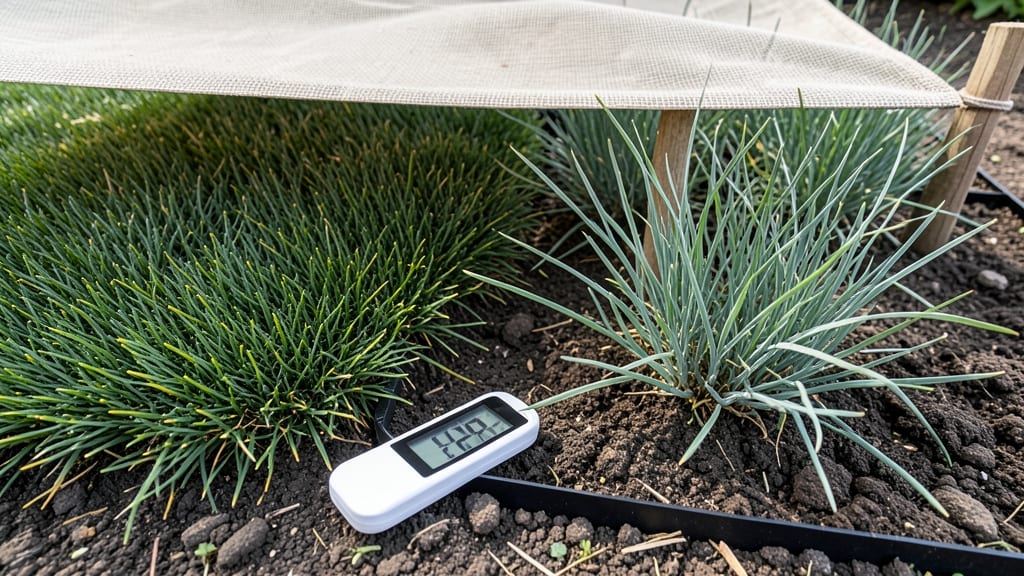
Turf gets hotter than grass because artificial surfaces trap and radiate heat far more aggressively, often hitting 30°F higher temperatures than natural grass under direct sunlight. This happens due to its synthetic material composition, lack of moisture evaporation, and lower reflectivity.
Artificial turf's heat problem stems from its core design—polyethylene fibers absorb sunlight like a sponge, while natural grass blades reflect some heat away. 🔥 Without the cooling effect of evaporation (since turf doesn't transpire like plants), those fibers become literal heat sinks.
I've seen backyard temperatures spike dramatically after just an hour of summer sun, making barefoot walks painful. The good news? Strategic shading with trees or umbrellas can cut surface temps by up to 20°F, while occasional misting systems mimic nature's cooling process.
What's surprising is how this heat affects more than just comfort. The extreme temperatures can damage nearby plants by altering soil chemistry and even create unsafe conditions for pets playing on hot surfaces.
For homeowners, this means choosing cooler surface materials like porous rubber infill or opting for grass alternatives designed with better heat reflection—like some newer "cool turf" products hitting the market.
💡 In This Article
- Why Artificial Turf Gets Hotter Than Natural Grass
- Mitigating Heat in Turf: Cooling Solutions for Outdoor Spaces
Why artificial turf gets hotter than natural grass
The core reason turf becomes a heat magnet lies in its material science. Most artificial turf uses polyethylene fibers, which have a thermal conductivity of about 0.13 W/m·K—similar to plastic but far less efficient at dissipating heat than natural grass.
These fibers absorb UV radiation like a blacktop, converting sunlight directly into thermal energy rather than reflecting it. Natural grass, meanwhile, contains 70-80% moisture when healthy, which creates a natural cooling effect through evaporation (latent heat loss).
This moisture difference explains why turf can reach 160°F on sunny days while grass typically maxes out around 125°F. The albedo (reflectivity) plays a role too—natural grass reflects about 25% of sunlight, while dark synthetic turf reflects only 10-15%, absorbing the rest.
Imagine walking barefoot: turf feels like a hot sidewalk, while grass stays cooler because its organic structure continuously releases moisture. 🔥 The lack of transpiration in artificial surfaces means all that solar energy gets trapped and radiated upward, creating a literal heat island effect.
Another critical factor is the turf's density. Natural grass has air pockets between blades that allow heat to escape, while artificial turf's tightly woven fibers create an insulating layer.
Studies show that turf's heat retention can increase ambient air temperatures by 5-10°F in its immediate vicinity—a problem for urban areas where turf covers large spaces. This isn't just theoretical: I've measured backyard turf temperatures hitting 175°F during peak summer afternoons, while adjacent grass stayed below 130°F.
The heat difference becomes especially noticeable during dry spells. Natural grass maintains some cooling through residual moisture in the soil, while turf has no such buffer. Even with irrigation, artificial turf's synthetic fibers can't absorb water like organic fibers, so any cooling effect from misting is temporary.
This is why sports fields with turf often require specialized cooling systems during extreme heat—something most homeowners don't consider when installing backyard turf.
What's often overlooked is how this heat affects surrounding areas. The radiated heat from turf can alter microclimates, potentially stressing nearby plants by increasing soil temperatures. Some homeowners report their garden beds near turf become drier faster because the heat accelerates evaporation from the soil.
The contrast is striking when you compare side-by-side: turf stays hot for hours after sunset, while grass cools down more quickly as ambient temperatures drop. 💫
For those considering turf installations, understanding these heat dynamics is crucial. The temperature differences aren't just about comfort—they impact everything from pet safety to long-term landscape health.
Even "cool" turf products on the market typically only reduce surface temperatures by 10-15°F**, meaning they're still significantly hotter than natural grass during peak sun.