
How To
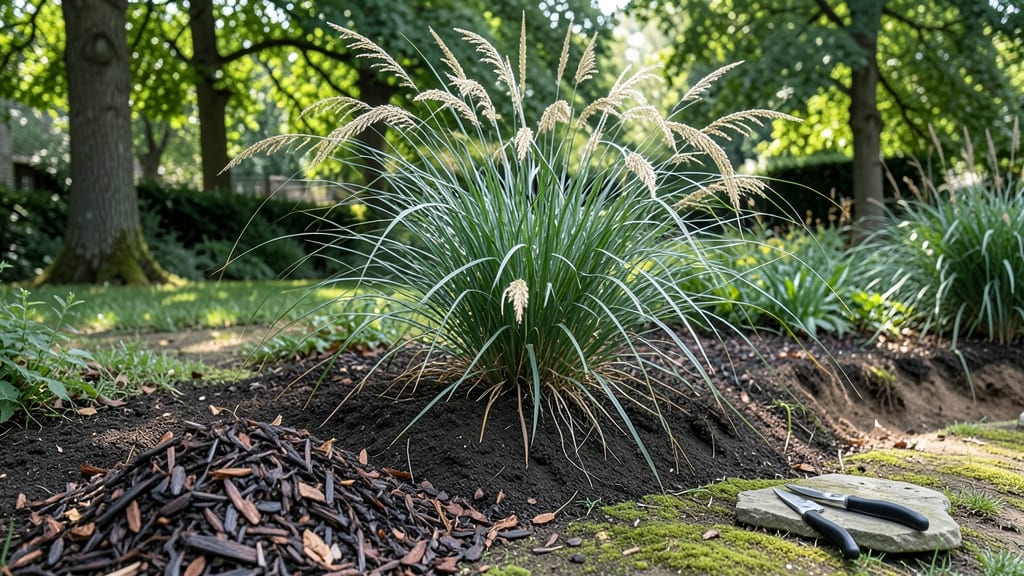
Grasses help build up the soil by preventing erosion through deep root systems, adding organic matter via decomposed leaves and roots, and enhancing microbial activity with their nutrient-rich litter. Their fibrous roots also improve soil structure and water retention.
Grasses act like nature's soil engineers by creating a protective shield against wind and water erosion.
Their extensive root networks bind soil particles together, while the dense growth above ground catches falling debris. 🌱 Unlike trees that drop large leaves, grasses produce fine, fibrous litter that breaks down quickly, releasing nutrients back into the soil.
This rapid decomposition process feeds beneficial microbes, which in turn boost soil fertility and structure. The key difference from other plants lies in their year-round growth cycle—even dormant grasses leave behind root systems that continue improving soil quality between seasons.
For practical application, consider planting tall fescue or switchgrass—both excel at soil building. These varieties produce abundant litter while maintaining strong root systems. To maximize benefits, avoid over-trimming in late summer, as this removes the protective mulch layer.
Regular mowing at 3-4 inches height encourages deeper root growth and better soil coverage.
💡 In This Article
- Grass Root Systems and Soil Erosion Prevention
- Organic Matter Contribution: Grasses vs Other Plants
Grass root systems and soil erosion prevention
The secret weapon of grasses lies in their root architecture, which can extend 10-15 times deeper than the height of the plant above ground. Take buffalo grass—its roots can reach 6-8 feet deep while the plant itself stays under 6 inches tall.
These deep, fibrous roots act like nature's Velcro, binding soil particles together through a network of fine root hairs that create microscopic bridges between sand, silt, and clay particles.
This binding effect reduces soil particle movement by up to 70% during heavy rains, while also resisting wind erosion by anchoring soil in place.
What sets grasses apart is their horizontal root spread, which can extend 2-3 feet outward from the plant. This creates a 3D root matrix that catches falling raindrops and slows water flow, preventing sheet erosion—the most common type of soil loss.
Prairie grasses like big bluestem develop root systems that spread 3-4 feet wide while reaching 5 feet deep, forming a natural erosion barrier.
In comparison, turfgrass varieties like Kentucky bluegrass have shallower roots (4-6 inches deep) but compensate with dense surface coverage that intercepts 90% of raindrops before they hit the soil.
The root structure also creates macropores—large channels that improve water infiltration. Studies show grassed areas can absorb 2-3 times more water than bare soil, reducing runoff by 50-60%. This water-holding capacity is crucial because it prevents the high-velocity water flow that causes gully erosion.
The fibrous nature of grass roots creates tiny air pockets that improve soil aeration while maintaining structure—unlike clay soils that compact easily or sandy soils that drain too quickly. 🌱 For practical application, planting switchgrass or orchardgrass mixtures provides both deep roots for erosion control and abundant surface growth for water absorption.
Seasonal variations play a key role in erosion prevention. Even dormant grasses maintain 30-50% of their root biomass through winter, continuing to stabilize soil. The dead plant material from previous seasons forms a protective mulch layer that further reduces erosion.
In agricultural settings, cover crops like ryegrass planted in fall develop extensive root systems by spring, preventing soil loss during critical planting periods. The key measurement here is root density—areas with 10+ roots per cubic inch show significantly less erosion than those with sparse root networks.
For maximum erosion control, combine grasses with 3-4 inches of mulch on bare soil areas. This mimics natural grassland conditions where fallen stems and leaves provide additional protection. The mulch layer works synergistically with roots by slowing water velocity and trapping sediment.
In restoration projects, native grass mixes outperform monocultures because their diverse root structures create a more comprehensive erosion barrier. For example, a mix of Indian grass, little bluestem, and sideoats grama can reduce erosion by 80% compared to single-species plantings.
What most people overlook is how grass roots secrete polysaccharides that act as natural soil glues. These sticky substances bind soil particles even more effectively than synthetic soil stabilizers. The process works best in well-drained soils with 5-10% organic matter content, where roots can thrive.
In degraded soils, adding compost tea can stimulate root growth by 20-30%, accelerating the erosion prevention benefits. 🌿 The result is soil that stays in place, water that infiltrates properly, and a foundation for healthier plant growth.