
Lawn
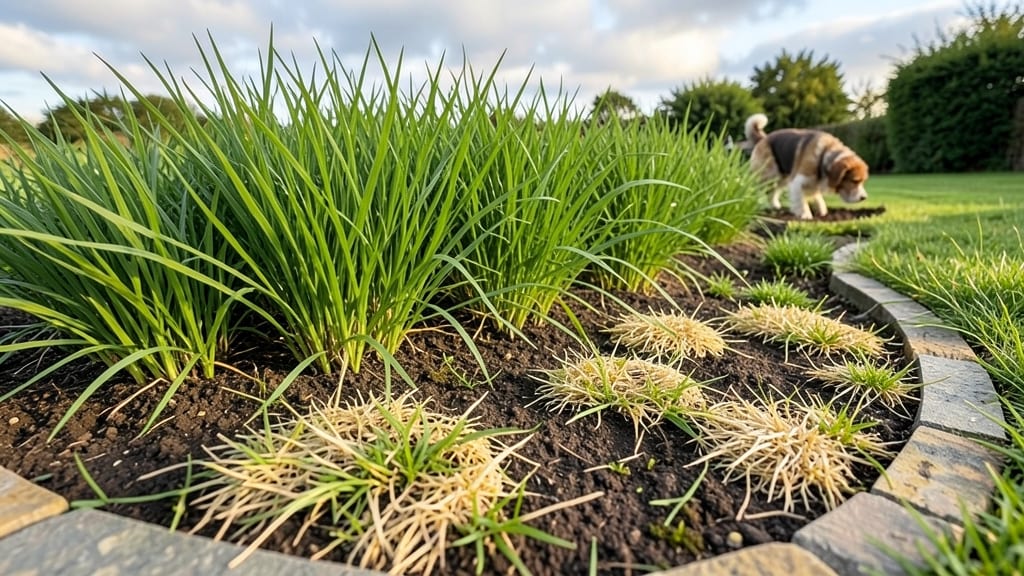
Dog urine damages grass by burning blades and weakening roots due to its high nitrogen concentration, especially when concentrated in one spot. Frequent urination can yellow lawns and slow growth over time.
Dog urine's harm comes from its concentrated ammonia and nitrogen, which act like a chemical burn when left to sit.
The pH imbalance disrupts grass cell structure, causing browning in concentrated spots while diluted urine leads to gradual yellowing. 🌱 This explains why some lawns develop patchy dead zones near high-traffic dog areas, even if the rest appears healthy.
To protect your lawn, train your dog to urinate in one designated area or dilute the urine by having them drink more water. After they go, lightly water the spot to spread the nitrogen and reduce burn risk.
Some grass types like fescue or ryegrass tolerate urine better than delicate Bermuda grass, making them smart choices for pet owners.
💡 In This Article
- How Dog Urine Chemistry Harms Grass Roots and Blades
- Protecting Your Lawn from Dog Urine Damage
How dog urine chemistry harms grass roots and blades
Dog urine contains ammonia and nitrogen concentrations up to 10,000 parts per million (ppm), which is 100 times stronger than human urine. When deposited on grass, this creates a localized chemical burn effect.
The ammonia immediately raises the soil's pH to 8.0 or higher (alkaline), disrupting the grass's natural 6.0-7.0 pH range needed for nutrient absorption. This imbalance causes cell membranes to break down, leading to browning or crispy patches where the urine lands.
The damage mechanism differs based on concentration. A single 10-second urination spot can deliver enough ammonia to kill grass blades within 24 hours due to direct contact burns.
However, diluted urine (from multiple small urinations or rain) spreads the nitrogen more evenly, causing gradual yellowing as the roots struggle to absorb excess nutrients. Think of it like a slow-release fertilizer overdose—too much nitrogen without proper dilution stresses the plant system.
Grass blades also suffer from protein denaturation in the urine's high ammonia environment. The ammonia reacts with the grass's chlorophyll, turning it brown and brittle.
This is why you often see circular dead spots where dogs frequently urinate—the concentrated ammonia acts like a natural herbicide. 🌱 The roots, meanwhile, become weakened as they attempt to process the sudden nutrient spike, making the grass more vulnerable to drought or disease.
Interestingly, the damage isn't just chemical—it's also physical. Dog urine's high salt content (up to 1.5%) creates osmotic stress, drawing moisture out of grass cells. This dehydration effect compounds the nitrogen burn, accelerating cell death.
The combination of chemical burn, pH imbalance, and moisture loss explains why some lawns develop permanent brown patches even after the urine dries.
Another critical factor is timing. Fresh urine contains 90% water, but as it evaporates, the ammonia and nitrogen become more concentrated. This is why watering the spot immediately after urination (within 5-10 minutes) can dilute the damage by 50% or more.
The evaporation process transforms what would be a localized burn into a wider area of gradual stress.
To visualize the difference: imagine pouring 1 tablespoon of bleach on grass versus spreading it over 1 square foot. The concentrated bleach would kill grass instantly, while the diluted version would cause slow discoloration. Dog urine works similarly—concentration determines the severity and speed of damage.