
Pests
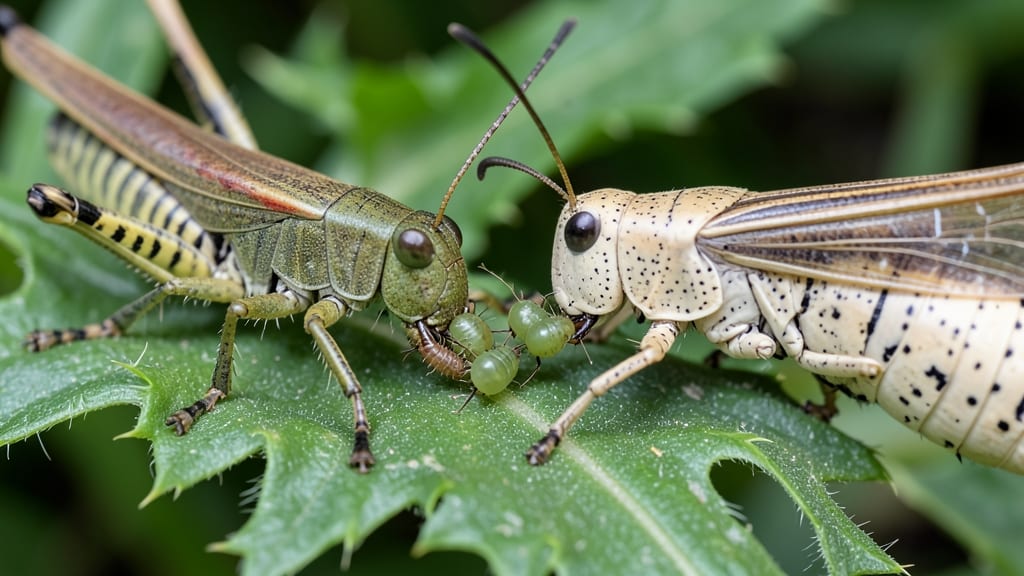
Grasshoppers do eat aphids, though they prefer other plants and insects when available. They primarily consume leaves and stems but will target aphids during shortages, making them occasional predators in garden ecosystems.
Grasshoppers are primarily plant-eaters, but their diet can shift when food sources become scarce. 🌱 Their strong mandibles allow them to crush aphids, though they much prefer tender shoots and leaves.
This opportunistic behavior makes them helpful in controlling aphid populations only when other food is limited, unlike dedicated predators like ladybugs that focus on insects year-round.
In garden ecosystems, grasshoppers play a subtle role in pest management. While they won't replace primary aphid predators, their presence can reduce outbreaks during droughts or when vegetation is sparse.
To encourage their natural pest control benefits, maintain diverse plantings that provide alternative food sources while keeping aphid populations in check.
💡 In This Article
- Grasshopper Diet: Why Aphids Aren’t Their Primary Prey
- Natural Pest Control: Grasshoppers vs Aphids in Gardens
Grasshopper diet: why aphids aren’t their primary prey
Grasshoppers are classified as polyphagous herbivores, meaning they primarily consume a wide variety of plant materials rather than specializing in animal prey. Their digestive systems are optimized for breaking down cellulose and plant fibers through specialized gut microbes that produce enzymes like cellulase.
This adaptation allows them to efficiently process leaves, stems, and even bark, which make up over 90% of their diet when abundant. Aphids, while technically insects, don't provide the same nutritional value as fresh plant matter, so grasshoppers only turn to them when their preferred plant-based meals are scarce.
The key factor in their occasional aphid consumption lies in their mandibles—powerful, scissor-like jaws capable of crushing both plant tissue and small insects. When grasshoppers encounter aphids, they'll consume them, but this behavior is more about opportunism than preference.
Studies show that grasshoppers are 3-5 times more likely to feed on new leaf growth than on insects, even when both are available. Their mouthparts are simply more efficient at processing plant material, which contains the carbohydrates and proteins they need in higher concentrations than insect prey.
Seasonal changes dramatically influence grasshopper diets. During spring and summer, when vegetation is lush, they'll almost entirely ignore aphids. However, in late summer or early fall when plants begin to dry out, grasshoppers may turn to aphids as a supplementary food source.
This shift is particularly noticeable in agricultural fields or gardens where drought conditions create food shortages. The aphids themselves become more visible during these times as they cluster on remaining green growth, making them easier targets for hungry grasshoppers.
What makes this behavior particularly interesting is the ecological trade-off. While grasshoppers do provide some aphid control, their primary role in ecosystems is as plant consumers rather than insect predators. Their impact on aphid populations is therefore limited compared to specialized predators like ladybugs or parasitic wasps.
However, in systems where plant-eating insects are already well-controlled, grasshoppers can play a supporting role in keeping aphid numbers in check during food-scarce periods.
Consider this comparison: A single grasshopper might consume 10-20 aphids in a day during lean times, but this is dwarfed by the 50-100 aphids a single ladybug can eat daily. The difference lies in specialization—grasshoppers are generalists adapted for plant consumption, while ladybugs have evolved specifically for insect predation.
This specialization makes ladybugs far more effective aphid controllers, though grasshoppers still contribute to the ecological balance in their own way.
Understanding this dietary hierarchy helps explain why gardeners shouldn't rely solely on grasshoppers for aphid control. While they'll help during tough times, their primary role is maintaining plant health by consuming vegetation.
The most effective garden ecosystems actually balance both plant-eaters and insect predators, creating a natural check-and-balance system that keeps all populations in harmony.