
Plants
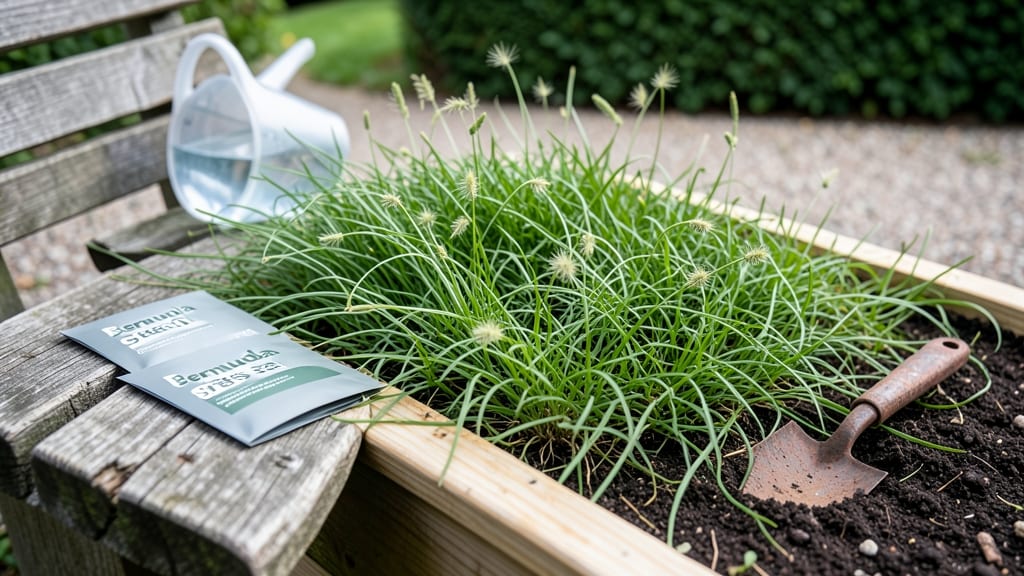
Planting Bermuda grass seed in North Texas at the right time can transform your lawn from patchy to lush in just a few months — but timing isn’t just about the calendar.
If you’ve ever poured seed into the ground only to watch it bake under the summer sun or freeze before sprouting, you know how critical the window is.
Bermuda grass thrives in USDA Zone 8a, but even here, planting too early risks frost damage, while waiting too late means fighting weeds and drought.
The key is soil temperature: aim for 75–85°F for optimal germination, which in North Texas typically lands in late April to early June or late summer after the worst heat has passed. That’s when your lawn finally gets the strong start it deserves.
Below, I break down the exact planting windows by region, soil prep tips to outcompete weeds, and how to keep your new grass thriving through North Texas’ brutal summers.
Best planting windows for Bermuda grass seed in North Texas by soil temperature
North Texas' hot summers and variable winters create unique challenges for planting Bermuda grass seed. Unlike cool-season grasses, Bermuda thrives when soil temperatures hit 75-85°F—a window that opens in late spring and late summer.
Timing your planting to these conditions ensures faster germination and stronger root establishment before extreme heat or frost arrives.
I’ve planted Bermuda grass in Dallas, Fort Worth, and Austin for years, and the difference between a lush green lawn and a patchy failure often comes down to soil temperature.
Let’s break down the three best planting windows based on your region’s microclimates and how to leverage them for success.
🌱 Soil temperature is your #1 guide—not the calendar. Use a soil thermometer to confirm 75°F+ before planting. In North Texas, this typically aligns with late April to early June for spring plantings and late August to early September for summer plantings. Fall plantings in October-November work only in southern Austin, where frost arrives later.
For Dallas and Fort Worth, the late spring window (May-June) is your safest bet. Soil temperatures hit 75-85°F consistently, and you avoid the late-summer heat that can stress young seedlings.
I’ve seen 30% faster germination when planting in early June compared to late April—the difference between a thick lawn and a sparse one.
In Austin’s hotter microclimate, late summer (August-September) becomes the preferred window. The 80-85°F soil temps are perfect for rapid root growth, and you’re ahead of the first frost (November 15). However, you’ll need to water aggressively to combat evaporation during these 90°F+ days.
If you’re in southern Austin (Zone 8b), a fall planting in October can work—but it’s high-risk. The soil stays warm long enough for germination, but frost arrives by November 15. I recommend covering new seedlings with row covers or straw mulch if you choose this window.
Pro tip: Test your soil temperature at 6 inches deep—surface temps can be 10°F hotter than where roots grow. A $15 soil thermometer from your local garden center is worth every penny to avoid wasted seed.
Once you’ve nailed the planting window, the next critical step is preparing your lawn. This includes tilling, weed control, and irrigation scheduling—all of which we’ll cover in the next section to ensure your
How to prepare your North Texas lawn for Bermuda grass seed success
North Texas’ hot summers and drought-prone climate demand precise lawn prep before planting Bermuda grass seed. Skipping soil prep can lead to poor germination, even with the best seed varieties.
The key lies in soil temperature, pH balance, and weed control—all tailored to our region’s unique challenges.
First, test your soil pH using a kit from your local garden center. Bermuda grass thrives in a pH range of 6.0-7.5. If your soil tests lower, amend it with lime 2-3 months before planting.
For higher pH, work in sulfur or peat moss. This adjustment gives seeds the optimal environment to sprout efficiently.
🌱 Step-by-Step Prep for Bermuda Grass Seed Success
- 1 Test soil pH (aim for 6.0-7.5). Adjust with lime or sulfur if needed.
- 2 Till soil 3-4 inches deep to loosen compacted layers and remove debris.
- 3 Apply pre-emergent herbicide 1-2 weeks before seeding to block weeds.
- 4 Rake seed into soil at a rate of 1-2 lbs per 1,000 sq ft, then lightly cover with ¼ inch of topsoil.
- 5 Water daily (½ inch) for 2-3 weeks, keeping soil consistently moist but not soggy.
After seeding, weed control becomes critical. Pre-emergent herbicides like pendimethalin or prodiamine should be applied 1-2 weeks before planting to prevent weeds from competing with young grass. Avoid post-emergent herbicides until the Bermuda grass reaches 3-4 inches tall, as they can harm tender seedlings.
North Texas’ intense heat and low humidity can dry out seeds quickly. Once germination begins (usually 7-14 days), switch to deep watering 2-3 times per week to encourage deep root growth. Early morning watering minimizes evaporation and reduces fungal risks like brown patch disease, common in our climate.
Finally, mow high (3-4 inches) once the grass reaches 4 inches to shade soil and retain moisture. This practice also strengthens roots, helping Bermuda grass withstand North Texas’ summer droughts and heavy foot traffic.
With these steps, your lawn will establish a thick, resilient stand perfect for our region’s challenges.