
Fertilization
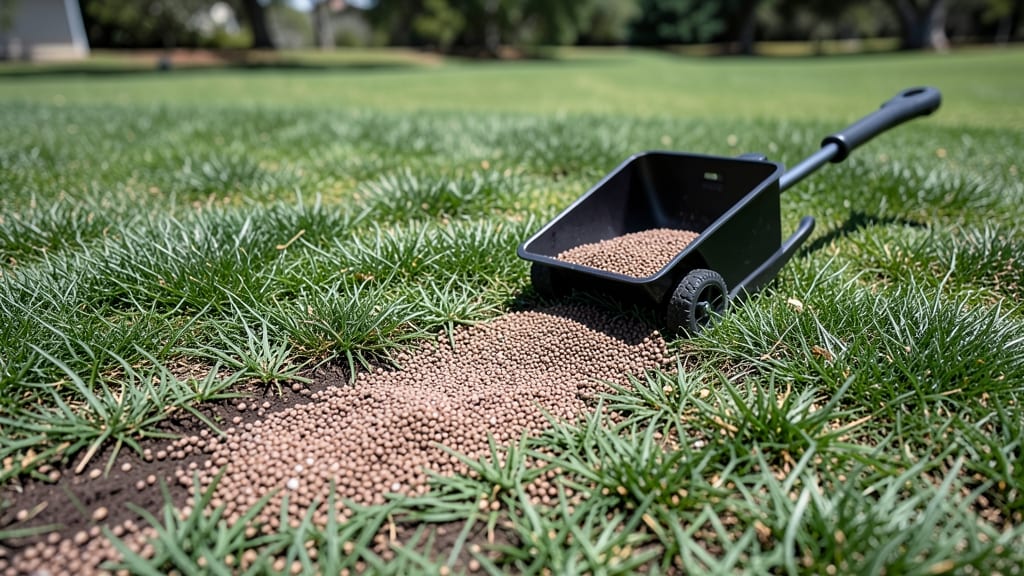
Fertilizing Bermuda grass at the right time is the key to a lush, resilient lawn that stays green through summer heat and recovers quickly after drought.
Picture this: You’ve spent weeks mowing, watering, and pulling weeds, only to watch your grass turn yellow or slow down just when it should be thriving. That’s usually a sign you fertilized too early, too late, or with the wrong product.
The truth is, Bermuda grass has a specific schedule—spring and fall are the prime windows, but timing matters just as much as what you apply.
In this guide, I’ll break down the exact months to fertilize based on your climate, how to spot when your lawn is truly hungry (or overfed), and the three most common mistakes that waste fertilizer and stress your grass.
Whether you’re in a warm Southern zone or a cooler transition area, you’ll leave knowing when to feed and when to skip it entirely.
By the end, you’ll have a customized plan for your region, plus pro tips to make every dollar of fertilizer count—no guesswork, no brown patches, just that deep green your neighbors will envy.
Optimal Bermuda grass fertilization schedule by season (spring & fall)
Bermuda grass is a powerhouse for warm-season lawns, but its growth cycles demand precise fertilization timing. Unlike cool-season grasses, Bermuda thrives when fed during active growth periods—spring green-up and fall root strengthening.
Skipping these windows means weaker roots and patchy color, while overfeeding burns delicate blades. Let’s break down the month-by-month schedule tailored to your climate zone.
Your local climate dictates adjustments: Southern regions (Zones 8+) can fertilize earlier in spring (March-April), while Northern areas (Zones 7-) should wait until after May 15 when soil temps hit 65°F. Fall applications also shift—cooler climates stop by October 1, while warm zones extend to November 15.
Key rule: Always fertilize when Bermuda is actively growing—never during dormancy (winter) or heat stress (mid-summer). A slow-release fertilizer (16-4-8 NPK) applied in early morning minimizes burn risk and maximizes root absorption.
| Season | Month | Fertilization Window | Climate Adjustments | Fertilizer Type | Notes |
|---|---|---|---|---|---|
| Spring | March (South) | Early March (Zones 8+) | Wait until soil temps hit 60°F | Slow-release (16-4-8) | Light feed (0.5 lb/1000 sqft) |
| April-May (All Zones) | After green-up (soil 65°F+) | Standard schedule | High-nitrogen (30-0-4) | 1 lb/1000 sqft every 6-8 weeks | |
| June (North) | Late June (Zones 7-) | Avoid July heat stress | Slow-release only | Reduce rate to 0.75 lb/1000 sqft | |
| Fall | August (South) | Early August (Zones 8+) | Stop by Sept 15 | Low-nitrogen (10-0-10) | Root-strengthening feed |
| September-October (All Zones) | 6-8 weeks before frost | Northern zones: Oct 1 cutoff | Slow-release (12-4-8) | 0.5 lb/1000 sqft for dormancy prep | |
| November (South Only) | Early November (Zones 8+) | Avoid winter stress | Organic options (compost tea) | Light top-dressing only |
For spring fertilization, time your first application right after Bermuda breaks dormancy—look for 2-3 inches of new growth. In my Zone 8b garden, I apply a high-nitrogen fertilizer (30-0-4) in early April, then repeat every 6 weeks until late June.
This schedule prevents summer burn while maintaining vibrant color through peak heat.
Fall is about root hardening, not lush top growth. Switch to a low-nitrogen formula (10-0-10) in September to encourage deep root systems. My October 1 rule applies: no fertilizers after this date in cooler climates, as new growth risks winter damage.
Southern gardens can extend to November, but always stop 6 weeks before first frost.
Avoid mid-summer fertilization (July-August) unless you’re in a tropical climate. High temps cause fertilizer burn, turning blades brown. Instead, focus on deep watering and mowing high (3-4 inches) to shade roots.
I’ve seen many lawns suffer from over-fertilizing in August, so this is a critical window to skip.
Pro tip: Soil test first! Bermuda prefers pH 6.0-7.0. If your soil is acidic (<6.0), amend with lime before fertilizing. In my sandy soil garden, I add compost tea alongside synthetic fertilizer to improve nutrient retention.
This dual approach has cut my fertilizer costs by 30% while improving lawn density.
Climate-specific tweaks matter. In arid regions (like Arizona), Bermuda may need monthly light feeds during summer to combat drought stress. Meanwhile, <
Signs your Bermuda grass needs fertilizer (and when to skip it)
Bermuda grass sends clear signals when it craves nutrients—don’t ignore the yellow patches or thin, patchy spots that scream for attention.
These nutrient deficiencies often appear after winter dormancy or during rapid growth spurts when roots struggle to keep up. Slow recovery after foot traffic or drought also means your lawn’s starving for the right nitrogen boost.
But here’s the catch: over-fertilizing causes just as many problems. Brown leaf tips or crispy edges after feeding? That’s your grass burning from excess salt.
Even excessive growth followed by sudden wilting signals you’ve overdone it. Weather matters too—hot, dry spells make grass more sensitive to fertilizer, while cool, damp conditions slow nutrient uptake.
When to Fertilize Bermuda Grass
✅ Do Fertilize When...
- Spring green-up (April-May) for new growth
- Yellow patches appear after winter dormancy
- Slow recovery from drought or foot traffic
- Soil test shows low nitrogen (below 3%)
- Thin spots persist despite mowing/watering
❌ Skip Fertilizing When...
- Brown tips or leaf burn appear post-application
- Active drought (soil is bone-dry or flooded)
- Winter dormancy (Nov-Feb in cold climates)
- Soil test shows high phosphorus/potassium
- Newly seeded grass (wait 6-8 weeks post-sowing)
🌱 Pro Tip: Always water deeply 24 hours before fertilizing to prevent burn.
Your soil’s pH level plays a huge role too. Bermuda grass thrives in slightly acidic soil (6.0–7.0).
If your soil test shows pH below 5.5, the grass can’t absorb nutrients—no matter how much fertilizer you add. Lime applications (to raise pH) should come 3–4 months before fertilizing for best results.
Timing also depends on your climate zone. In warm climates (Zones 8–11), Bermuda grass stays active year-round, so you might fertilize every 6–8 weeks from spring through fall. But in cooler zones (6–7), fall fertilization becomes critical to strengthen roots before winter dormancy.
Watch for weed competition too—thick clover or crabgrass means your Bermuda grass isn’t getting enough sunlight or nutrients.
If weeds dominate 20%+ of your lawn, tackle them first with pre-emergent herbicides before fertilizing. Overcrowded grass can’t absorb nutrients efficiently, so thin spots often need both weed control and feeding.
Finally, mowing height affects nutrient needs. Keep Bermuda grass at 1–1.5 inches—taller grass shades out weeds and holds moisture, but scalping it too short stresses the roots, making them crave more fertilizer. Adjust your mower blade before diagnosing nutrient issues!