
Pests
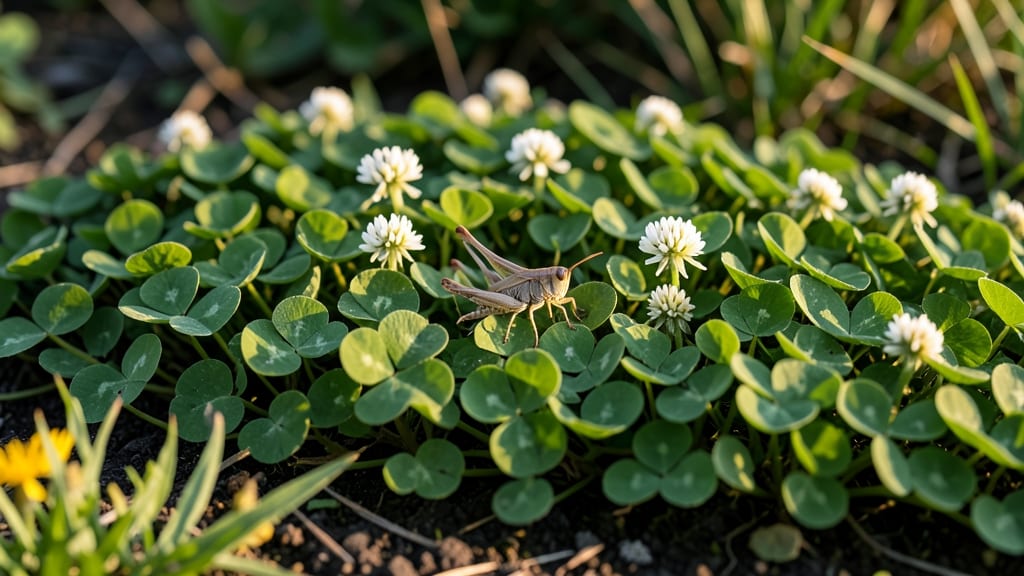
Green grasshoppers eat a wide range of plants, focusing on leaves, stems, and flowers throughout their development, though their preferences evolve from delicate seedlings to hardier foliage as they mature. Their favorite targets include grasses, clover, and garden staples like beans and corn.
These insects are particularly destructive during their nymph stages when they favor soft, young plant growth that's easier to consume. 🌱 As they grow into adults, their jaws strengthen, allowing them to tackle tougher vegetation like alfalfa and wheat stalks.
What's interesting is how their feeding patterns shift seasonally—spring brings outbreaks on emerging crops, while summer sees them targeting mature plants in fields and gardens.
Understanding this lifecycle helps gardeners implement targeted control measures. For instance, early intervention with row covers can protect vulnerable seedlings, while later-season monitoring focuses on mature crops. The key is recognizing their preferred food sources at each stage to minimize damage effectively.
💡 In This Article
- Green Grasshopper Feeding Habits by Life Stage
- Plants Most Vulnerable to Green Grasshopper Damage
Green grasshopper feeding habits by life stage
Green grasshoppers undergo dramatic dietary shifts as they transition from nymphs to adults, with their jaw strength and feeding preferences evolving alongside their growth. During the nymph stage (first 5-6 molts), their mandibles are delicate, making them highly dependent on soft, moisture-rich plant tissues like young leaves and flower buds.
They can consume up to 10% of their body weight daily during this phase, often targeting emerging seedlings that haven't developed tough outer layers. 🌱 This early-stage feeding creates the characteristic "notched" edges on leaves that gardeners often notice first.
The transformation becomes apparent in the final nymph stages when their exoskeleton hardens and their jaws develop the power to chew through more fibrous vegetation. At this point, they shift toward stems and mature leaves, particularly those with higher cellulose content like wheat stalks or corn husks.
Adult grasshoppers can exert 10-15 times more force with their mandibles than nymphs, allowing them to strip entire plants bare when populations are high. Their preference for legumes (beans, peas) and grasses during adulthood stems from these plants' high protein and nitrogen content, which supports their rapid growth.
Seasonal variations further complicate their feeding patterns. In spring, when new growth emerges, grasshoppers focus on tender shoots and flowers, while summer brings a shift toward mature crops as plants develop thicker cell walls.
This seasonal transition explains why early-season gardens often see more damage to seedlings, while late-season fields suffer from defoliation of mature plants. The key mechanism here is their taste receptor sensitivity, which detects plant stress hormones like jasmonates—making damaged or stressed plants more appealing targets. 💚
What's particularly damaging is how their feeding habits create a feedback loop. When grasshoppers consume plant tissue, they often leave behind silica-rich excrement that can further stress plants by clogging stomata (pores). This combination of mechanical damage and chemical stress makes affected plants more vulnerable to secondary pests and diseases.
Understanding these lifecycle stages helps explain why control measures need to be timed precisely—early interventions focus on protecting seedlings, while later strategies target mature vegetation when adults are most active.
Interestingly, green grasshoppers exhibit cannibalistic tendencies during crowded conditions, particularly when food sources become scarce. This behavior, combined with their rapid reproduction rates (females can lay 20-30 eggs per pod and produce multiple pods), creates population explosions that can devastate crops.
The most effective management strategies leverage this biology by implementing habitat modifications (like reducing monoculture planting) and biological controls such as parasitic nematodes that target nymphs during their most vulnerable early stages. 🔍
For gardeners and farmers, recognizing these patterns means watching for early signs of nymph activity—such as tiny holes in leaves or chewed petals—rather than waiting for adult damage to appear.
The window between nymph hatching and adult emergence is often the most critical period for intervention, as nymphs are less mobile and more susceptible to targeted treatments. This lifecycle knowledge transforms generic pest control into a precision approach that maximizes effectiveness while minimizing environmental impact.