
Pests
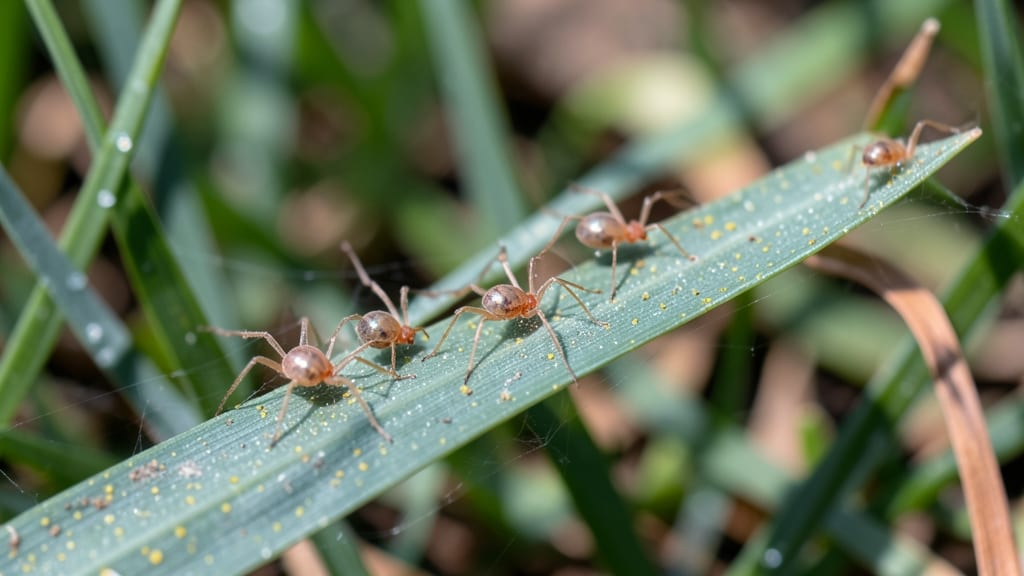
Spider mites in grass turn your lawn into a dusty, brittle mess faster than you can say "summer drought." 🌱 I’ve battled these tiny pests on my own lawn, and the key to stopping them lies in acting fast—before they spin webs between blades and suck the life out of your grass.
These microscopic pests thrive in hot, dry conditions, so your first line of defense is watering deeply twice a week (early morning is best) to keep the soil moist.
But when they’ve already taken hold, organic sprays like neem oil or insecticidal soap work within 24-48 hours to smother them without harming your lawn. You’ll know it’s working when the grass stops yellowing and starts regrowing with a vibrant green sheen.
The secret? Consistency—reapply sprays every 5-7 days until the mites disappear, and keep your mower blade high to shade the soil and deter future infestations. This method works for Bermuda, Kentucky bluegrass, and fescue alike. Let’s get your lawn back to lush in no time.
Hidden Triggers Behind Tiny Invaders
Spider mites don’t just appear in grass out of nowhere—they’re drawn by a mix of environmental stressors, plant vulnerabilities, and even human habits. Understanding these root causes is the first step to stopping their spread. Let’s break down why these microscopic pests decide your lawn is their perfect buffet.
Spider mites thrive in hot, dry conditions because their natural predators—like ladybugs and lacewings—struggle to survive when temperatures rise above 90°F (32°C). When grass becomes dehydrated, it produces sticky resins on its leaves, which attract mites as a food source. Even a single week of drought can trigger an infestation.
- Why it matters: Heat weakens grass cell walls, making it easier for mites to pierce and feed on sap.
- Actionable fix: Deep watering (1–1.5 inches per week) and mulching retain moisture, making grass less appealing.
Spider mites love stressed plants, and over-fertilizing—especially with high nitrogen—can backfire. While lush green grass looks healthy, it often lacks structural resilience, making it easier for mites to colonize. Conversely, under-fertilized grass with yellowing patches is also vulnerable because it can’t fight off pests effectively.
💡 Pro Tip: Use a balanced fertilizer (10-10-10 or 16-4-8) in early spring and fall to encourage strong root growth without overfeeding.
Grass infected with fungal diseases (like brown patch or dollar spot) or bacterial infections creates the perfect breeding ground for spider mites. The weakened plant tissue releases volatile organic compounds (VOCs) that signal mites to feed and lay eggs nearby.
Even dead or dying grass from disease provides shelter for their webs.
- Signs to watch for: Circular dead patches, slimy grass blades, or a foul odor.
- Prevention: Apply neem oil or copper fungicide at the first sign of infection to break the cycle.
Tightly mowed grass or thick thatch (the layer of dead grass between soil and blades) traps heat and humidity, creating a microclimate that spider mites adore. Without proper airflow, chemical defenses in the grass break down, and mites reproduce exponentially faster.
🔥 Key Fix: Raise your mower blade to 3–4 inches in summer to improve airflow and reduce thatch buildup.
Ironically, broad-spectrum pesticides (like synthetic pyrethroids) can wipe out mite predators while leaving the mites unharmed. Some pesticides also disrupt plant immunity, making grass more susceptible to future infestations. Even herbicide drift from neighboring properties can stress grass, inviting mites to move in.
- Safer alternative: Rotate organic sprays (like insecticidal soap or horticultural oil) to avoid resistance.
- Avoid: Applying chemicals during peak mite activity (late afternoon) when they’re most exposed.
Spider mites don’t respect property lines. If your neighbor’s lawn is infested, wind or wildlife (like birds or squirrels) can carry mites—or their eggs—onto your grass. Even compost piles or mulch from infected plants can harbor hidden colonies waiting to spread.
✨ Community Defense: Encourage neighbors to treat their lawns too, and inspect new plants before adding them to your garden.
Natural Ways to Kick Out Grass Pests
Spider mites in your lawn aren’t just an eyesore—they can weaken grass, making it brown, brittle, and prone to disease. The good news? You don’t need harsh chemicals to banish them.
Below are targeted, organic solutions based on the root cause of your infestation, plus prevention tips to keep mites from returning.
Spider mites thrive in damp, shaded, or compacted soil where grass struggles to dry out. If your lawn feels spongy or stays wet for days, mites will stick around.
How to Fix It: ✅ Aerate your lawn (rent a core aerator or use a manual spike aerator). This loosens soil, improves airflow, and helps grass roots dry faster. ✅ Mow higher (set your mower to 3–4 inches) to shade the soil and reduce evaporation. ✅ Water deeply but less often—aim for 1–1.5 inches per week (including rain). Early morning is best to prevent fungal growth. ✅ Rake up thatch (the spongy layer between soil and grass) if it’s over ½ inch thick—this breaks up mite hiding spots.
💡 Pro Tip: If your lawn is clay-heavy, mix in compost or sand during aeration to improve drainage.
Spider mites attack weak grass—whether from nutrient deficiencies, disease, or drought stress. A healthy lawn is their worst nightmare.
How to Fix It: ✅ Fertilize with organic options like:
- Fish emulsion (for nitrogen)
- Compost tea (for microbes that crowd out pests)
- Bone meal (for phosphorus, which strengthens roots)
✅ Overseed bare spots with drought-resistant grass (like tall fescue or Kentucky bluegrass). ✅ Test your soil (a $20 home kit works). If pH is off (too acidic/alkaline), amend with lime (to raise pH) or sulfur (to lower it).
🌡️ Heatwave Survival Tip: If mites appear after extreme heat, water deeply at night to cool the roots and reduce stress.
If you’ve spotted tiny red/orange mites or fine webbing on blades, it’s time for direct action.
How to Fix It: 🔥 Blast them off with water (high-pressure hose spray) to dislodge eggs and adults. 🍳 Mix a DIY organic spray (choose one):
- Neem oil spray (1 tbsp neem oil + 1 tsp mild soap + 1 quart water). Spray at dusk (avoids burning grass).
- Garlic & pepper spray (blend 5 garlic cloves + 1 tbsp cayenne + 1 quart water; strain and spray).
- Insecticidal soap (store-bought or homemade: 2 tbsp Castile soap + 1 quart water).
⏰ Reapply every 5–7 days until mites disappear (usually 2–3 weeks).
🔪 For stubborn cases: Try beneficial nematodes (Steinernema feltiae), microscopic worms that eat spider mite eggs. Apply after watering.
Once you’ve kicked them out, stop them from moving in again with these habits:
✅ Encourage natural predators—plant marigolds, yarrow, or dill near your lawn to attract ladybugs and lacewings, which devour mites. ✅ Mulch properly—use straw or wood chips (not thick layers) to prevent moisture buildup. ✅ Rotate organic sprays—mites can build resistance, so switch between neem, garlic spray, and insecticidal soap. ✅ Check new plants—quarantine potted plants or sod for 2 weeks before adding them to your lawn.
🎯 Long-Term Fix: If mites keep returning, improve lawn health first—strong grass = fewer pests.
Final Reminder: Spider mites are annoying but beatable with patience and organic methods. Start with one fix (like aerating or spraying), then layer in prevention. Your lawn will thank you! 🌿
Frequently asked questions about grass spider mites
How do I know if my lawn has spider mites?
Look for tiny red or orange specks on grass blades (use a magnifying glass) and fine webbing between blades. You’ll also notice yellowing or stippling on leaves, and grass may feel dry and brittle despite regular watering. Check the undersides of blades where mites hide.
Are spider mites harmful to grass?
Yes, they suck plant sap, causing grass to yellow, weaken, and become more susceptible to disease. Severe infestations can kill patches of grass over time. However, they don’t transmit diseases—they’re purely a nutritional pest. Act fast to prevent long-term damage!
Will regular mowing prevent spider mites?
Not by itself—mowing too short (below 2 inches) actually invites mites by stressing grass. Instead, set your mower to 3–4 inches to shade soil and reduce heat. Combine this with deep watering (1–1.5 inches/week) and proper fertilization for best results.
Can I use vinegar to kill spider mites in grass?
Not recommended—vinegar’s acidity can burn grass while only temporarily affecting mites. For safe treatment, use neem oil or insecticidal soap instead. These target mites without harming your lawn when applied correctly (early morning or dusk).
How long does it take for organic sprays to work?
Most organic treatments (like neem oil or insecticidal soap) show results within 24–48 hours, but full eradication takes 2–3 weeks with consistent reapplication (every 5–7 days). Patience is key—mites reproduce quickly, so don’t stop treatment too soon!