
Lawn
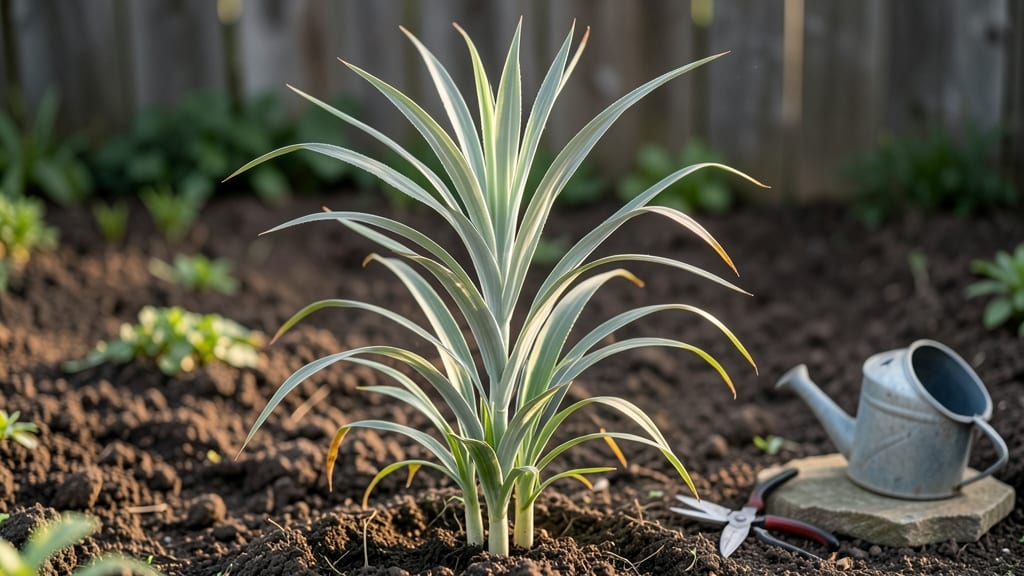
Lemongrass is not a grass but belongs to the Poaceae family’s close relative, Andropogoneae, making it a tropical perennial herb with long, slender stalks and aromatic properties. Its botanical classification as Cymbopogon distinguishes it from true grasses like bamboo or wheat.
Lemongrass belongs to the Cymbopogon genus, part of the broader Poaceae family's subfamily Andropogoneae, which includes other aromatic plants like citronella. 🌿 Unlike true grasses, lemongrass produces long, hollow stalks with linear leaves arranged in a fan pattern—key traits that set it apart from lawn grasses like Bermuda or fescue.
Its rhizomatous growth habit also differs from grass tillers, making it more herb-like in cultivation.
This tropical herb thrives in warm climates and requires consistent moisture, unlike many ornamental grasses that tolerate drought. The confusion often stems from its grass-like appearance, but botanists classify it separately due to its unique leaf anatomy and reproductive structures.
For gardeners, understanding this distinction helps in choosing the right companion plants and care routines.
💡 In This Article
- Botanical Classification: Why Lemongrass Isn’t a Grass
- Growing Lemongrass: Cultivation Tips for Home Gardens
Botanical classification: why lemongrass isn’t a grass
Lemongrass belongs to the Cymbopogon genus within the Poaceae family's Andropogoneae subfamily, but its classification as a "grass" is botanically inaccurate.
True grasses like wheat or bamboo have parallel leaf veins and produce seeds in clusters called spikelets, while lemongrass features rolled, linear leaves with a central vein and aromatic oils in specialized cells called schizogenous glands.
These glands release citral and geraniol compounds, giving lemongrass its signature citrusy aroma that true grasses lack entirely.
The confusion arises from its grass-like appearance—lemongrass grows in clumps via underground rhizomes (horizontal stems), similar to how some ornamental grasses spread. However, its reproductive structures differ: lemongrass produces panicles (branched clusters) of tiny flowers, whereas true grasses form spikelets along a single stem.
This floral distinction is why botanists categorize it separately, despite superficial similarities to grasses like Miscanthus or Pennisetum.
For gardeners, this matters because lemongrass thrives in tropical conditions (70-85°F) with consistent moisture, unlike drought-tolerant ornamental grasses. Its hollow, woody stalks reach 3-5 feet tall, while true grasses typically remain 1-3 feet and lack the same aromatic compounds.
The leaf arrangement—alternate and fan-like—further separates it from grasses, which have opposite or whorled leaf patterns.
Here’s a quick comparison to clarify:
- Leaf Structure: Lemongrass has rolled, linear leaves with a single central vein; true grasses have flat blades with parallel veins.
- Growth Habit: Lemongrass spreads via rhizomes; grasses spread via tillers (above-ground shoots).
- Aromatic Compounds: Lemongrass contains citral and geraniol; grasses lack these volatile oils.
- Flower Type: Lemongrass produces panicles; grasses form spikelets.
The Cymbopogon genus includes over 55 species, with Cymbopogon citratus (West Indian lemongrass) being the most common. Its aromatic oils are concentrated in the lower leaf stalks, which is why chefs and herbalists focus on the bottom 6-8 inches of the stalk for maximum flavor.
This specialization is absent in true grasses, which lack such concentrated aromatic properties.
Understanding this distinction helps avoid mislabeling in gardens and kitchens. For example, planting lemongrass near true grasses like Bermuda won’t yield the same benefits—lemongrass needs rich, well-draining soil and partial shade in hot climates, while grasses thrive in full sun with sandy soil.
The botanical differences extend to pest resistance too: lemongrass repels mosquitoes due to its oils, while grasses offer no such protection. 🌿