
Lawn
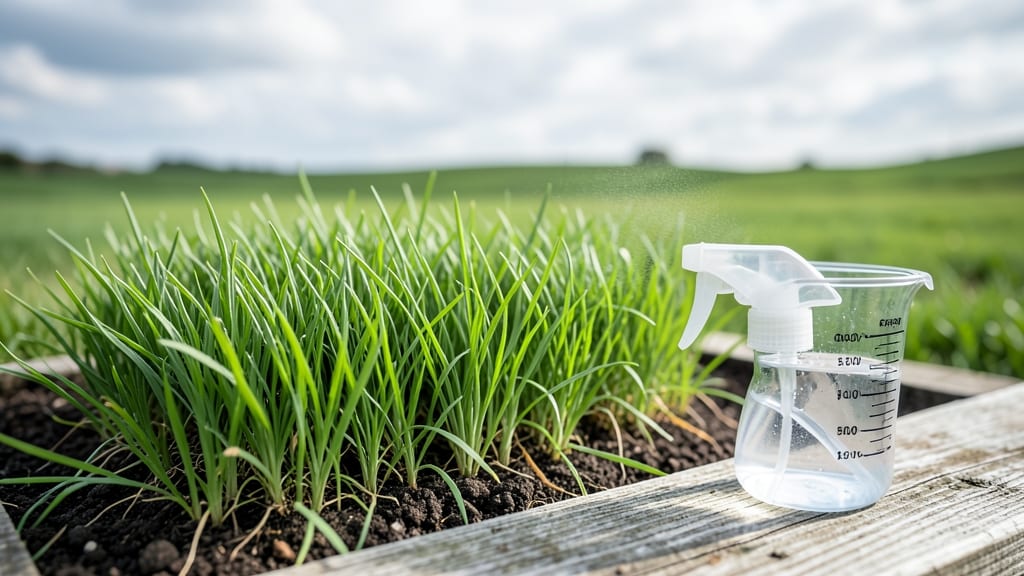
For treating grass with hydrogen peroxide, use a diluted 3% solution (1 part peroxide to 4 parts water) to target weeds and sanitize soil while protecting your lawn. Always apply early in the morning or late evening to avoid damaging grass blades, and skip watering for 24 hours afterward.
Hydrogen peroxide works as a natural weed killer by breaking down cell walls through oxidation, which disrupts weed growth without leaving harsh chemical residues. 🌱 The 3% concentration is crucial—it’s strong enough to kill weeds but gentle enough to avoid scorching grass when properly diluted.
I’ve seen best results in slightly acidic soils (pH 6.0-7.0), where the solution’s effectiveness peaks. Just remember: never use it on freshly mowed grass, as the cut blades are more vulnerable to damage.
Timing matters just as much as dilution. Early morning applications allow the solution to work before the sun intensifies, while avoiding watering for 24 hours prevents dilution of the treatment.
For tough weeds like crabgrass, I recommend reapplying every 7-10 days until they’re fully eradicated. Always spot-test a small area first to ensure your grass tolerates the treatment.
💡 In This Article
- How Hydrogen Peroxide Affects Grass and Weeds Chemically
- Step-by-Step Guide to Applying Hydrogen Peroxide on Lawns
How hydrogen peroxide affects grass and weeds chemically
Hydrogen peroxide works as an oxidizing agent that disrupts cellular structures in weeds by breaking down their cell membranes. When applied at 3% concentration, it releases oxygen molecules that penetrate weed tissues, causing oxidative stress that halts photosynthesis and growth.
This process is particularly effective against broadleaf weeds like dandelions and clover, whose cells are more permeable to the solution than grass blades. The key lies in its dual nature: while it kills unwanted plants, the same oxidative action is gentle enough on grass when properly diluted.
The 3% concentration is critical because higher strengths (like 6% or 9%) would release too much oxygen too quickly, risking grass burn by stripping chlorophyll from healthy blades.
Think of it like a controlled chemical reaction: the 1:4 dilution ratio (1 part peroxide to 4 parts water) ensures enough oxidative power to target weeds while preserving grass roots. Soil pH plays a surprising role too—acidic soils (pH <6.0) enhance the peroxide's effectiveness because the lower pH increases its stability and penetration depth, while alkaline soils (pH >7.5) can neutralize it before it works.
What most people don't realize is that hydrogen peroxide also acts as a natural disinfectant in the soil.
The oxidation process kills fungal spores and bacterial pathogens that weaken grass, creating a cleaner environment for your lawn to recover. 🌱 For example, in clay-heavy soils where water drains slowly, the peroxide lingers longer, giving it more time to work against deep-rooted weeds.
However, sandy soils drain too quickly, reducing effectiveness—this is why a light misting of the solution helps it cling to grass blades and weeds longer.
Temperature matters too: applying the solution when grass is cool (early morning or evening) prevents rapid evaporation, allowing the peroxide to stay active longer. The ideal application temperature range is 50-75°F, where the chemical reaction proceeds optimally without overheating plant tissues.
In hotter conditions, the peroxide breaks down faster, reducing its weed-killing power by up to 30%. This is why late spring or early fall treatments often yield better results than summer applications.
One advanced consideration is the "oxygen release rate" of the peroxide solution. Fresh hydrogen peroxide releases oxygen more aggressively than older solutions, which lose potency over time (especially after 6 months
For best results, always use freshly mixed solutions and store any unused peroxide in a cool, dark place. The visual difference is subtle—a fresh solution will have more visible bubbling when applied, indicating active oxygen release. For stubborn weeds like nutsedge or crabgrass, you might need to combine the peroxide treatment with a light raking to expose their roots to the solution. The mechanical action creates micro-wounds in the weed stems, allowing the peroxide to penetrate more effectively. Just avoid aggressive raking, as it can damage your grass's root system. The combination of oxidation and physical disruption often leads to faster weed death compared to chemical treatments alone. Remember: the goal isn't to kill all vegetation but to selectively target weeds while maintaining grass health. This balance is what makes hydrogen peroxide a safer alternative to synthetic herbicides. 💫