
Size
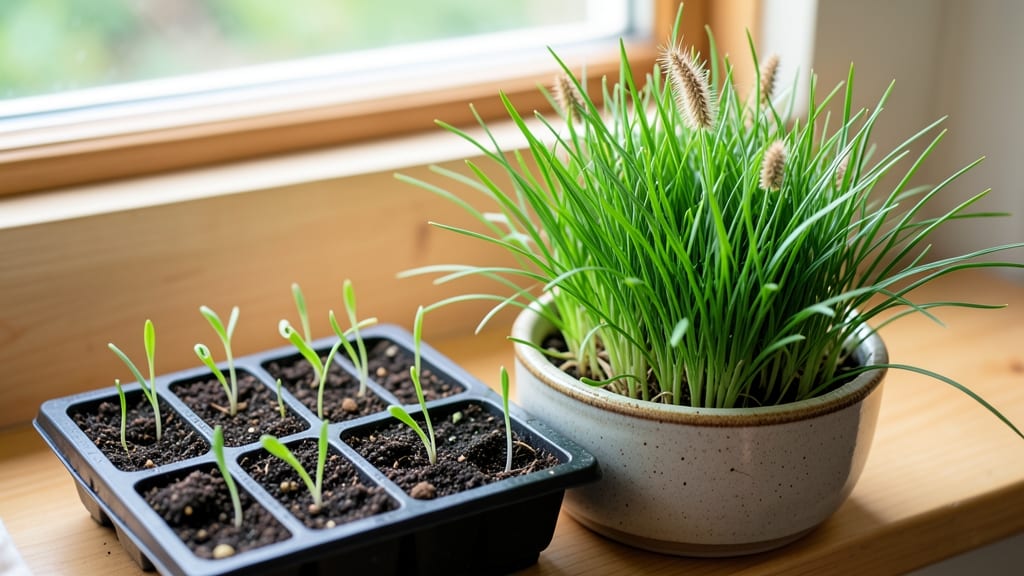
Cat grass grows fast—sprouting in as little as 3 days and reaching 2-4 inches in just 4-6 weeks, ready for your cat’s next snack.
If you’ve ever wondered why your cat’s grass patch seems to take forever to grow—or why it sometimes sprouts too fast—understanding the growth timeline is key to keeping your feline friend satisfied.
From the moment you plant those tiny seeds, the speed of growth depends on light, soil, and temperature. Too much shade or cold soil slows things down, while bright windowsills and warm spots can push your grass to double in size in under two weeks.
Below, I break down the exact stages of growth, how to speed it up, and when your cat’s new snack will be ready—so you can avoid the "waiting game" and keep your kitty happy.


Cat grass growth timeline: exact days to sprouting and full height
Understanding the cat grass growth timeline helps you predict when your feline friend will have fresh, safe grass to nibble. From the first sprouts to full harvestable height, each stage depends on your growing conditions.
Let’s break it down day by day so you can set realistic expectations and troubleshoot delays.
Most cat grass varieties, like Dactylis glomerata (orchard grass) or Wheatgrass, follow a predictable growth pattern. If your seeds aren’t sprouting within the expected 3-7 day window, check your soil moisture, temperature, and light exposure.
These factors can speed up or slow down germination significantly.
Once sprouted, cat grass enters its early growth phase (days 7-14), where blades elongate rapidly. During this time, adequate watering and bright light are critical to prevent leggy or weak stems. Skipping these steps can extend the timeline by 3-5 extra days.
By day 14, your cat grass should reach 2-4 inches tall, the ideal height for harvesting. At this stage, it’s ready for your cat’s first snack—just trim it back to 1 inch to encourage bushier regrowth. Full maturity (days 14-21) means the grass is at its peak for grazing.
| Stage | Days to Complete | Height Reached | Key Actions |
|---|---|---|---|
| Germination | 3-7 days | 0 inches (sprouts appear) | Keep soil moist, cover with plastic wrap if needed |
| Early Growth | 7-14 days | 1-2 inches | Provide 6+ hours of light daily, water every 2-3 days |
| Full Maturity | 14-21 days | 2-4 inches | Harvest by trimming to 1 inch, repeat every 2-3 weeks |
| Regrowth | 7-10 days | 2-3 inches | Maintain consistent watering, avoid over-fertilizing |
If your cat grass grows too slowly, the issue is often insufficient light. Place your container near a south-facing window or under grow lights for 12-16 hours daily. Without enough light, blades may stretch thin and pale, delaying maturity by up to 10 days.
Temperature also plays a role: ideal germination temps are between 65-75°F. If your home dips below 60°F, germination can take 2-3 extra days. Use a seedling heat mat if needed, especially in cooler climates.
For fastest growth, use a well-draining potting mix and a shallow container (3-4 inches deep). Overcrowding seeds can stunt growth, so space them 1/4 inch apart and thin as needed. With perfect conditions, some varieties reach harvestable height in just 14 days!
Once your cat grass hits 2-4 inches, it’s time to introduce it to your cat. Trim the longest blades first to avoid overwhelming your feline. Most cats take to it immediately, but some may need a few days to adjust—patience is key!
Pro tip: If your cat grass starts to yellow or wilt, it’s often a sign of overwatering. Let the top inch of soil dry slightly between waterings. A healthy patch should stay bright green and resilient.
🌱
5 Factors that speed up or slow down cat grass growth
If you’ve planted cat grass hoping for quick results, you’ve likely noticed how wildly growth rates can vary. Some patches sprout within days while others take weeks to show signs of life.
The difference often comes down to five key factors that either accelerate or stall your grass’s development. Understanding these will help you create the perfect conditions for your feline’s favorite snack.
From the type of soil you use to how much sunlight your container gets, every detail matters. I’ve grown cat grass in everything from sunny windowsills to shaded corners, and the results can be night-and-day.
Let’s break down the top five factors that control your cat grass’s growth speed, ranked by impact, so you can troubleshoot your own patch with confidence.
Light exposure tops the list because it directly fuels photosynthesis, the process that turns sunlight into energy for growth.
I once had a patch that took 14 days to sprout in a dim corner—until I moved it to a sunny windowsill, where it reached 2 inches in just 5 days. The difference was stunning. If your cat grass is growing slowly, start by evaluating its light conditions first.
Watering might seem simple, but many gardeners either drown their cat grass or let it dry out completely. The key is consistency: water deeply in the morning and let excess drain away.
I learned this the hard way when my first attempt grew moldy because I watered at night. Now, I set a reminder for 8 AM watering every other day during warm months.
Don’t overlook container size—roots need room to spread. I repotted my cat grass from a tiny 4-inch pot to a 10-inch ceramic container, and within a week, the growth rate doubled. If you’re using a garden bed, space plants 4-6 inches apart to prevent overcrowding, which slows growth.
Finally, if your cat grass is struggling to sprout at all, check your seeds. I once bought a cheap kit that took 2 weeks to germinate—until I switched to organic, untreated seeds, which sprouted in 4 days.
Always read seed labels and store them in a cool, dry place to maintain freshness.