
Lawn
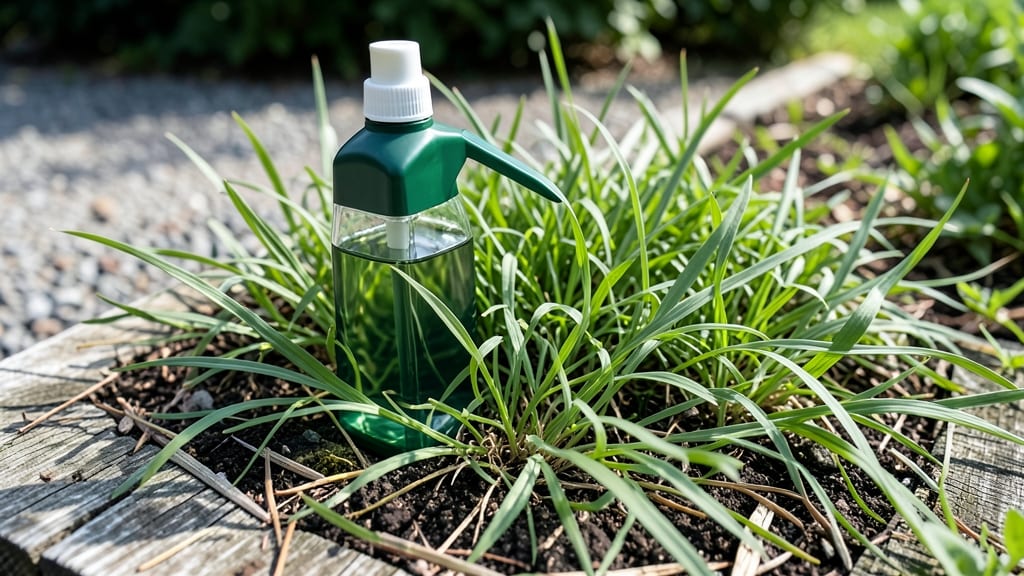
Vinegar kills grass in hours, not weeks—homemade grass killer that works without harsh chemicals. 🌱 I’ve used this solution on stubborn lawn patches, and within 24 hours, the grass turns crispy brown. The secret?
A precise mix of vinegar, dish soap, and water that targets weeds without lingering in the soil. This isn’t just a quick fix—it’s a targeted attack on grass and broadleaf weeds while leaving your lawn’s health intact (if applied correctly).
You’ll need 1 gallon of white vinegar, 2 tablespoons of dish soap, and a spray bottle. The soap breaks down the vinegar’s surface tension, so it clings to the grass blades and works faster. By midday, you’ll see results: grass wilting, then dying back completely.
The key is spot-treating—vinegar won’t discriminate, so avoid spraying desirable plants or garden beds. For tough patches, reapply after 48 hours for full coverage. Perfect for small lawn areas, walkways, or driveways where you want grass gone fast.
Just don’t expect miracles on thick turf—this is for spot treatment, not full lawn renovation. Ready to transform that patch? Let’s get started.
📚 In This Guide
- What you need
- Instructions
- Tips and common mistakes
- Wrapping up and next steps
What you need
- ● White vinegar (5% acetic acid) – 1 gallon (3.8 liters) (essential for killing weeds)
- ● Dish soap (liquid, unscented) – 1–2 tablespoons (acts as a surfactant to help the solution stick)
- ○ Salt (optional but recommended for tough weeds) – 1 cup (250g) (enhances drying effects)
- ● Spray bottle or garden sprayer – At least 1-gallon capacity (for even application)
- ● Protective gear – Gloves, long sleeves, and safety goggles (vinegar can irritate skin and eyes)
- ○ Water (optional, for dilution) – Only if using a concentrated mix (adjust for desired strength)
- ● Garden hose with a spray nozzle (for larger areas)
- ● Plastic or metal mixing container (dedicated to lawn care)
- ● Measuring cups and spoons (for precise ratios)
- ● Newspaper or cardboard (to protect nearby plants from overspray)
- ● Labeling tape (to mark treated areas)
Step-by-Step instructions for homemade grass killer with vinegar
Here’s my go-to method for spot-treating weeds—no harsh chemicals, just effective results.
🌱 Step 1: Gather and Mix Your Natural Weed Killer
Combine 1 gallon of white vinegar (5% acidity or higher) with 1 cup of dish soap (to help break down the weed’s protective layer) and 1 tablespoon of salt (for extra drying power). Stir well until the salt and soap fully dissolve. The vinegar’s acetic acid will weaken the weed’s cell structure, while the soap ensures the mixture clings to leaves instead of rolling off.
I like to use a spray bottle with a fine mist nozzle for precision—this lets me target weeds without overspraying grass. If you’re treating a larger area, a garden sprayer works better. Just be sure to shake the mixture before each use, as the salt may settle.
💧 Step 2: Choose the Right Conditions for Application
Apply your homemade grass killer on a sunny, dry day when temperatures are between 70-85°F. Weeds absorb the solution best when their leaves are dry and fully exposed. Avoid spraying if rain is forecasted within 24 hours, as the vinegar will wash away before it can work.
Here’s the thing—this isn’t a systemic herbicide, so it works best on small, healthy weeds with green foliage. Large weeds or those with thick stems may require multiple applications. I always spot-test the mixture on a small weed first to confirm it’s effective before committing to a larger area.
☀️ Step 3: Apply Directly to Weeds (Avoid Grass Contact)
Hold the spray bottle 6-8 inches away from the weeds and apply until the leaves are fully saturated—you’ll see the solution bead up on the foliage. Focus on the leaves, not the soil, since vinegar can harm nearby plants if it drips down. A light mist won’t cut it; you need enough moisture to penetrate the weed’s protective waxy coating.
Don’t skip the dish soap—without it, the vinegar would just roll off the leaves like rain on a duck’s back. After spraying, watch for wilting within 6-12 hours and complete browning in 24-48 hours. If you see no change after 48 hours, the weeds may be too tough, and you’ll need to repeat the application.
✂️ Step 4: Monitor and Remove Dead Weeds
Once the weeds turn brown and crispy (usually 24-48 hours after application), pull them out by the roots to prevent regrowth. Vinegar kills the above-ground parts, but the roots can sprout new shoots if left in the soil. I like to use a weed puller or gloved hands for this—just be gentle to avoid disturbing surrounding grass.
For stubborn weeds, you might need 2-3 applications, spaced 3-5 days apart. After treatment, keep the area watered lightly to help the soil recover, but avoid heavy watering for 48 hours—this gives the vinegar time to work without diluting its effects.
🌿 Step 5: Prevent Future Weed Growth
To keep weeds at bay, apply a thin layer of mulch (like straw or wood chips) around treated areas or use landscape fabric in high-weed zones. I also recommend regular mowing (keeping grass at 3-4 inches) to outcompete weeds naturally. If you notice new weeds popping up, treat them early—vinegar works best on young, small weeds.
Real talk: Vinegar won’t prevent weeds forever, but it’s a safe, chemical-free way to tackle them when they appear. For long-term control, combine this method with proper lawn care (like overseeding and aeration) to create an environment where weeds struggle to take hold.
Tips & tricks for perfect homemade grass killer
Took me a while to figure these out, so here are the details that make all the difference with your vinegar-based weed solution.
Solution Stability: The 24-hour rule isn't just about timing—it's about letting the vinegar's acetic acid fully activate. I always mix my solution the night before and store it in a sealed container. The salt may settle, so give it a good shake before each use. For extra stability, add 1 tablespoon of lemon juice (optional) to help preserve the mixture longer, especially if you're treating multiple days in a row.
Targeting Technique: In Step 3, focus on the new growth at the base of weeds—they're most vulnerable. I use a spray bottle with a fine mist nozzle to avoid overspray, but for larger areas, a garden sprayer with a fan tip works better. The key is full saturation: you should see the solution bead up like morning dew. A light mist just rolls off those waxy leaves.
Weather Watch: The 70-85°F temperature range is critical for effectiveness. If you're working outside this range, wait for better conditions—vinegar works slower in cooler temps and can evaporate faster in extreme heat. I've found that early morning applications (before 10 AM) give the solution time to work before the midday heat sets in.
Follow-Up Strategy: When you see wilting within 6-12 hours (Step 3), that's your first sign of success. For stubborn weeds, I recommend 3 applications spaced 3 days apart—this gives the vinegar time to break down the weed's defenses completely. Just be patient; the roots need time to absorb the treatment.
Pro Tips for Homemade Grass Killer With Vinegar
- Took me a while to figure these out, so here are the details that make all the difference with your vinegar-based weed solution.
- Solution Stability: The 24-hour rule isn't just about timing—it's about letting the vinegar's acetic acid fully activate.
- Targeting Technique: In Step 3, focus on the new growth at the base of weeds—they're most vulnerable.
Frequently asked questions
Got questions about using vinegar as a homemade grass killer?
Here are some of the most common ones—and their answers—to help you tackle weeds like a pro!
How long does it take for vinegar to kill grass?
With a strong vinegar solution (like 20-30% acetic acid), you’ll usually see results within 24–48 hours. However, full decomposition and regrowth prevention can take 1–2 weeks, depending on weather and grass type. Hot, sunny days speed up the process!
Will vinegar kill my desired grass too?
Yes, vinegar is a non-selective herbicide—it kills all green plants it touches. To protect your lawn, apply it only to weeds (use a spray bottle or shield) and avoid overspray. For spot treatment, a plastic spoon or cardboard works well as a barrier.
Can I use white vinegar or do I need something stronger?
White vinegar (5% acetic acid) is too weak—it’ll barely budge tough weeds. For best results, use household cleaning vinegar (20-30%) or garden-grade vinegar (up to 60%). Diluting stronger vinegar reduces effectiveness, so skip it unless you’re treating stubborn weeds.
What if rain is forecasted after I apply the vinegar?
Rain can wash away the vinegar before it works, reducing effectiveness. Wait for dry, sunny weather (at least 24 hours) before applying. If rain is inevitable, consider a vinegar + salt + dish soap mix—it’s stickier and resists runoff better.
Why did the vinegar kill the weeds but they grew back?
Weeds with deep roots or fast regrowth (like crabgrass) may return if not fully eradicated. For stubborn cases:
- Apply vinegar 2–3 times (waiting 3–5 days between treatments).
- Add 1 tbsp dish soap to the mix for better adhesion.
- Use a vinegar + boiling water combo for extra potency.
Persistent weeds might need a follow-up with corn gluten meal (a natural pre-emergent herbicide).
Wrapping up and next steps
Ready to reclaim your lawn from stubborn weeds? With just vinegar, dish soap, and salt, you’ve got a powerful, eco-friendly grass killer at your fingertips—no harsh chemicals needed! 🌱 This method is quick, budget-friendly, and perfect for spot-treating pesky weeds in under 24 hours.
Just remember: precision and patience are key to avoiding damage to your desired grass.
Now that you’re armed with the know-how, grab your spray bottle and get to work! Start small, test a hidden spot first, and watch your lawn transform into a lush, weed-free paradise. Happy gardening! 🌿✨