
Companion Plants
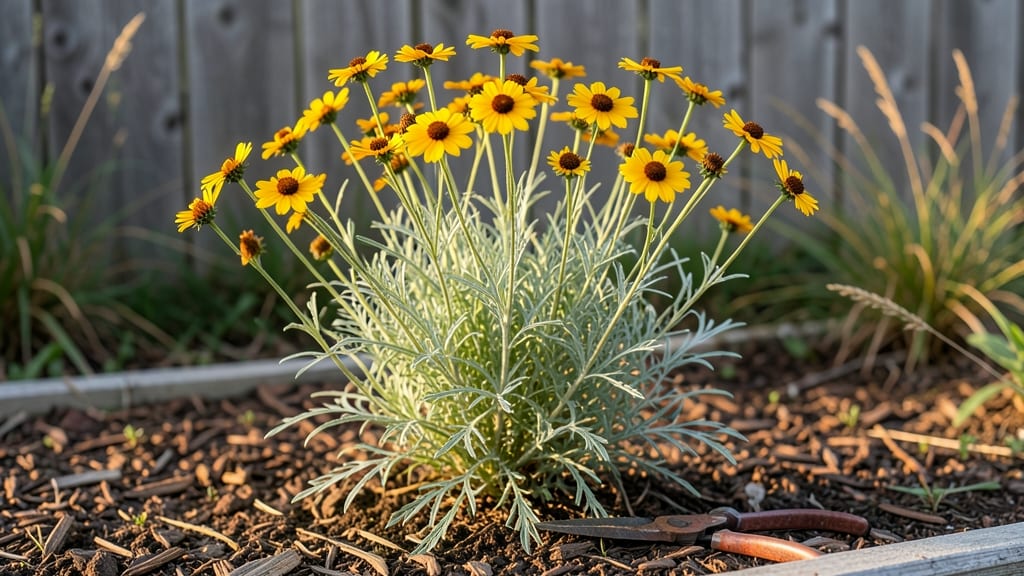
That grass-looking plant with yellow flowers—like Coreopsis and Helenium—turns dull corners into buzzing pollinator hotspots with minimal effort. 🌻 These plants thrive in full sun, need minimal fuss, and pair beautifully with purple coneflowers or black-eyed Susans.
Their airy stems and bright blooms create movement and contrast, even in small spaces. You’ll love how they attract bees, butterflies, and hummingbirds while adding texture and color. Perfect for borders, meadow-style gardens, or even containers on patios.
Low-maintenance varieties like ‘Moonbeam’ Coreopsis stay compact and bloom all summer, making them ideal for busy gardeners who still want drama.
Understanding Yellow Flower Triggers
Yellow blooms on your grass-like plant aren’t just a pretty sight—they’re a direct response to its environment. Whether you’re growing Coreopsis, Goldenrod, or Sedum (common grass-textured perennials with cheerful yellow flowers), these vibrant blooms emerge due to a mix of biological cues and growing conditions.
Let’s break down the science behind why your plant throws its sunny show—and what you can do to encourage it.
Yellow-flowering grass-like plants are heliophiles—they crave sunlight. Their flowering mechanisms are hardwired to respond to light intensity and duration.
- Photosynthesis & Florigen Production: These plants rely on photoperiodism (daylight hours) and photoinduction (light quality).
Short days or low light trigger less florigen (a flowering hormone), delaying or preventing blooms. Action: Ensure 6+ hours of direct sunlight daily—partial shade may satisfy foliage growth but stunts flowers. - UV-B Radiation Boost: Studies show UV-B light (the kind that gives sunburn) can enhance pigment production in yellow flowers, making them brighter. Action: If your plant is in filtered light, consider a UV-reflective mulch or a clear UV-boosting cloche for a pop of color. - Seasonal Light Shifts: Many of these plants (like Coreopsis verticillata) are short-day or day-neutral but still need consistent light. Action: If blooms fade mid-season, check for new shade sources (e.g., tree growth, nearby structures).
💡 Pro Tip: If your plant is flowering weakly, try moving it to a south-facing spot or supplement with a grow light (12–14 hours/day) in winter.
Too much or too little water can suppress flowering by redirecting energy to survival instead of reproduction.
- Overwatering = Leafy, Not Bloomy: Excess moisture stresses roots, triggering ethylene production (a plant stress hormone that delays flowers). Action: Ensure well-draining soil (amend with perlite or sand) and water only when the top 1–2 inches are dry.
- Drought Stress = Forced Blooming: Some grass-like perennials (like Solidago ‘Golden Fleece’) actually bloom more prolifically under mild drought. Action: Reduce watering by 20–30% in late spring to encourage buds, then resume normal care.
- Nutrient Imbalance: Too much nitrogen (common in lawn fertilizers) promotes leafy growth at the expense of flowers. Action: Switch to a low-N, high-P (phosphorus) fertilizer (e.g., 5-10-10) to support blooming.
🌡️ Heat Tip: Yellow flowers often close in extreme heat (above 90°F) to conserve water. Provide afternoon shade if your region hits these temps.
Poor soil health can starve your plant of the nutrients it needs to produce vibrant yellow blooms.
- Phosphorus Deficiency: This macronutrient is critical for flower development. Yellowing leaves with purple stems? That’s a classic P deficiency. Action: Add bone meal or rock phosphate to the soil in early spring. - Calcium & Magnesium: These minerals help pollen and nectar production.
Yellowing edges on leaves + slow blooming?
Test for lime deficiency. Action: Apply dolomitic lime (follow package rates). - pH Imbalance: Most grass-like yellow-flowering plants prefer slightly acidic to neutral soil (6.0–7.0). Action: Test your soil—if pH is off, adjust with sulfur (to lower) or wood ash (to raise).
✨ Soil Hack: Mix composted manure (like cow or chicken) into the soil in fall—it’s packed with trace minerals that boost flower vibrancy.
Yellow flowers aren’t just for show—they’re pollinator magnets, and their production can be feedback-driven based on visitor activity.
- Lack of Bees/Butterflies = Fewer Flowers: Some plants (like Rudbeckia ‘Goldsturm’) produce more blooms when pollinators remove old flowers, signaling the plant to keep producing. Action: Plant companion pollinator attractors nearby (e.g., bee balm, coneflowers, or alyssum).
- Over-Pollination Stress: Too many bees can deplete nectar, causing flowers to drop early. Action: Deadhead spent blooms to encourage new growth, but leave some for pollinators!
- Pesticide Impact: Neonicotinoids and broad-spectrum sprays kill pollinators, reducing flower production. Action: Switch to neem oil or insecticidal soap if pests are an issue.
🔥 Pollinator Boost: Install a small water source (like a shallow dish with pebbles) near your plant—happy pollinators = more yellow flowers!
Young or stressed plants often delay flowering until they’ve built enough energy reserves.
- First-Year Plants: Many perennials (like Sedum ‘Autumn Joy’) take 1–2 years to reach full blooming potential. Action: Be patient—provide consistent care (water, light, soil) to help them establish.
- Root Bound Stress: Crowded roots compete for nutrients, slowing flower production. Action: Divide overcrowded clumps every 3–4 years in early spring.
- Disease or Pest Damage: Fungal issues (like powdery mildew) or pests (e.g., Japanese beetles) drain energy. Action: Treat early with copper fungicide or kaolin clay for pests.
🎯 Health Check: Inspect leaves for yellowing between veins (sign of fungal issues) or chewed edges (insects). Act fast to preserve blooms!
Revitalizing Your Grass-Like Bloomers
If your grass-like plant with cheerful yellow blooms is struggling, don’t fret—most issues have simple, effective fixes. Below, we’ve mapped common problems to practical solutions, so you can restore your garden’s star performer to its vibrant best. Prevention tips are included to keep it thriving long-term!
Signs: Stunted growth, sparse flowering, or yellowing at the base. Fix: 🔥 Step 1: Gently dig around the plant’s edges with a trowel, loosening the soil to assess root spread. 🍳 Step 2: Separate clumps into smaller sections, ensuring each has healthy roots and foliage. Use clean, sharp shears if needed. 👨🍳 Step 3: Replant divisions 6–12 inches apart in well-draining soil. Water deeply to help roots establish. 💡 Pro Tip: Divide in early spring or fall when the plant is dormant but still active. Avoid mid-summer heat stress!
Signs: Wilting, crispy edges, or flowers fading quickly. Fix: 🔪 Step 1: Observe the plant’s current location—if it’s in full, blazing sun (6+ hours daily), it may need shade. 🌡️ Step 2: Gradually move it to a spot with morning sun + afternoon shade (e.g., near a tree’s dappled shade or a north-facing wall). ✨ Pro Tip: Mulch with 2–3 inches of organic matter (like shredded bark) to retain moisture and cool roots.
Signs: Drooping leaves (underwatered) or yellowing, mushy stems (overwatered). Fix: 📊 For Drought Stress:
- Water deeply 1–2 times per week (check soil 1 inch down—it should be dry but not bone-dry).
- Use a soaker hose to deliver water slowly at the base.
💪 For Overwatering:
- Let the top 2 inches of soil dry out between waterings.
- Improve drainage by amending soil with perlite or coarse sand (mix 1 part amendment to 3 parts soil).
Signs: Chewed leaves, sticky residue (aphids), or holes in foliage. Fix: 🍎 For Soft-Bodied Pests (Aphids, Spider Mites):
- Spray with neem oil solution (1 tbsp neem oil + 1 tsp mild soap per quart of water). Reapply every 5–7 days.
- Introduce ladybugs (natural predators) by purchasing them online or attracting them with companion plants like dill or yarrow.
🔥 For Grubs or Caterpillars:
- Handpick larvae and drop them in soapy water.
- Apply diatomaceous earth (food-grade) around the base—it’s non-toxic but deadly to pests.
Signs: Pale yellow leaves (nitrogen deficiency), weak stems, or slow growth. Fix: 🥗 Quick Boost:
- Use a balanced liquid fertilizer (10-10-10 or 20-20-20) diluted to half-strength. Apply every 4–6 weeks during growing season.
- Compost tea (brewed from aged compost) adds microbes without burning roots.
🎯 Long-Term Soil Health:
- Top-dress with 1–2 inches of compost in spring.
- Avoid synthetic fertilizers high in phosphorus if your plant prefers leaner soil (e.g., some ornamental grasses).
Signs: Leggy growth, bare stems, or flowers flopping over. Fix: ✂️ When to Prune:
- After flowering: Cut back 1/3 of the plant to encourage bushier growth.
- Deadheading: Snip spent blooms to redirect energy to new flowers (use clean scissors!).
💡 Pro Tip: Wear gloves—some grass-like plants (like sedges) have sharp edges!
With these fixes, your yellow-flowered garden star will bounce back in no time. Combine solutions with regular care, and it’ll reward you with lush foliage and pollinator-friendly blooms all season long!
Frequently asked questions
What’s the best grass-like plant with yellow flowers for small gardens?
Coreopsis ‘Moonbeam’ is perfect for small spaces—it stays compact (12–18 inches tall) and blooms nonstop from spring to frost. Its delicate, daisy-like yellow flowers contrast beautifully with purple or blue companions like salvia or lavender. Plant in containers or borders for instant pollinator appeal!
Can I grow these plants in containers?
Sedum ‘Autumn Joy’ and Helianthus ‘Lemon Queen’ thrive in containers with well-draining potting mix. Use pots at least 12 inches deep and place them in full sun. Add a time-release fertilizer in spring to keep blooms vibrant. Just ensure pots have drainage holes to prevent root rot.
Why aren’t my yellow flowers attracting bees?
Bees love yellow flowers, but they need accessible nectar and companion plants. Try planting bee balm or alyssum nearby to create a pollinator buffet. Avoid pesticides—even “organic” sprays can repel bees. Also, ensure flowers aren’t overcrowded; bees prefer open access to nectar!
How do I keep these plants from flopping over?
Tall varieties like Goldenrod or Rudbeckia need support. Stake them early with bamboo stakes or decorative rings tied loosely to the stems. For a natural look, interplant with taller grasses like Miscanthus, which provide windbreak and visual balance. Prune leggy stems in early spring to encourage bushier growth.
Are these plants deer-resistant?
Most grass-like perennials with yellow flowers (like Coreopsis or Sedum) are moderately deer-resistant, but hungry deer may still nibble. For extra protection, apply deer repellent sprays or plant them near deer-deterrent herbs like rosemary or lavender. Avoid planting near wooded edges where deer are more likely to browse.