
Lawn
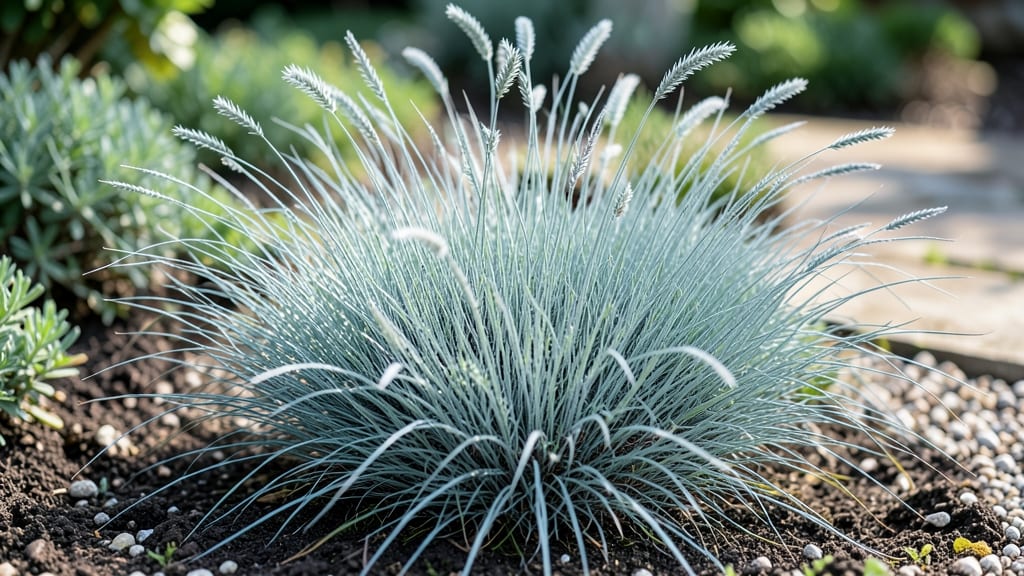
Blue fescue grass landscaping transforms dull yards into textured, drought-proof masterpieces. 🌿 I planted mine last spring as a bold border around my front walkway, and the way it sways in the breeze—like a sea of silver-blue feathers—completely changed the look of my property.
This ornamental grass thrives where others fail, turning water bills into savings while adding year-round interest.
The secret lies in its versatility. Space plants 12-18 inches apart for that lush, natural look, or tuck them into rock gardens where their upright form contrasts beautifully with low-growing perennials. Pair it with lavender for a Mediterranean vibe, or let it stand alone as a striking vertical accent.
Unlike traditional lawns, blue fescue stays green through droughts and even adds winter interest when frosted.
You'll love how effortless it is—no mowing, no fertilizing, just occasional trimming to keep it tidy. The texture alone makes it a designer's favorite, but the real magic happens when it catches the light at dawn or dusk, shimmering like a hidden treasure in your landscape.
Once established, it practically takes care of itself while making your outdoor space feel more sophisticated.
Perfect for modern, cottage, or minimalist gardens, this grass works in containers too. Try it as a focal point in corner beds or lining pathways—wherever you plant it, it becomes the star.
The best part? Your neighbors will ask how you did it, and you'll just smile knowing it's the easy way to grow stunning, low-maintenance beauty.
📚 In This Guide
- What you need
- Instructions
- Tips and common mistakes
- Wrapping up and next steps
What you need
- ● Blue fescue grass seed: 10–20 lbs per 1,000 sq. ft. (Choose a drought-resistant variety like 'Westlick' or 'Everest').
- ● Topsoil or compost: 2–3 inches (for poor soil or new installations).
- ● Organic starter fertilizer: Low-nitrogen, phosphorus-rich (e.g., 5-10-10 ratio).
- ● Mulch (straw or peat moss): Light layer to retain moisture.
- ○ Drip irrigation system or soaker hoses: Optional but recommended for water efficiency.
- ● Broadcast spreader: For even seed distribution.
- ● Rake (bow or leaf rake): To level soil and cover seeds lightly.
- ● Garden hose with adjustable nozzle: For watering.
- ○ Lawn roller (optional): 100–200 lbs for compacting soil pre-seeding.
- ● Gloves & knee pads: For comfort during prep work.
- ● Sunlight: Full sun (6+ hours/day) for optimal growth.
- ● Well-draining soil: Test pH (ideal: 6.0–7.0); amend if needed.
- ● Clear area: Remove weeds, debris, and rocks before planting.
- ● Water access: Consistent moisture (especially in the first 4 weeks).
How to establish blue fescue grass for a stunning, low-maintenance landscape
This drought-tolerant ornamental grass thrives with minimal effort—here's how to plant it for year-round texture and movement.
🌱 Step 1: Select and Prepare the Planting Site
Blue fescue excels in full sun to partial shade but truly shines with 6+ hours of direct sunlight daily. Scan your yard for spots with rocky, well-drained soil—this grass despises soggy roots. If your soil is heavy clay, amend with 2-3 inches of coarse sand or grit mixed into the top 6 inches to improve drainage.
Mark planting locations with stakes, spacing clumps 12-18 inches apart for mature width. For a naturalistic drift, scatter plants loosely in odd-number groupings (3, 5, or 7). The key is avoiding rigid rows—blue fescue's grace lies in its airy, flowing habit. Test soil pH if possible; it prefers 6.0-7.5, but tolerates slight acidity.
🪴 Step 2: Plant Blue Fescue in Containers or Ground
For containers, choose pots with drainage holes at least 8 inches deep—shallow pots stunt root growth. Fill with a mix of 50% potting soil and 50% perlite or coarse sand. Gently remove the grass from its nursery pot, tease apart roots if crowded, then place in the hole at the same depth as it grew in the nursery.
For ground planting, dig holes twice as wide as the root ball but no deeper. Position the plant so the top of the root ball sits ½ inch below soil level—this prevents crown rot. Backfill with native soil, pressing lightly to eliminate air pockets. Water deeply until moisture reaches 6 inches down, then let the top inch dry before watering again.
☀️ Step 3: Establish Initial Care for Strong Growth
Blue fescue's first year focuses on root development, not foliage. Water deeply once weekly (or when the top 2 inches of soil feel dry) to encourage deep roots. Avoid overhead sprinklers—wet foliage invites fungal issues. In extreme heat (90°F+), you may need biweekly watering, but resist the urge to keep soil constantly moist.
Skip fertilizing the first year—this grass thrives on lean conditions. Instead, mulch with 1 inch of gravel or coarse bark around plants to suppress weeds and regulate soil temperature. You'll see new growth emerge in 3-4 weeks, though it may look sparse at first. Patience is key; full maturity takes 2-3 years.
✂️ Step 4: Maintain Through Seasons for Year-Round Appeal
Cut back old foliage in early spring before new growth appears, trimming to 2-3 inches above ground level. Use clean, sharp shears to avoid tearing. Never remove more than ⅓ of the plant at once—blue fescue's winter interest comes from its airy, seed-head structure. In fall, leave the foliage until late winter to protect emerging shoots and provide winter interest.
Divide clumps every 3-4 years in early spring to maintain vigor. Dig up the entire plant, separate into 3-inch sections with roots attached, and replant immediately. This grass rarely needs division, but crowded centers lose their upright form. Apply a light layer of compost annually in spring to replenish nutrients without encouraging lush, floppy growth.
🌿 Step 5: Design with Blue Fescue for Maximum Impact
Use blue fescue as a focal point in rock gardens, where its blue-green blades contrast beautifully with gray stones. Plant in masses of 5-7 plants for dramatic effect, or intersperse among perennials like lavender or Russian sage. Its fine texture softens modern landscapes, while its 3-4 foot height adds vertical interest to borders.
For a low-maintenance lawn alternative, overseed with blue fescue in 1,000 sq ft sections, spacing plants 12 inches apart. The grass spreads slowly but fills in over time, creating a drought-tolerant carpet that requires half the mowing of traditional lawns. Group plants in 3-foot diameters for natural-looking clusters that sway gracefully in breezes.
Tips & tricks for perfect blue fescue grass landscaping
Here's what nobody tells you about getting your blue fescue to thrive from day one.
Soil Preparation Secret: Before amending heavy clay soil with the 2-3 inches of coarse sand, I recommend testing drainage first. Dig a 12-inch deep hole, fill it with water, and time how long it takes to drain completely. If it takes more than 4 hours, you definitely need the sand amendment—but if it drains in under 2 hours, you might be over-amending. Blue fescue needs good drainage, not sandy desert conditions.
The Planting Depth Detail: When positioning your blue fescue so the top of the root ball sits just ½ inch below soil level, resist the urge to bury it deeper. Too much soil coverage suffocates the plant and causes crown rot. I've seen gardeners bury it 1-2 inches too deep, and within weeks the grass turns yellow and stops growing. Use a level or straight edge to verify depth before backfilling.
Watering Wisdom: The once-weekly deep watering is non-negotiable, but timing matters just as much. Water in the early morning (before 8 AM) to allow foliage to dry completely before evening. Wet grass at night creates the perfect conditions for fungal diseases. In extreme heat above 90°F, I increase to biweekly watering but always check that top 2 inches of soil first—overwatering is the fastest way to kill this drought-tolerant grass.
Mulching Matters: While the 1-inch layer of gravel or coarse bark is excellent for weed suppression, I've found that dark-colored mulches can actually overheat the soil in summer. Opt for light-colored gravel or bark chips instead. This keeps soil temperatures stable and prevents stress on your blue fescue during heatwaves. The mulch should look like a thin blanket, not a thick layer that smothers the plant.
Pro Tips for Blue Fescue Grass Landscaping
- Here's what nobody tells you about getting your blue fescue to thrive from day one.
- Soil Preparation Secret: Before amending heavy clay soil with the 2-3 inches of coarse sand, I recommend testing drainage first.
- The Planting Depth Detail: When positioning your blue fescue so the top of the root ball sits just ½ inch below soil level, resist the urge to bury it deeper.
Frequently asked questions
Is blue fescue grass really drought-resistant?
Once established, blue fescue thrives with minimal water—ideal for drought-prone areas. It develops deep roots that access moisture efficiently, making it a top choice for water-wise landscaping. For best results, water deeply but infrequently during the first growing season.
How long does it take to grow and establish?
Blue fescue is a slow but steady grower. Expect seed germination in 14–21 days (with consistent moisture), and full establishment in 6–12 months. Patience pays off—once rooted, it’s resilient and requires far less mowing than traditional lawns. Pro tip: Avoid heavy foot traffic until it’s well-established!
Can I mix blue fescue with other grasses?
Yes! Blue fescue blends beautifully with fine fescues, creeping red fescue, or clover for texture and color variety. Avoid mixing with cool-season grasses like Kentucky bluegrass, as they have different care needs. For a natural, low-maintenance look, try a 50/50 mix with white clover—it’s pollinator-friendly too!
What’s the best way to troubleshoot yellowing or thinning patches?
Yellowing often signals overwatering, poor drainage, or fungal issues. First, check soil moisture—blue fescue prefers well-draining soil. If fungal disease (like brown patch) is suspected, apply a fungicide or improve airflow by thinning dense areas. For thin spots, overseed in early fall for optimal results. Quick fix: Aerate compacted soil to boost root health!
Do I need special tools to maintain blue fescue?
Not at all! A sharp lawn mower (set to 2–3 inches) and basic yard tools are all you’ll need. Unlike high-maintenance lawns, blue fescue doesn’t need fertilizers or pesticides—just occasional mowing (every 3–4 weeks in growing season). For weeds, hand-pull or spot-treat with vinegar-based herbicide for an organic approach. Bonus: Its upright growth makes it easy to mow!
Wrapping up and next steps
Transforming your lawn with blue fescue grass isn’t just about aesthetics—it’s a smart, sustainable choice for a low-maintenance, drought-resistant landscape. Whether you’re drawn to its striking blue-gray hue, resilience, or minimal upkeep, this grass delivers beauty and practicality.
Ready to elevate your outdoor space? Start by sketching your design, gathering the right supplies, and taking that first step toward a lush, effortless lawn! 🌱✨
- Next step: Pick a sunny weekend to prep your soil and plant your first patch!