
Pests
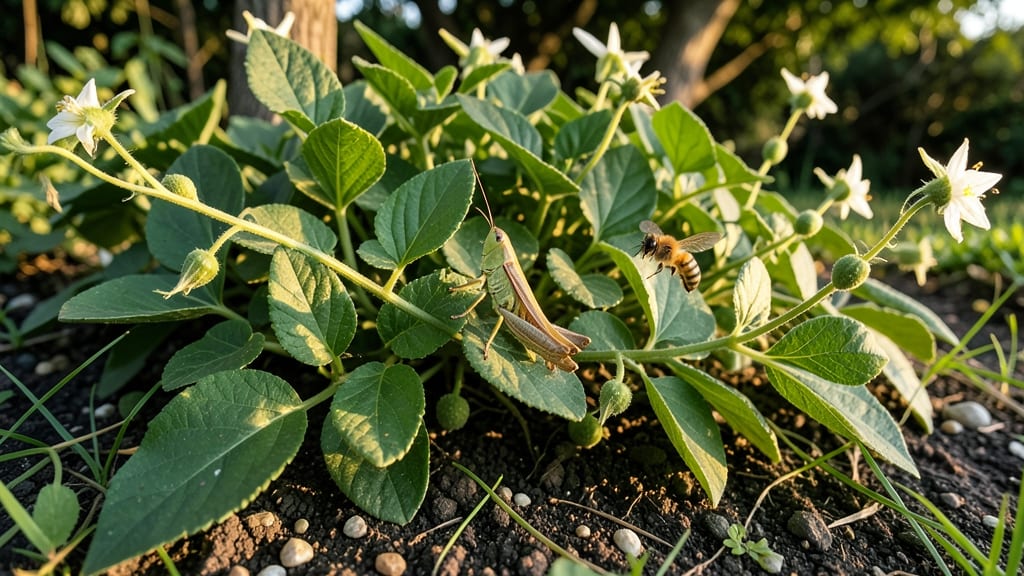
Grasshoppers are not primary pollinators like bees or butterflies, but they can accidentally transfer pollen between flowers while feeding, especially on wind-pollinated or open-blooming plants like legumes or grasses.
While grasshoppers don't have specialized structures like bees do, their chewing mouthparts and fuzzy bodies can still pick up and move pollen from one flower to another. 🌱 This makes them helpful for certain plants, particularly those that rely on wind or general insect activity, like clovers or sunflowers.
However, their role is far less precise than that of bees or butterflies, which actively seek out and collect pollen for food.
Bees and butterflies are the superstars of pollination because they're designed to carry pollen efficiently, often visiting many flowers in a single trip. Grasshoppers, on the other hand, are more like accidental helpers—they might transfer pollen while munching on leaves or flowers, but they're not as reliable for consistent pollination.
If you're trying to boost garden productivity, focusing on attracting bees and butterflies will give you better results.
💡 In This Article
- How Grasshoppers Interact With Plant Pollination
- Best Pollinators for Gardens: Grasshoppers vs Bees vs Butterflies
How grasshoppers interact with plant pollination
Grasshoppers don't have pollen baskets or specialized body structures like bees, but their biology still allows for pollen transfer. Their chewing mouthparts—mandibles and maxillae—crush plant material while feeding, and pollen grains can become lodged in the tiny grooves or hairs on their legs and bodies.
Unlike bees, which actively collect pollen for nutrition, grasshoppers simply carry it as a byproduct of their feeding habits. This makes their pollination role more passive and less efficient, but still valuable for certain plants.
The key mechanism involves their fuzzy exoskeletons and the way they move between flowers. When a grasshopper lands on a flower to feed, pollen grains stick to its body hairs or get caught in its mouthparts.
As it hops to the next plant—often 2-5 feet away in a single leap—some pollen may rub off onto the stigma of another flower.
Studies show grasshoppers can transfer pollen effectively on wind-pollinated plants or those with open, accessible blooms like alfalfa or wild grasses, where precise positioning matters less than sheer volume of pollen movement.
What sets grasshoppers apart is their feeding behavior: they often consume entire flowers or plant parts, unlike bees that target nectar-producing structures. This means they can inadvertently pollinate flowers that might otherwise go unvisited by more selective pollinators.
However, their lack of specialized pollen-collecting structures means they're 10-20 times less efficient than bees at transferring pollen to the right parts of flowers for fertilization. 🌿 For example, while a bee might visit 50 flowers in a minute, a grasshopper might only "service" 5-10 during the same time.
Grasshoppers also play a unique role in secondary pollination—helping plants that primary pollinators ignore. In agricultural settings, they can contribute to pollination in crops like corn or sorghum, where wind is the main pollinator but insect activity provides a helpful boost.
Their random movement patterns make them particularly useful in early spring when other pollinators are scarce, giving plants a head start in the growing season.
Consider the contrast with bees: a honeybee has specialized pollen baskets (corbiculae) on its hind legs that can carry up to 50% of its body weight in pollen, while a grasshopper might carry only 1-2% of its body weight passively.
The difference in efficiency becomes clear when you compare how many flowers each insect visits per minute—bees are precision pollinators, while grasshoppers are more like nature's accidental delivery service. 🐞
For gardeners, this means grasshoppers won't replace bees, but they can still play a supporting role—especially in large fields or areas with sparse bee populations. Their contribution becomes more noticeable in ecosystems where other pollinators are absent, making them an important (if overlooked) part of the pollination puzzle.